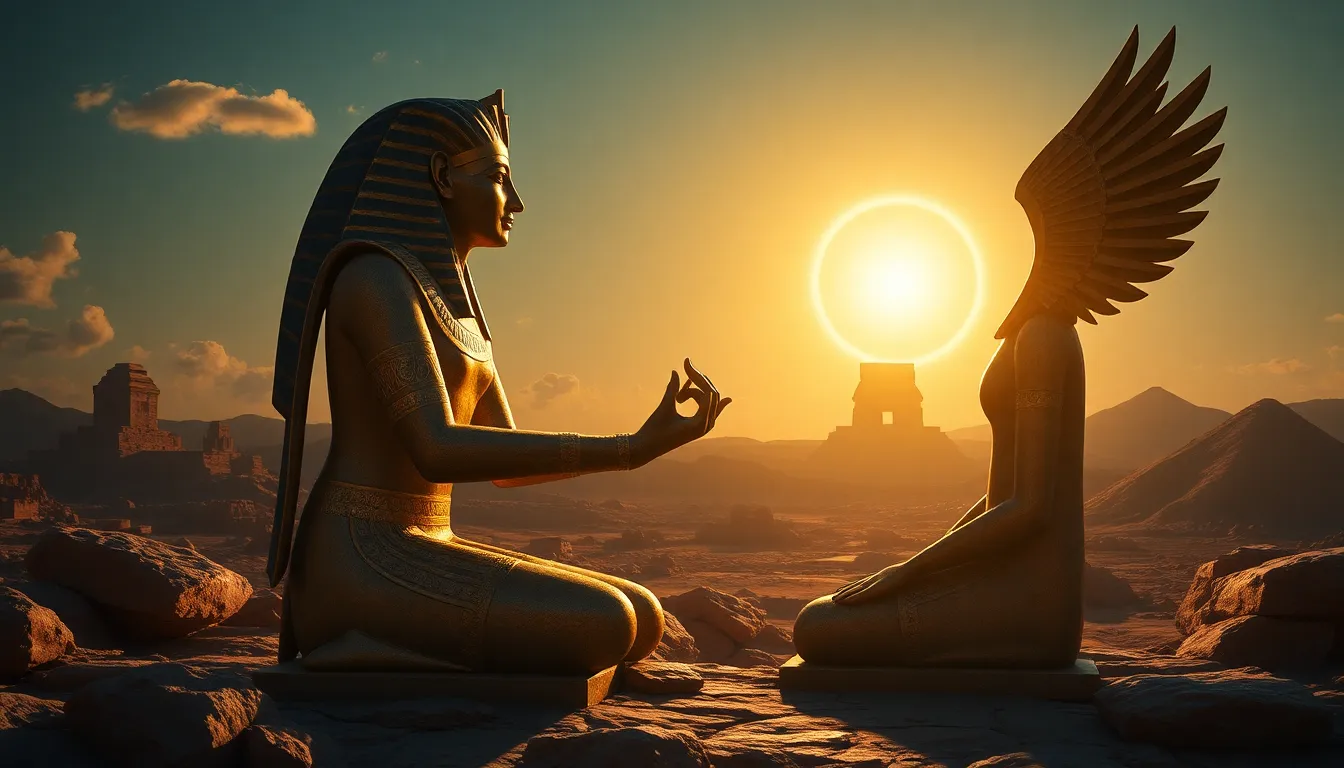
The Power of Love: How Relationships Shaped Egyptian Mythology
I. Introduction
Egyptian mythology is a rich tapestry of gods, goddesses, and legendary tales that have captivated the imagination of people for centuries. At the heart of this mythology lies a profound exploration of love and relationships, which played a pivotal role in shaping the beliefs and practices of ancient Egyptian culture. This article delves into the significance of love, examining how it influenced mythology, societal norms, and artistic expression in ancient Egypt.
II. The Role of Love in Egyptian Society
In ancient Egypt, love was not merely a romantic ideal but a fundamental aspect of daily life. The Egyptians understood love as a powerful force that governed relationships, family structures, and social interactions.
A. Love as a Central Theme in Daily Life
- Expressions of affection were common among family members and friends.
- Love poetry and songs were prevalent, celebrating both romantic and platonic relationships.

B. Marriage and Family Structures in Ancient Egypt
Marriage was highly valued in Egyptian society, often seen as a sacred union that ensured the continuation of family lines and the stability of society. Families were typically nuclear, consisting of parents and their children, and marriages were often based on love, trust, and mutual respect.
C. The Cultural Significance of Romantic Love and Affection
Romantic love held a special place in the hearts of the Egyptians. It was celebrated in literature, art, and religious practices. Relationships were often viewed as a partnership that transcended the mundane, embodying the ideals of loyalty, devotion, and passion.
III. Key Relationships in Egyptian Mythology
Several key relationships in Egyptian mythology exemplify the power of love and its impact on the divine realm.
A. Osiris and Isis: The Archetype of Eternal Love
Osiris and Isis are perhaps the most iconic couple in Egyptian mythology, representing the eternal bond of love that transcends death.
1. The Story of Their Relationship
Osiris, the god of the afterlife, and Isis, the goddess of motherhood and fertility, shared a deep and abiding love. Their relationship was marked by trials and tribulations, including Osiris’s murder by his brother Set. However, Isis’s unwavering devotion led her to resurrect Osiris, showcasing the idea that love conquers even death.
2. Symbolism of Resurrection and Rebirth
Their story symbolizes the cyclical nature of life, death, and rebirth, emphasizing the belief that love is a powerful force capable of overcoming great obstacles.
B. Hathor and Horus: Love and Protection
Another significant relationship in Egyptian mythology is that of Hathor, the goddess of love, beauty, and music, and Horus, the god of the sky and kingship.
1. Their Connection and Roles in Mythology
Their union represents not only romantic love but also the protective and nurturing aspects of love. Hathor often aided Horus in his battles against Set, ensuring the triumph of good over evil.
2. Representations of Love in Art and Literature
Artistic depictions of Hathor and Horus often illustrate their love through intimate gestures and shared symbols, reinforcing the significance of their relationship within the mythological framework.
IV. The Impact of Love on the Divine
Love played a crucial role in the dynamics among the gods, influencing creation myths and the interplay of power.
A. Love as a Driving Force Behind Creation Myths
In many creation myths, love is depicted as the force that brings forth order from chaos. The god Atum, for example, created the first gods from his own love and desire.
B. The Interplay Between Love and Power Among the Gods
The relationships among the gods often highlight the tension between love and power, showcasing how love can inspire both benevolence and rivalry.
C. Stories of Jealousy, Betrayal, and Reconciliation
Myths often explore themes of jealousy and betrayal, such as Set’s envy of Osiris, which ultimately leads to conflict and tragedy. However, they also emphasize the potential for reconciliation and healing through love.
V. Myths of Love and Loss
Love and loss are integral themes in Egyptian mythology, portraying the complexities of human emotion.
A. The Tale of Set and the Consequences of Betrayal
Set’s betrayal of Osiris is a central narrative that illustrates the destructive power of jealousy and the loss of love. This act not only leads to Osiris’s death but also sets off a chain of events that forever alters the balance of power among the gods.
B. Themes of Mourning and Remembrance in Mythological Narratives
The mourning of Isis for her beloved Osiris highlights the profound impact of loss, emphasizing the need for remembrance and honoring those who have passed.
C. The Legacy of Love Lost in Egyptian Storytelling
These tales of love lost resonate through history, serving as poignant reminders of the fragility of relationships and the enduring impact of love on the living.
VI. Love as a Source of Moral Lessons
Egyptian myths often serve as moral tales, imparting lessons about love and loyalty.
A. The Teachings of Love and Loyalty in Mythic Tales
Stories of devotion, such as those of Isis’s relentless search for Osiris, teach the importance of loyalty and commitment in relationships.
B. How Relationships Influenced Ethical Standards in Society
The ideals of love and respect within relationships contributed to the ethical standards of ancient Egyptian society, shaping behaviors and social norms.
C. Myths that Serve as Cautionary Tales Regarding Love
Myths involving betrayal and jealousy, such as Set’s actions, serve as cautionary tales about the darker sides of love, reminding individuals of the potential pitfalls that can arise when love turns to envy.
VII. The Artistic Representation of Love in Ancient Egypt
Art played a significant role in expressing the themes of love within Egyptian culture.
A. Depictions of Love in Hieroglyphs and Temple Reliefs
Hieroglyphs and temple reliefs often featured scenes of couples and families, celebrating love and affection through visual storytelling.
B. The Role of Art in Conveying Romantic Narratives
Artistic representations captured the essence of love, portraying it as a divine force that influenced the lives of both mortals and gods.
C. Love as a Motif in Funerary Artifacts and Tomb Paintings
Funerary artifacts often included motifs of love, symbolizing the belief in the continuation of love beyond death and the importance of relationships in the afterlife.
VIII. Conclusion
In conclusion, love is a central theme that permeates Egyptian mythology, influencing stories, societal norms, and artistic expression. The significance of relationships in ancient Egyptian culture reflects a deep understanding of the complexities of love, highlighting its capacity to inspire, heal, and even destroy. As we explore these ancient narratives today, we find that the lessons of love continue to resonate, reminding us of its enduring power in our lives.