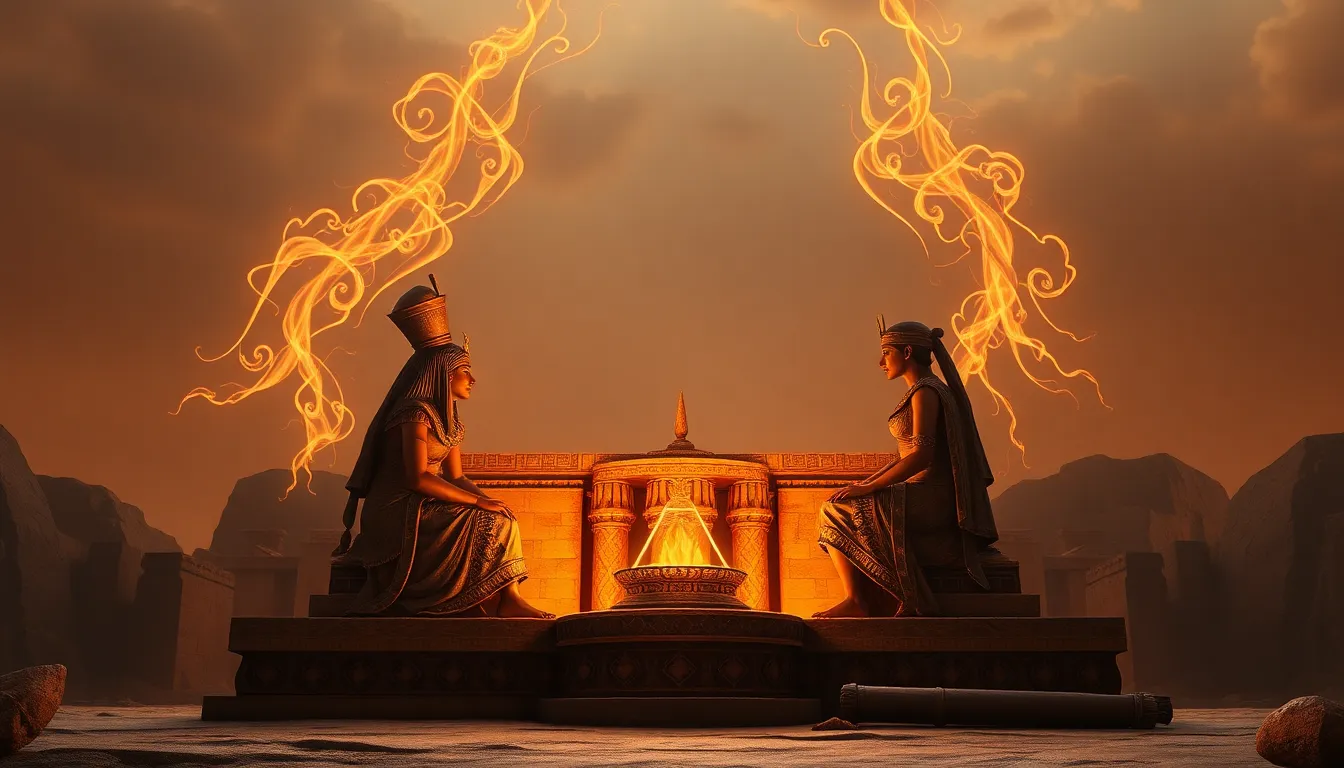
The Myth of the Divine Marriage: Sacred Unions in Ancient Egypt
I. Introduction
In the landscape of Ancient Egyptian mythology, the concept of Divine Marriage holds a significant place, encapsulating the sacred unions between gods and goddesses and their earthly representatives. These unions were not merely personal relationships but were imbued with deep spiritual and cosmic implications. They served to connect the divine with the mortal, ensuring the continuity of life and the stability of the cosmos.
This article aims to delve into the myths and realities surrounding divine marriages in Ancient Egypt, exploring their historical context, significance in religious practices, and their lasting impact on Egyptian culture and beyond.
II. Historical Background of Ancient Egyptian Religion
The pantheon of Ancient Egyptian gods and goddesses was vast and complex, with deities representing various aspects of life, nature, and the universe. Key figures such as Ra, Osiris, Isis, and Hathor played pivotal roles in both mythology and the daily lives of the Egyptians.
- Ra: The sun god, symbolizing creation and life.
- Osiris: The god of the afterlife, resurrection, and fertility.
- Isis: The goddess of motherhood and magic, often associated with divine protection.
- Hathor: The goddess of love, beauty, and music.
Mythology was integral to Ancient Egyptian society, providing explanations for natural phenomena and guiding moral and ethical behavior. Sacred unions were believed to maintain cosmic order, linking the divine with the earthly realm and ensuring the stability of both society and nature.
III. The Concept of Divine Marriage
Divine marriages in Ancient Egypt were characterized by their transcendent nature, often involving a god and a goddess or a god and a mortal. These unions symbolized not just love but also fertility, governance, and the continuation of the divine lineage.
Notable examples of divine unions include:
- Osiris and Isis: Their union is central to the mythology surrounding life, death, and resurrection.
- Horus and Hathor: Their relationship symbolizes the connection between love and divine kingship.
The symbolism inherent in these marriages often reflected themes of fertility, kingship, and governance, reinforcing the belief that the Pharaoh was a divine ruler chosen by the gods.

IV. The Role of Pharaohs in Divine Marriages
The Pharaoh of Ancient Egypt was seen as a divine figure, acting as a mediator between the gods and the people. This divine status was often reinforced through marriages with goddesses, which were believed to confer legitimacy and divine favor.
Notable marriages included:
- Pharaoh and Hathor: Hathor was often depicted as the mother of the Pharaoh, reinforcing his divine right to rule.
- Pharaoh and Isis: Marrying a goddess like Isis signified a strong connection to the afterlife and resurrection, key themes in Egyptian belief.
Such unions not only legitimated the Pharaoh’s rule but also served to unify the people under a common divine authority.
V. Rituals and Ceremonies Surrounding Sacred Unions
Rituals associated with divine marriages were elaborate and deeply spiritual, reflecting the importance of these unions in both personal and communal contexts. Ceremonies often included:
- Ritual offerings to the gods.
- Processions and celebrations in temples.
- Symbolic acts representing the union of the divine and the mortal.
The significance of these ceremonies extended beyond the individuals involved; they served to reinforce social cohesion and religious devotion within the community, highlighting the interconnectedness of the divine and the earthly.
Archaeological evidence, such as temple inscriptions and artifacts, has provided insights into these sacred wedding practices, showcasing the reverence with which they were conducted.
VI. The Mythological Narratives of Divine Marriages
Key myths involving divine unions often explore themes of love, betrayal, and resurrection, encapsulating the complexities of relationships in both the divine and human realms. Important narratives include:
- The story of Osiris and Isis: Their relationship highlights themes of loyalty, love, and the cycle of life and death.
- The conflict between Seth and Osiris: This tale of betrayal and revenge underscores the struggle between chaos and order.
These narratives not only served to explain the mysteries of existence but also offered moral lessons and reflections on the human experience, drawing parallels with other ancient cultures’ sacred unions.
VII. The Decline of Divine Marriage Myths
Over time, the significance of divine marriages in Ancient Egypt began to wane, influenced by various factors including:
- Invasions and the integration of foreign cultures and beliefs.
- The rise of monotheism, particularly with the advent of Christianity and Islam.
- Shifts in political power and the decline of the Pharaoh’s divine status.
This decline did not erase the legacy of divine marriage myths; instead, they evolved, influencing contemporary interpretations of spirituality and governance.
VIII. Conclusion
In summary, the myth of divine marriage in Ancient Egypt is a rich tapestry woven from threads of mythology, religion, and societal structure. These sacred unions played a critical role in maintaining cosmic order, legitimizing political authority, and providing moral guidance.
Reflecting on the enduring impact of these myths, we see their echoes in modern culture, where themes of love, power, and divine connection continue to resonate. As we explore the beliefs and practices of Ancient Egypt, we uncover a profound understanding of the human experience that transcends time.
We invite you to further explore the fascinating world of Ancient Egyptian beliefs and practices, delving deeper into the stories that have shaped our understanding of the divine.