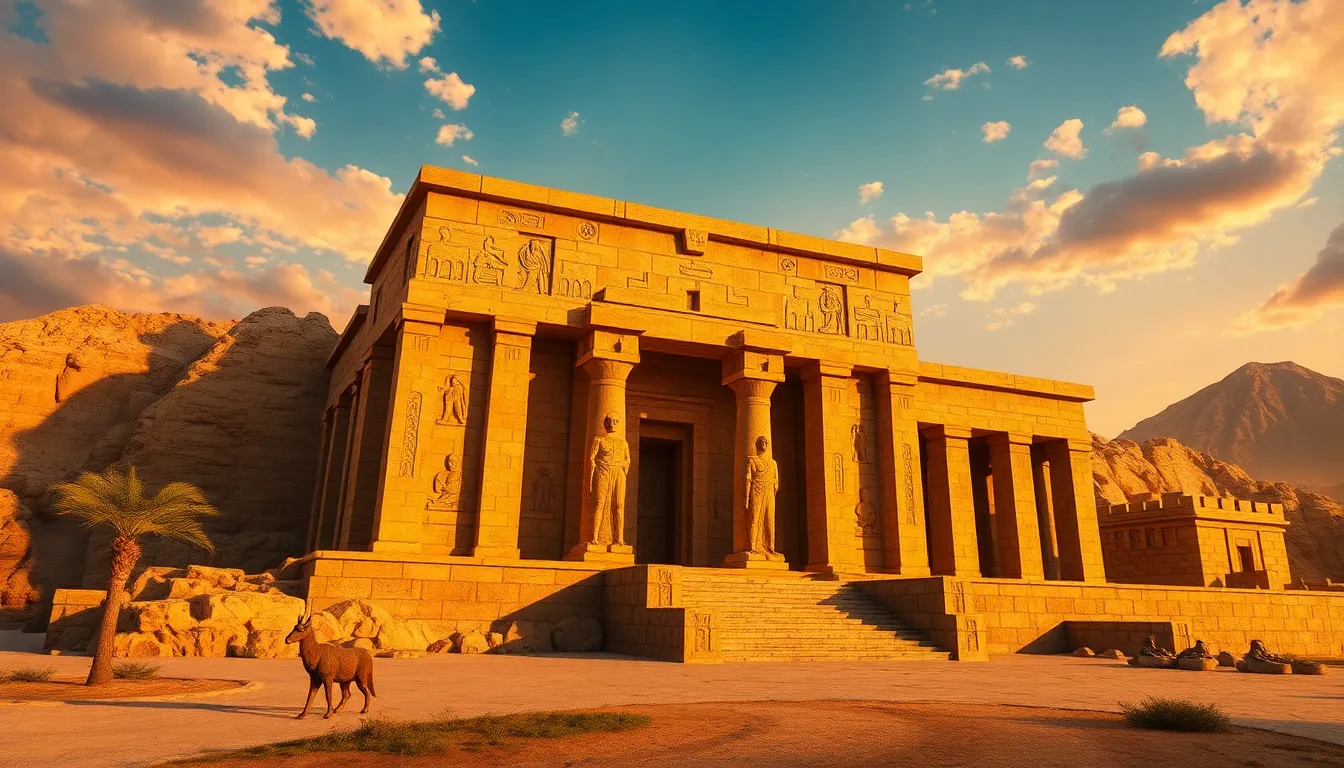
The Temples of Ancient Egypt: Guardians of Tradition
I. Introduction
Ancient Egypt stands as one of the most remarkable civilizations in human history, renowned for its rich culture, monumental architecture, and intricate belief systems. Among its most significant contributions to history are the temples, which served as vital centers of worship, education, and community life. The temples of Ancient Egypt were not merely places of worship; they were the guardians of tradition, preserving the intricate tapestry of religious practices and cultural identity that defined Egyptian society.
This article aims to explore the multifaceted role of temples in ancient Egypt, examining their historical context, architectural features, religious significance, and lasting legacy in the realms of education and community life.
II. Historical Context of Ancient Egyptian Temples
The evolution of temple architecture in Ancient Egypt reflects the changing dynamics of its civilization over thousands of years. From simple structures to grand monumental complexes, temples underwent significant transformations across different dynasties.
- Old Kingdom (c. 2686–2181 BCE): The earliest temples were characterized by their basic layout, often constructed from mudbrick. The most notable was the Pyramid complex at Giza.
- Middle Kingdom (c. 2055–1650 BCE): A re-emergence of temple building led to more elaborate designs, including the famous temple of Karnak.
- New Kingdom (c. 1550–1070 BCE): This period saw the zenith of temple architecture, with grand structures such as the Temple of Luxor and the magnificent Karnak Temple complex.
Cultural and political influences played a crucial role in temple construction. The rise of pharaohs and the centralization of power often resulted in the building of grand temples as symbols of divine authority and state power.
III. Architectural Features of Egyptian Temples
The architectural design of temples in Ancient Egypt was not only functional but also steeped in symbolism. Key architectural features included:
- Hypostyle Halls: These vast, columned halls served as spaces for congregational worship and were often decorated with intricate carvings.
- Obelisks: Tall, four-sided stone pillars that symbolized the sun’s rays and were often placed at temple entrances.
- Pylons: Massive gateways that marked the entrance to the temple, symbolizing the transition from the mundane to the sacred.
The layout of temples was meticulously planned to reflect the mythological journey of the sun god Ra, reinforcing the connection between the physical space and the divine realm. Each element of the architecture served as a representation of gods and the afterlife, emphasizing the temples’ significance in religious practices.
IV. The Religious Significance of Temples
Temples were considered the earthly residences of the gods, where divine presence was believed to dwell. This concept of divine residence was central to the religious beliefs of the ancient Egyptians.
- Rituals and Ceremonies: Temples were the sites of numerous rituals, including daily offerings, festivals, and special ceremonies that marked significant events in the Egyptian calendar.
- The Role of Priests: Priests and priestesses were responsible for maintaining the temple and conducting rituals. They were seen as intermediaries between the gods and the people, safeguarding the traditions and practices that defined Egyptian spirituality.
V. Temples as Centers of Learning and Knowledge
Beyond their religious functions, temples served as repositories of knowledge and education. They housed extensive libraries and archives containing sacred texts, literature, and astronomical observations.
- Religious Texts: Temples preserved important religious documents, including the Pyramid Texts and the Book of the Dead, which offered insights into the beliefs and practices of the time.
- Training of Scribes: Temples provided education for young scribes, who played a critical role in administration and record-keeping, ensuring the continuity of knowledge through generations.
- Preservation of Knowledge: Temple archives acted as crucial resources for historians and scholars, preserving the wisdom of the ancients for future generations.
VI. Temples in Daily Life and Community
Temples were not only places of worship but also served as social hubs for community gatherings and cultural activities. They played an integral role in the daily lives of the people.
- Social Hubs: Temples hosted festivals, celebrations, and public ceremonies that brought communities together, fostering a sense of belonging and shared identity.
- Economic Role: Temples often engaged in trade and agricultural activities, functioning as economic centers that contributed to the local economy.
- Public Ceremonies: Large-scale events, such as the Opet Festival, were held at temples, reinforcing the connection between the divine and the community.
VII. The Legacy of Ancient Egyptian Temples
The influence of Ancient Egyptian temples extends beyond their time, leaving a profound impact on later cultures and religions.
- Influence on Later Cultures: The architectural styles and religious concepts of Egyptian temples influenced Greek and Roman temple designs, as well as later monotheistic religions.
- Modern Discoveries: Archaeological efforts continue to uncover the grandeur of ancient temples, revealing insights into their construction, function, and significance in society.
- Preservation Efforts: Today, efforts to preserve and restore ancient temple sites are critical for maintaining cultural heritage and understanding the past.
VIII. Conclusion
In conclusion, the temples of Ancient Egypt were far more than mere structures; they were the guardians of tradition, embodying the beliefs, practices, and cultural identity of a civilization that has captivated humanity for millennia. Their roles as houses of the gods, centers of learning, and community hubs underscore their significance in the social and spiritual life of ancient Egyptians.
As we reflect on the enduring impact of these magnificent structures, it becomes clear that preserving the cultural heritage of Ancient Egypt is essential for understanding our shared history and appreciating the complexities of human civilization.