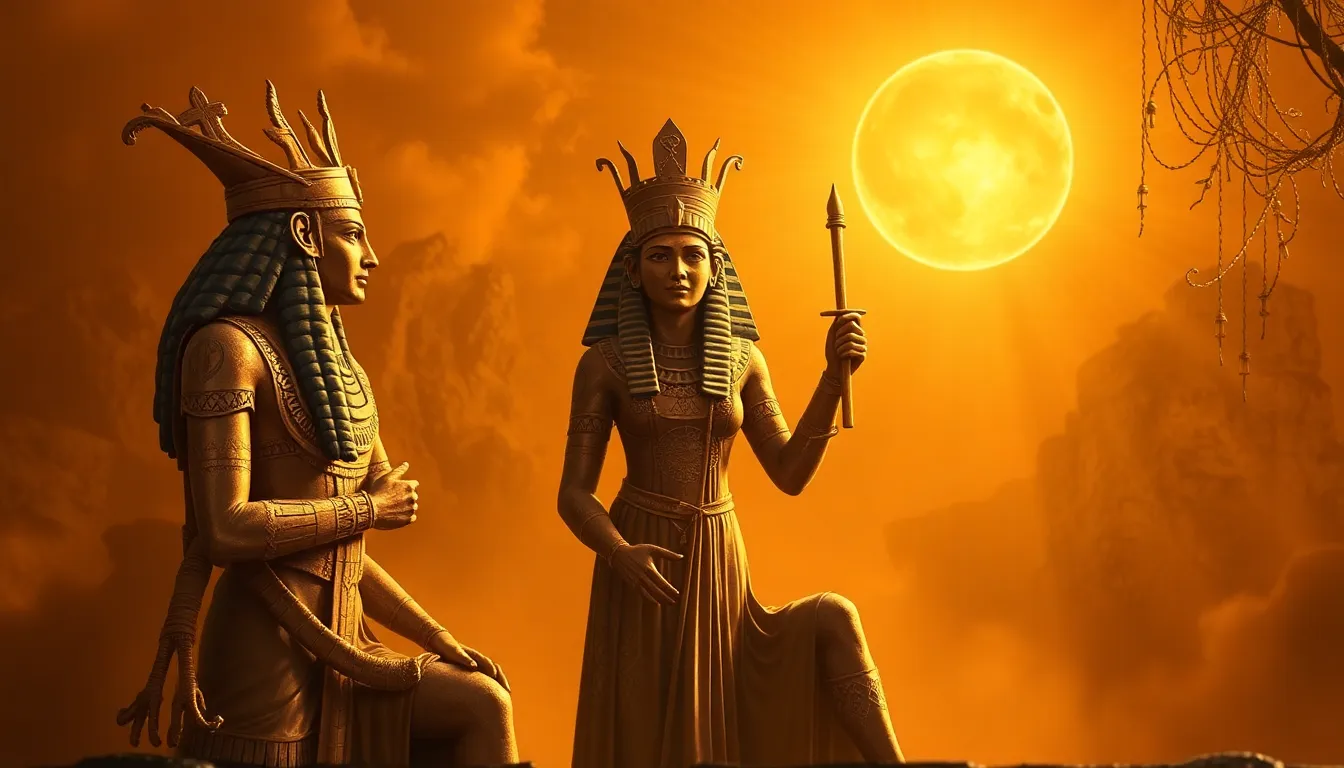
The Legacy of Isis: A Study of Her Relationships with Other Deities
I. Introduction
Isis, one of the most important deities in ancient Egyptian mythology, is widely revered as the goddess of magic, motherhood, and fertility. Her legacy transcends time, making her a central figure in the pantheon of gods and goddesses worshipped in ancient Egypt. Understanding her relationships with other deities not only enhances our knowledge of her character but also sheds light on the complexities of ancient Egyptian religion and cosmology.
The importance of studying these relationships lies in the insights they provide into the social and cultural dynamics of ancient Egypt. Each relationship reveals themes of love, betrayal, power, and nurturing, which are integral to the mythology and its influence on society. This article aims to explore the multifaceted relationships of Isis with other deities, delving into their historical contexts, narratives, and the lasting impact of these connections.
II. Historical Context of Isis
The cult of Isis has its origins in the early dynastic period of ancient Egypt, where she was initially worshipped as a local goddess. Over time, her influence expanded, and she became a major deity in the Egyptian pantheon, embodying the ideals of motherhood and protection.
Throughout different dynasties, the worship of Isis evolved significantly:
- In the Old Kingdom, she was primarily associated with the funerary rites and the afterlife.
- During the Middle Kingdom, her role expanded as she became linked with healing and magic.
- By the New Kingdom, Isis was celebrated as a universal goddess, with temples established across the Mediterranean.
Her cultural significance is reflected in literature, art, and religious practices, making her one of the most enduring symbols of ancient Egyptian spirituality.
III. Isis and Osiris: The Archetypal Relationship
The relationship between Isis and her brother-husband Osiris is one of the most famous narratives in Egyptian mythology, representing the themes of love, resurrection, and eternal life. The myth recounts how Osiris was murdered by his jealous brother Seth, who dismembered his body and scattered the pieces across Egypt. In a display of unwavering devotion, Isis embarked on a perilous journey to recover Osiris’s body and ultimately resurrect him.
This myth encapsulates profound themes:
- Love: Isis’s determination to save Osiris highlights the power of love and loyalty.
- Resurrection: The story signifies the belief in life after death, a cornerstone of ancient Egyptian religion.
- Rebirth: Osiris’s resurrection symbolizes the cyclical nature of life and the agricultural cycles of the Nile.
The impact of their relationship on Egyptian cosmology cannot be understated, as it laid the foundation for the concept of an afterlife and the role of the pharaoh as a divine ruler.
IV. Isis and Horus: The Mother-Son Dynamic
Isis’s relationship with her son Horus is characterized by nurturing and protection. After the death of Osiris, Isis took on the role of a devoted mother, raising Horus in secret to protect him from Seth, who sought to eliminate any threat to his power.
This mother-son dynamic is rich in symbolism:
- Protection: Isis’s fierce defense of Horus embodies the protective qualities of motherhood.
- Kingship: Horus’s ascension to the throne of Egypt symbolizes the legitimate rule over the land, with Isis as his guiding force.
The influence of their relationship extends to the legitimacy of the pharaohs, who were often seen as the earthly embodiment of Horus, reinforcing the connection between divine right and rulership.
V. Isis and Seth: The Complex Rivalry
The relationship between Isis and Seth is marked by complexity and conflict. As the god of chaos and disorder, Seth represents the antithesis of Isis’s nurturing and protective nature. Their antagonism emerges from Seth’s murder of Osiris and his ongoing attempts to thwart Horus’s claim to the throne.
The themes of conflict and betrayal in their narrative highlight the delicate balance between chaos and order:
- Conflict: The struggle between Horus and Seth for supremacy is a central theme in the mythology, symbolizing the ongoing battle between good and evil.
- Betrayal: Seth’s actions against Osiris and Isis reveal the treachery that exists among the gods.
Seth’s role can be viewed as that of an anti-hero, challenging the status quo and forcing the other deities, particularly Isis and Horus, to confront their fears and assert their power.
VI. Isis and Other Female Deities
Isis’s relationships with other female deities such as Hathor, Nephthys, and Ma’at reveal both collaborative and competitive dynamics within the pantheon of goddesses. Each goddess played a distinct role, yet their interactions often reflected shared themes of motherhood, fertility, and justice.
Some notable relationships include:
- Hathor: Often associated with love and joy, Hathor and Isis are sometimes seen as complementary figures, representing different aspects of femininity.
- Nephthys: As the sister of Isis and a goddess of mourning, Nephthys shares a complex bond with Isis, embodying the themes of loss and support.
- Ma’at: Representing truth and order, Ma’at’s relationship with Isis emphasizes the importance of balance in the cosmos.
The role of female deities in the ancient Egyptian pantheon showcases a rich tapestry of relationships that highlight the importance of women in mythology and religion.
VII. The Influence of Isis on Later Religions
The legacy of Isis extends beyond ancient Egypt, influencing Greco-Roman culture and later religious traditions. Her attributes of motherhood, magic, and healing were adapted and amalgamated into various belief systems.
Key aspects of her influence include:
- Greco-Roman Reception: Isis was worshipped in Rome and Greece, where her cult gained popularity, often depicted in art and literature.
- Adaptation of Attributes: Many of her qualities, such as compassion and protection, were assimilated into the narratives of later deities.
- Modern Spirituality: In contemporary times, Isis has become a symbol of empowerment in feminist movements, representing the strength and resilience of women.
This enduring legacy highlights the significance of Isis as a cultural symbol throughout history.
VIII. Conclusion
In summary, the relationships of Isis with other deities reveal profound insights into the values and beliefs of ancient Egyptian society. Her connections with Osiris, Horus, Seth, and other goddesses illustrate themes of love, motherhood, conflict, and the balance of order and chaos.
The enduring legacy of Isis in mythology reflects the complexities of human emotions and the cultural significance of female deities. Understanding these relationships not only enriches our knowledge of ancient Egyptian religion but also underscores the importance of mythology in shaping human experience across time and cultures.
Ultimately, the study of deity relationships in ancient cultures like that of Egypt offers invaluable perspectives on how societies conceptualize power, family, and the divine.