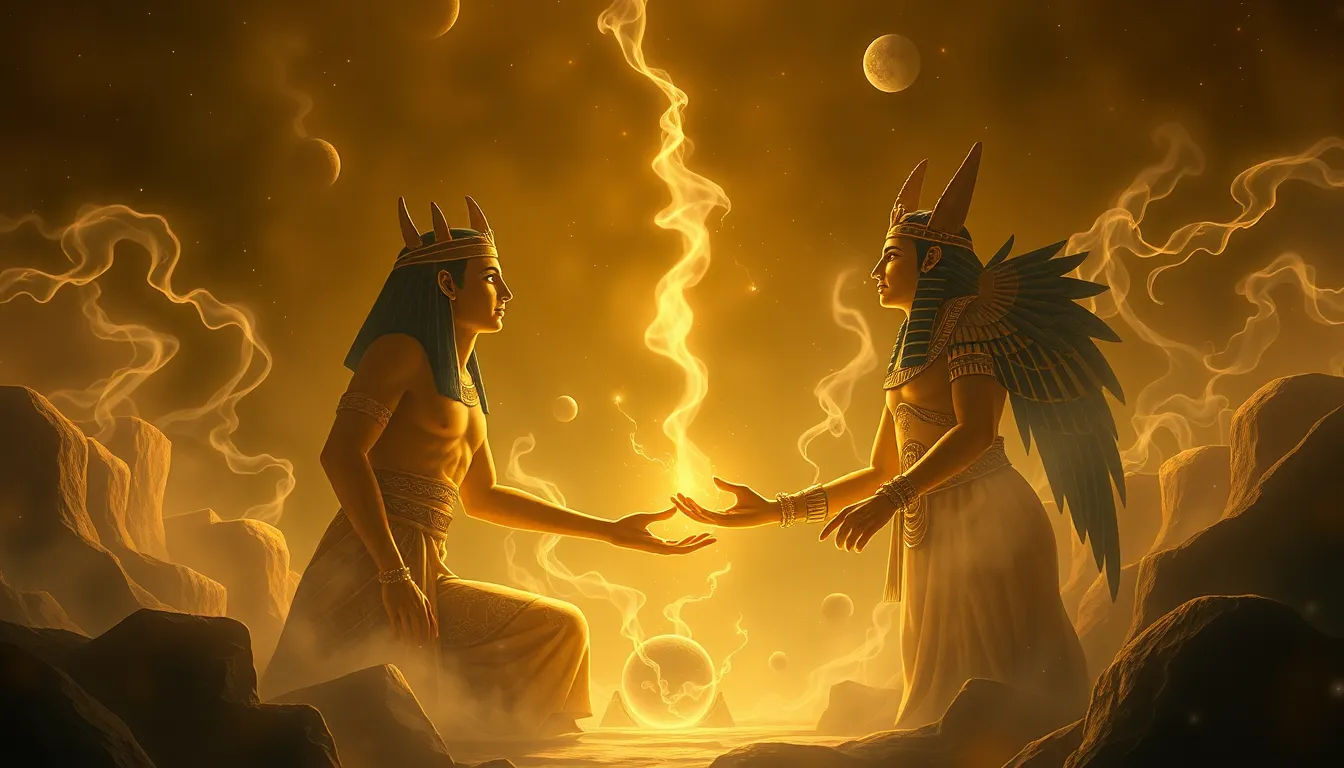
The Role of Love in the Afterlife: Egyptian Myths Explored
I. Introduction
The ancient Egyptians had a rich tapestry of beliefs surrounding the afterlife, viewing it not just as an end but as a continuation of life’s journey. Central to these beliefs was the concept of love, which played a vital role in the spiritual realm. Love was perceived as an essential force that transcended death, influencing the way the living interacted with the deceased and how the deceased navigated the afterlife.
This article aims to explore the intricate relationship between love and the afterlife in Egyptian mythology, shedding light on how these beliefs shaped their burial practices, ethical living, and cultural understanding of death and rebirth.
II. Ancient Egyptian Concepts of the Afterlife
In Egyptian mythology, the afterlife was known as the Duat, a realm where the souls of the deceased would journey after death. This journey was fraught with challenges, but it was also a pathway to eternal life, where the soul could reunite with loved ones and the gods.
Several key deities were associated with the afterlife:
- Osiris: The god of the afterlife, resurrection, and regeneration. He was often depicted as a mummified king, symbolizing rebirth.
- Anubis: The god of embalming and the protector of the dead. He was responsible for guiding souls through the afterlife.
- Isis: The goddess of magic and motherhood, who played a crucial role in the resurrection of Osiris and was seen as a protector of the dead.
The journey of the soul through the afterlife involved the weighing of the heart against the feather of Ma’at, the goddess of truth and justice. This ceremony emphasized the importance of love, as the heart was believed to hold the essence of a person’s deeds and relationships in life.
III. The Symbolism of Love in Egyptian Mythology
Love was not only a personal emotion but a unifying force that connected the living and the dead. It was seen as essential for achieving a favorable afterlife. Love manifested in various forms, including romantic love, familial love, and the love of the gods.
Myths often illustrated the profound love between gods and mortals, demonstrating that love could transcend the boundaries of life and death. For example, the love story of Osiris and Isis symbolized the eternal bond between partners, which was believed to continue even after death.
Marital love held particular significance in the afterlife, as couples were thought to reunite in the Duat, fostering a sense of connection that persisted beyond mortal existence.

IV. Notable Myths Featuring Love and the Afterlife
Several myths encapsulate the role of love in the afterlife:
- The story of Osiris and Isis: This myth narrates the love between Osiris, the god of the afterlife, and his wife Isis, who mourned his death and sought to resurrect him. Their reunion symbolizes the enduring nature of love beyond death.
- The tale of Hathor: Often associated with love and beauty, Hathor was believed to assist souls in their journey to the afterlife, guiding them with compassion and affection.
- The Heart Weighing Ceremony: In this pivotal moment, the deceased’s heart was weighed against the feather of Ma’at. A heart heavy with sin indicated a lack of love and compassion, while a lighter heart signified a life lived with love and virtue.
V. Love’s Influence on Burial Practices and Funeral Customs
Love permeated ancient Egyptian burial practices and funeral customs, reflecting their belief in the afterlife:
- Tomb construction: Tombs were elaborately constructed as a testament to the deceased’s life and love. Inscriptions often included messages of love and devotion from family members.
- Offerings and rituals: Families would make offerings to honor their loved ones, believing that these acts of love would sustain the deceased in the afterlife.
- Funerary art: The concept of eternal love was frequently depicted in funerary art, showcasing scenes of couples and families, symbolizing the bonds that continued beyond death.
VI. The Legacy of Love in Egyptian Afterlife Beliefs
The ancient Egyptian view of love significantly shaped their cultural understanding of death. It motivated ethical living, as individuals sought to lead lives filled with love and devotion, knowing that their actions would determine their fate in the afterlife.
This emphasis on love influenced not only their myths and customs but also modern interpretations of love and loss. The belief that love endures beyond death resonates with contemporary views on grief and remembrance.
VII. Comparing Egyptian Views of Love in the Afterlife with Other Cultures
When examining Egyptian views of love in the afterlife, it is essential to compare them with beliefs from other cultures:
- Greek and Roman beliefs: Similar to the Egyptians, Greeks and Romans believed in an afterlife where love could transcend mortal existence, as seen in tales of Orpheus and Eurydice.
- Other ancient civilizations: Cultures such as the Mesopotamians and the Chinese also held beliefs about love’s enduring nature in the afterlife, reflecting a universal theme across civilizations.
- Cross-cultural reflections: The enduring nature of love as a theme in afterlife beliefs highlights its significance in human experience, transcending cultural boundaries.
VIII. Conclusion
In summary, love played a crucial role in ancient Egyptian beliefs about the afterlife, influencing myths, customs, and ethical living. The intertwining of love with death and rebirth showcases the timeless nature of this emotion in humanity’s quest for understanding the afterlife.
The Egyptian myths surrounding love and the afterlife continue to resonate today, offering insights into our own experiences of love and loss. As we reflect on these ancient beliefs, we recognize the enduring power of love in shaping our understanding of life, death, and what may lie beyond.