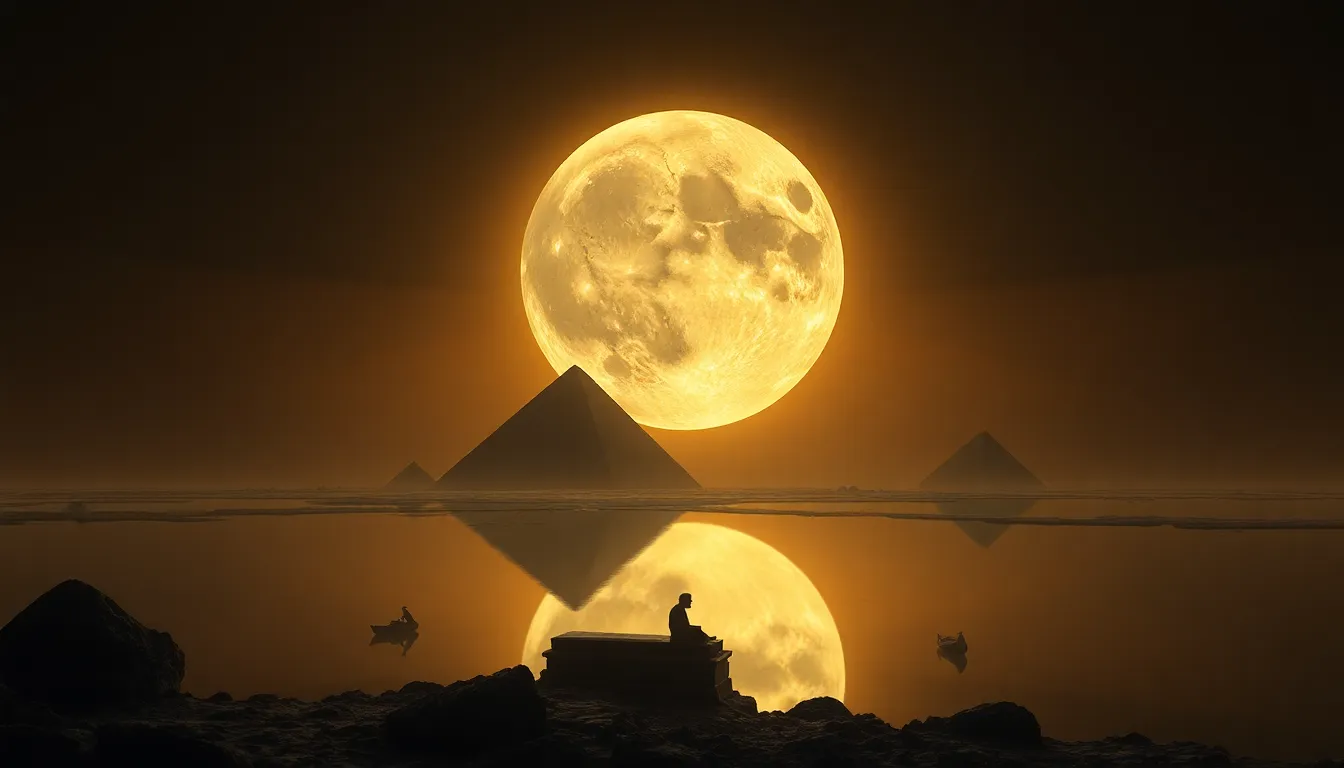
The Moon in Egyptian Poetry: Reflections of Love and Loss
I. Introduction
The moon has held a place of significance in Egyptian culture since ancient times, often seen as a symbol of beauty, mystery, and the cycle of life. Its silvery glow has inspired countless poets to explore themes of love and loss, using the moon as a powerful metaphor for human emotions. This article seeks to delve into how the moon serves as a potent symbol in Egyptian poetry, reflecting the complexities of love and the profound pain of loss.
II. Historical Context of Egyptian Poetry
Egyptian poetry has a rich history that dates back to the earliest civilizations along the Nile. It has evolved through various periods, from the Old Kingdom to the Greco-Roman era, each contributing layers of meaning and artistic expression.
- Evolution of Poetry: Egyptian poetry began with simple hymns and prayers, gradually becoming more sophisticated with the use of metaphors and complex imagery.
- Key Themes: Common themes in Egyptian poetry include nature, love, mortality, and the divine, reflecting the cultural and spiritual beliefs of the time.
- The Moon Motif: The moon frequently appears in ancient texts, symbolizing not only the passage of time but also the emotional states of love and loss.
III. The Moon as a Symbol of Love
In Egyptian poetry, the moon often represents romantic love, illuminating the beauty and tenderness shared between lovers. Poets have drawn parallels between the moon’s phases and the cyclical nature of love.
- Romantic Representations: The moon is frequently depicted as a romantic partner, casting a soft light over lovers and serving as a witness to their intimate moments.
- Phases of the Moon: The waxing and waning of the moon are likened to the ups and downs of love, highlighting themes of longing and fulfillment.
- Notable Works: Poets such as Imhotep and Sappho have celebrated lunar love in their verses, creating timeless expressions of affection.
IV. The Moon as a Symbol of Loss
While the moon often embodies love, it is also associated with grief and mourning in Egyptian poetry. Its silvery light can evoke feelings of sorrow and longing for what has been lost.
- Grief and Mourning: The moon’s light is sometimes portrayed as a reminder of lost loved ones, casting a melancholic glow over memories.
- Poetic Imagery: Imagery associated with the moon often reflects sorrow, with poets using the moon’s brightness to symbolize the pain of separation.
- Specific Poems: Works like “The Lamentations of Isis” convey deep emotional loss through the use of lunar symbolism, emphasizing the connection between love and grief.
V. Mythological Connections: The Moon and Egyptian Deities
In Egyptian mythology, lunar deities such as Khonsu and Thoth play crucial roles in shaping the cultural understanding of the moon. These gods embody various aspects of love and loss, influencing poetic expressions.
- Lunar Deities: Khonsu, the god of the moon, represents the passage of time and healing, while Thoth symbolizes wisdom and writing, often associated with knowledge of love and loss.
- Influence on Poetry: The attributes of these deities are reflected in poetic imagery, where the moon becomes a canvas for expressing human emotions.
- Embodiment of Themes: The stories and attributes of Khonsu and Thoth provide rich material for poets, allowing them to explore the duality of love and loss.
VI. The Moon in Modern Egyptian Poetry
Modern Egyptian poets continue to draw inspiration from the moon, carrying forward the themes of love and loss into contemporary works. While the essence remains, the portrayal has evolved.
- Continuation of Themes: Contemporary poetry retains the moon as a symbol of romance and sorrow, reflecting modern experiences of love and loss.
- Changes in Portrayal: Today’s poets may adopt new styles and forms, blending traditional imagery with modern sensibilities.
- Modern Poets: Notable figures such as Ahmed Fouad Negm and Fatma al-Sharif use lunar symbolism to explore personal and societal themes, weaving the moon into the fabric of modern Egyptian life.
VII. Comparative Analysis: The Moon in Global Poetry
The symbolism of the moon transcends cultures, appearing in poetry across the globe. A comparative analysis reveals both similarities and differences in how various cultures interpret this celestial body.
- Global Symbolism: In many cultures, the moon signifies femininity, change, and cyclical time, often linked to themes of love and loss.
- Comparative Themes: While many cultures portray the moon as a romantic figure, others may emphasize its role in solitude and melancholy.
- Unique Egyptian Interpretations: Egyptian poets uniquely interpret the moon through the lens of their mythology, intertwining it with their historical and cultural narratives.
VIII. Conclusion
In conclusion, the moon serves as a dual symbol of love and loss in Egyptian poetry, reflecting the timeless human experience of longing and remembrance. From ancient texts to modern verses, the moon continues to inspire poets to articulate their deepest emotions, leaving a lasting impact on the literary landscape. The significance of the moon as a poetic symbol endures, reminding us of the beauty and sorrow that coexist in our lives.