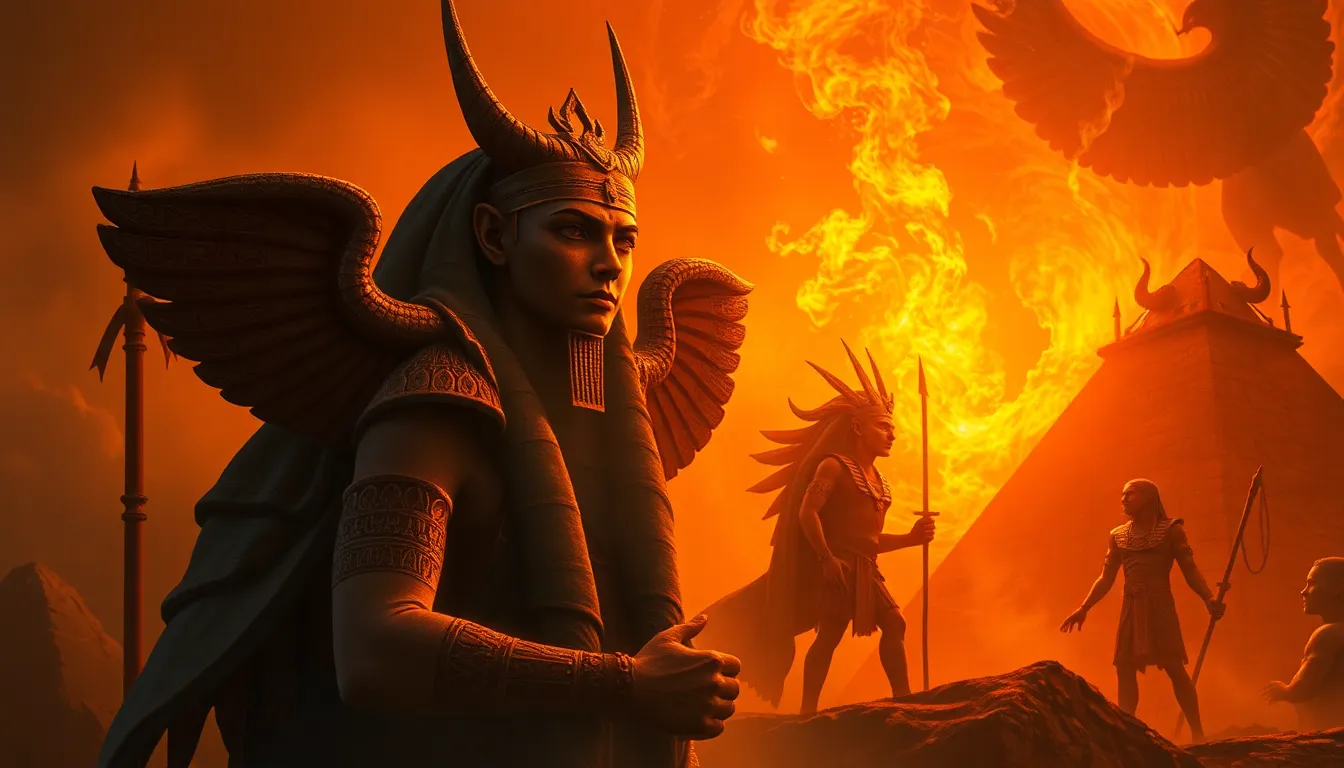
When the Gods Turned: Vengeful Tales from Ancient Egypt
I. Introduction
Ancient Egyptian beliefs were deeply intertwined with the divine, where gods and goddesses influenced every aspect of life and death. The Egyptians viewed their deities as powerful entities that governed the natural world, human affairs, and the afterlife. Among these divine beings, tales of vengeance stand out, highlighting the gods’ capacity for retribution against those who transgress moral and cosmic laws.
This article explores the theme of divine vengeance through key narratives in Egyptian mythology, revealing how the gods’ anger could lead to dramatic consequences for both mortals and immortals alike. From the rivalry between Set and Osiris to the wrath of Sekhmet, we delve into stories that illustrate the complexities of divine justice and the inevitable repercussions of wrongdoing.
II. The Nature of Egyptian Deities
Egyptian deities were characterized by a rich tapestry of attributes and roles, often embodying duality in their nature. They could be benevolent protectors or fearsome enforcers of justice, reflecting the balance of Ma’at, the principle of order and truth.
- Characteristics of Egyptian gods and goddesses:
- Anthropomorphic forms often combined with animal traits.
- Complex personalities, capable of kindness and wrath.
- Each deity had specific domains, such as fertility, war, or the afterlife.
- Concepts of justice:
- Ma’at as the foundation of cosmic order.
- Retribution as a means to restore balance.
- Duality of actions:
- Benevolence towards the righteous.
- Vengeance against those who disrupt order.
III. The Story of Set and Osiris
Central to Egyptian mythology is the tumultuous relationship between Set, the god of chaos, and Osiris, the god of the afterlife. Set’s jealousy and ambition drove him to betray his brother Osiris, leading to a tale of murder and vengeance.
Set deceived Osiris, trapping him in a coffin and casting it into the Nile, resulting in Osiris’s death. This act of betrayal sparked a series of events that would lead to divine retribution:
- Isis, Osiris’s devoted wife, sought to resurrect him, demonstrating the power of love and loyalty.
- She gave birth to Horus, who would later avenge his father’s death.
- Horus challenged Set for the throne, embodying the struggle between order and chaos.
Ultimately, Horus defeated Set, leading to Set’s exile and the restoration of Osiris as the ruler of the afterlife, illustrating the consequences of divine vengeance and the preservation of Ma’at.
IV. The Wrath of Sekhmet
Sekhmet, the lion-headed goddess of war and destruction, embodies the fierce aspect of divine retribution. Her origins are deeply rooted in the mythology surrounding the sun god Ra, who unleashed her upon humanity as punishment for their disobedience.
In one tale, Ra, angered by the growing corruption and immorality among humans, sent Sekhmet to annihilate them. Her rampage resulted in immense bloodshed and chaos:
- As she relished in destruction, Ra recognized the need for intervention.
- To stop her, he devised a plan involving the use of beer dyed red to resemble blood.
- Drunk and satiated, Sekhmet transformed from a destroyer into a healer, symbolizing the dual nature of divinity.
This tale highlights not only the power of vengeance but also the potential for healing and restoration, showcasing Sekhmet’s complex character.
V. The Judgment of the Dead
The afterlife in ancient Egypt was a realm of immense importance, where the souls of the deceased faced judgment in the Duat. Here, the concept of divine retribution took center stage, as the souls were assessed based on their earthly actions.
Anubis, the god of embalming and the afterlife, played a crucial role in this process:
- He guided souls to the Hall of Ma’at for judgment.
- The heart of the deceased was weighed against the feather of Ma’at, representing truth and justice.
Those who lived virtuous lives were granted passage to the afterlife, while the wicked faced dire consequences:
- Souls found to be unworthy were devoured by Ammit, the soul-eating monster.
- This judgment served as a powerful reminder of accountability and the moral implications of one’s actions.
VI. The Punishment of Apep
Apep, the serpent deity, personified chaos and evil. His eternal struggle against Ra, the sun god, symbolized the cosmic battle between order and chaos. Apep sought to devour Ra and plunge the world into darkness.
The significance of Apep’s defeat cannot be overstated:
- Ra’s nightly journey through the underworld involved confrontations with Apep.
- Every victory over Apep was a reaffirmation of cosmic order and stability.
- The cyclical nature of this battle reflected the daily cycle of night and day.
This ongoing conflict served as a metaphor for the continuous struggle against chaos, illustrating the theme of divine vengeance in preserving Ma’at.
VII. The Role of Mortals in Divine Vengeance
In Egyptian mythology, human actions often provoked the gods, leading to divine retribution. Hubris, betrayal, and moral failings were common themes that elicited the wrath of the deities.
Examples abound:
- Pharaohs who defied divine will faced catastrophic consequences.
- Commoners who disrespected the gods often encountered misfortunes.
- Mythological figures, such as the treacherous Set, serve as cautionary tales.
The narratives emphasize a fundamental message: humans are accountable for their actions, and maintaining harmony with the divine is crucial for prosperity and peace.
VIII. Conclusion
The tales of vengeance and justice in Egyptian mythology reflect a complex understanding of morality and the divine. These narratives demonstrate how the gods wielded power to enforce order and balance, often through retribution against those who disrupted the cosmic harmony.
The enduring impact of these stories resonates in modern interpretations of morality and justice, reminding us of the intricate relationship between humans and deities. Ultimately, the gods of ancient Egypt are not just figures of worship but embodiments of the dual nature of existence—capable of both creation and destruction, love and vengeance.