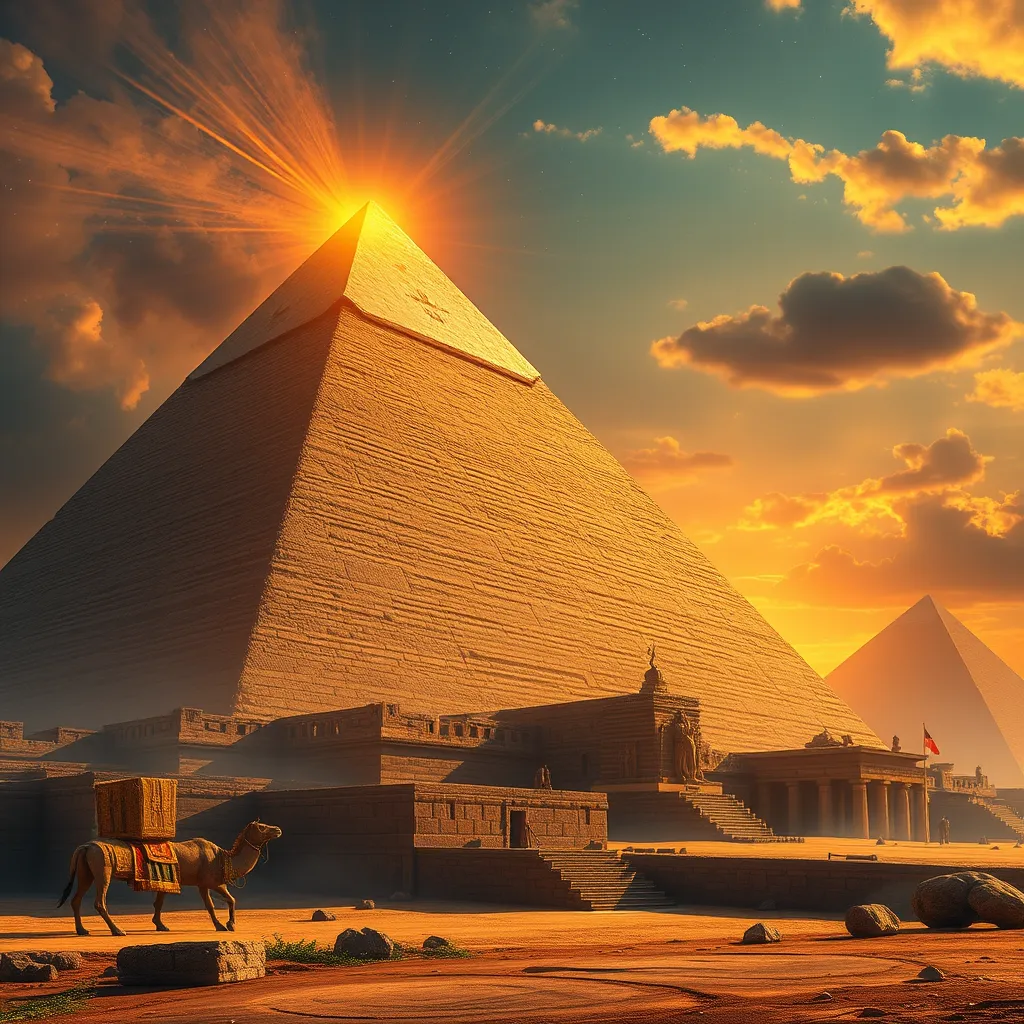
The Whispers of the Pyramids: Unveiling the Secrets of Egyptian Prophecy
I. Introduction
The Egyptian civilization, one of the oldest and most fascinating societies in human history, has captivated scholars and enthusiasts alike for centuries. Its monumental architecture, rich mythology, and profound contributions to art and science have left an indelible mark on the world.
Among its most iconic structures, the pyramids stand as a testament to the ingenuity and ambition of the ancient Egyptians. These colossal tombs not only served as final resting places for pharaohs but also as gateways to the afterlife, embodying the civilization’s deep spiritual beliefs.
This article aims to explore the prophecies associated with the pyramids, examining their historical significance, the rich tapestry of ancient beliefs, and the enduring impact of these structures on contemporary culture.
II. The Historical Significance of the Pyramids
The construction of the pyramids is a monumental achievement of engineering and artistry, showcasing the advanced skills of ancient Egyptian architects and laborers.
A. Overview of Pyramid Construction and Its Purpose
The pyramids were constructed primarily during the Old and Middle Kingdom periods of ancient Egypt, with the most famous being the Great Pyramid of Giza, built for Pharaoh Khufu. These structures were designed as elaborate tombs, reflecting the Egyptians’ belief in the afterlife.
B. The Role of the Pyramids in Ancient Egyptian Society
Pyramids served not only as burial sites but also as symbols of the pharaoh’s divine right to rule. They were central to the religious and political life of ancient Egypt, embodying the connection between the earthly realm and the divine.
C. Key Pyramids and Their Historical Figures
- Great Pyramid of Giza (Khufu): The largest and most famous pyramid, demonstrating the height of pyramid construction.
- Pyramid of Khafre: Known for its enigmatic Sphinx and slightly smaller than Khufu’s pyramid.
- Pyramid of Menkaure: The smallest of the three main pyramids at Giza, yet still a significant structure.
III. Ancient Egyptian Beliefs and Prophecy
To understand the connection between the pyramids and prophecy, one must delve into the spiritual and mystical beliefs of ancient Egyptians.
A. Understanding the Concept of Prophecy in Ancient Egypt
The ancient Egyptians viewed prophecy as a means of divine communication. Prophecies were often seen as messages from the gods, guiding the actions of pharaohs and the populace.
B. The Role of Priests and Oracles in Interpreting the Future
Priests played a crucial role in interpreting prophecies. They acted as intermediaries between the gods and the people, using rituals and oracles to discern future events.
C. Key Texts and Inscriptions Related to Prophecy
Important texts, such as the Pyramid Texts, contain spells and inscriptions that reflect the beliefs surrounding the afterlife and prophecy. These texts were inscribed within the pyramids, emphasizing their spiritual significance.
IV. The Symbolism of the Pyramids
The pyramids are rich in symbolism, reflecting both mathematical precision and spiritual beliefs.
A. Geometric and Astronomical Significance
The pyramids are aligned with incredible precision to the cardinal points and celestial bodies, suggesting a deep understanding of astronomy. Their geometric shapes symbolize the rays of the sun, connecting them to the sun god Ra.
B. The Pyramids as a Representation of the Afterlife and Divine Connection
Many believe that the pyramid’s shape represents the ascent of the soul towards the heavens. This connection to the divine is central to the ancient Egyptians’ understanding of life and death.
C. How Symbolism Relates to Prophecy
The symbolism embedded in the pyramids reinforces the prophetic messages of the ancient Egyptians, intertwining their beliefs about the afterlife with their understanding of fate and destiny.
V. Archaeological Discoveries and Insights
Archaeological research has shed light on the significance of the pyramids and their prophetic associations.
A. Recent Archaeological Findings Related to the Pyramids
Recent excavations have uncovered hidden chambers and artifacts that provide insights into the construction and purpose of the pyramids, including evidence of rituals performed to ensure a successful journey to the afterlife.
B. How Modern Science is Interpreting Ancient Prophecies
Modern science, through techniques like radiography and 3D scanning, is revealing the complexities of pyramid construction and the possible meanings behind ancient inscriptions, offering new interpretations of their prophetic significance.
C. Notable Researchers and Their Contributions to the Field
- Zahi Hawass: Renowned Egyptian archaeologist known for his extensive work on the Giza pyramids.
- Mark Lehner: An expert in ancient Egypt who has contributed significantly to the understanding of the pyramids’ construction and purpose.
- Salima Ikram: A leading Egyptologist specializing in mummification and ancient burial practices.
VI. The Connection Between Pyramids and Prophetic Events
The pyramids are often tied to significant historical events and prophetic narratives.
A. Historical Events Tied to Pyramid Prophecies
Many events in ancient Egyptian history were interpreted as fulfilling prophecies inscribed within the pyramids, influencing the actions of pharaohs and their decisions during crises.
B. Case Studies of Specific Prophecies and Their Outcomes
Some notable cases include the prophecies surrounding the reign of Pharaoh Tutankhamun and the interpretations of his untimely death, which were linked to omens and the pyramids’ spiritual significance.
C. Analyzing the Accuracy and Impact of These Prophecies
The accuracy of these prophecies is often debated, but their impact on society, politics, and culture is undeniable, shaping the course of Egyptian history.
VII. The Legacy of Egyptian Prophecy in Modern Culture
The fascination with Egyptian prophecy and the pyramids continues to resonate in contemporary culture.
A. The Influence of Egyptian Prophecy on Contemporary Literature and Art
Modern literature and art frequently draw inspiration from Egyptian mythology and prophetic themes, exploring concepts of fate, spirituality, and the afterlife.
B. How Modern Spiritual Movements Interpret Ancient Prophecies
Various spiritual movements seek to reinterpret ancient prophecies, often blending them with contemporary beliefs about spirituality and enlightenment.
C. The Ongoing Fascination with the Pyramids in Popular Culture
The pyramids remain a popular subject in films, documentaries, and media, symbolizing mystery and ancient wisdom that captivates audiences worldwide.
VIII. Conclusion
In summary, the pyramids of ancient Egypt are not merely architectural marvels; they are deeply intertwined with the civilization’s beliefs about prophecy, the afterlife, and the divine. Their historical significance, symbolic meaning, and the insights gained through archaeological discoveries continue to inspire fascination and inquiry.
Preserving the history and messages of these ancient structures is crucial for future generations to understand the complexities of human civilization and its enduring mysteries.
As we reflect on the whispers of the pyramids, we are reminded of the profound insights they offer into the human experience, bridging the past with the present and illuminating our understanding of destiny and divinity.