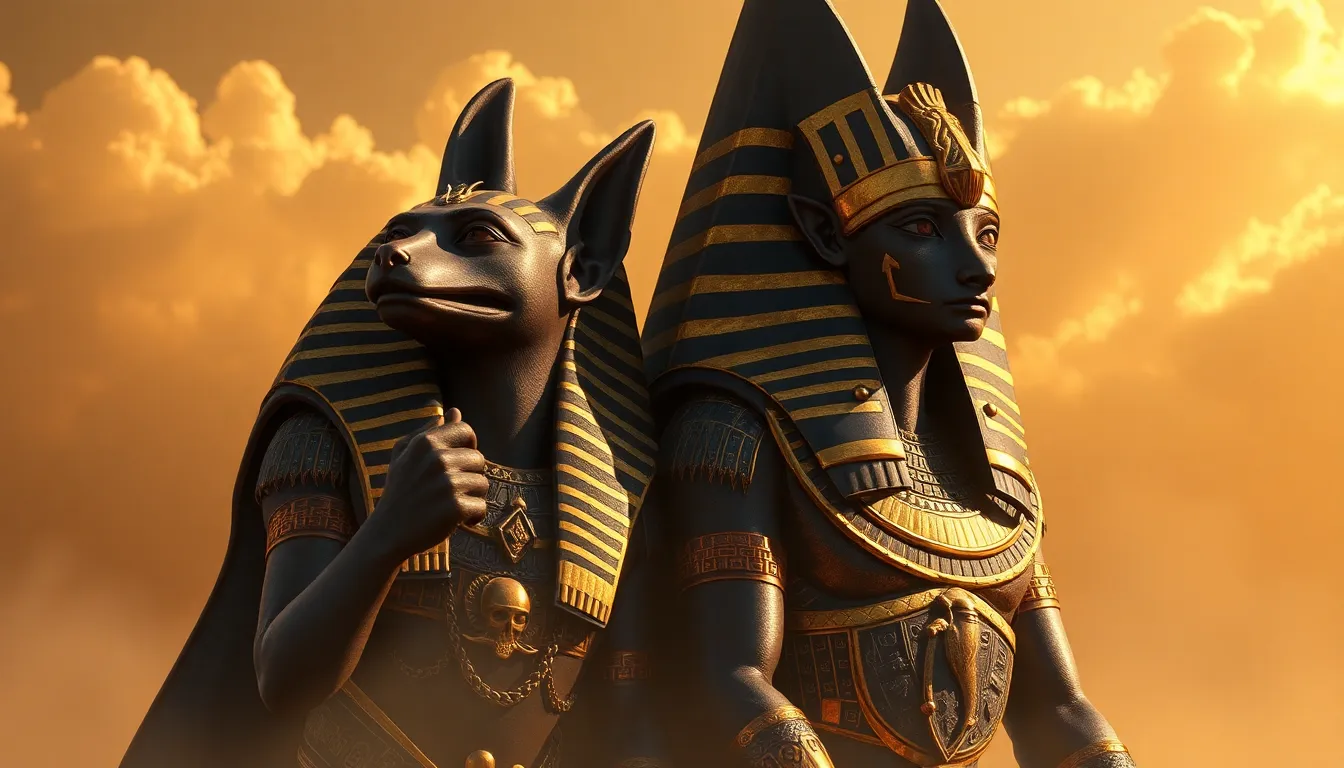
The Unbreakable Bond of Anubis and Osiris: Guardians of the Afterlife
I. Introduction to Egyptian Mythology
Ancient Egyptian mythology is rich with deities and narratives that explain the mysteries of life, death, and the afterlife. Among the most prominent figures in this pantheon are Anubis and Osiris, two gods whose roles are pivotal in the journey of souls after death.
The significance of the afterlife in Egyptian culture cannot be overstated. Egyptians believed that life continued after death, and the manner in which one lived determined their fate in the afterlife. This belief system shaped their rituals, tomb construction, and daily practices.
II. The Role of Anubis in the Afterlife
Anubis, depicted as a man with a jackal’s head, serves as the god of mummification and funerary rites. His primary role is to oversee the embalming process and ensure that the deceased are properly prepared for their journey into the afterlife.
- Anubis as the god of mummification: Anubis is central to the mummification process, which was believed to preserve the body for eternity. He is often depicted supervising the embalmers, ensuring that the rituals are performed correctly.
- Symbolism of the jackal: The jackal, a scavenger often found in cemeteries, symbolizes Anubis’s connection to death and the protection he offers to the dead.
- Guiding souls: Anubis is known as the guide of souls, leading them through the Duat (the Egyptian underworld) to their final judgment.
III. Osiris: The God of the Afterlife and Resurrection
Osiris is arguably one of the most important gods in Egyptian mythology. He represents the cycle of life, death, and rebirth. Osiris’s myth details how he was murdered by his brother Set and subsequently resurrected by his wife, Isis.
- Overview of Osiris’s myth: His narrative symbolizes the triumph over death and the promise of eternal life, making him a central figure in funerary practices.
- Symbol of rebirth: Osiris embodies the concept of resurrection, as he is often depicted as a green-skinned deity, symbolizing fertility and rebirth.
- Connection to nature: His story reflects the seasonal cycle, particularly the flooding of the Nile, which was essential for agricultural fertility.

IV. The Relationship Between Anubis and Osiris
The bond between Anubis and Osiris is deeply rooted in Egyptian mythology. Various myths highlight their complementary roles in the afterlife process.
- Mythological narratives: In many stories, Anubis is portrayed as a loyal servant to Osiris, assisting in his resurrection and guiding souls to him.
- Complementary roles: While Anubis oversees the mummification process, Osiris represents the final destination in the afterlife, where souls are judged and granted eternal life.
- Themes of loyalty: Their relationship exemplifies loyalty and guardianship, with Anubis protecting the deceased and Osiris offering them a chance at rebirth.
V. Rituals and Practices Involving Anubis and Osiris
Funerary practices in ancient Egypt were elaborate and deeply meaningful, involving both Anubis and Osiris in various rituals designed to ensure a safe passage to the afterlife.
- Funerary practices: These included mummification, offerings, and burial rites that honored both gods.
- The Weighing of the Heart ceremony: This crucial ritual involved weighing the heart of the deceased against the feather of Ma’at, representing truth and justice. Anubis played a key role in this judgment process.
- Importance of rituals: These practices were believed to secure the deceased’s safe passage and eventual acceptance by Osiris into the afterlife.
VI. Artistic Representations of Anubis and Osiris
The artistic representations of Anubis and Osiris are abundant in ancient Egyptian art, reflecting their significance and the cultural values surrounding death and the afterlife.
- Iconography and symbolism: Anubis is often shown as a black jackal or a man with a jackal’s head, while Osiris is depicted as a green-skinned figure wrapped in linen.
- Depictions in tombs and temples: Their images can be found in tomb paintings, statues, and carvings, illustrating their importance in funerary contexts.
- Influence on later cultures: Their representations have influenced artistic depictions of the afterlife in various cultures throughout history.
VII. Legacy of Anubis and Osiris in Modern Culture
The legacy of Anubis and Osiris extends beyond ancient Egypt, influencing contemporary culture in various ways.
- Influence on literature and media: Their stories have inspired countless works of fiction, film, and art, often exploring themes of life, death, and resurrection.
- Relevance in spiritual contexts: Some modern spiritual practices draw upon the mythology of Anubis and Osiris, emphasizing the importance of guidance in the afterlife.
- Popularity in modern interpretations: These deities remain popular figures in popular culture, often appearing in video games, novels, and movies that explore ancient mythology.
VIII. Conclusion: The Enduring Legacy of Anubis and Osiris
The bond between Anubis and Osiris represents a profound understanding of the afterlife in Egyptian mythology. Their roles as guardians of the dead and facilitators of resurrection illustrate the Egyptians’ deep reverence for life, death, and what lies beyond.
As we reflect on their enduring legacy, it is clear that the mythology surrounding Anubis and Osiris continues to impact our understanding of existential themes, reminding us of the unbreakable bond that transcends time and culture.