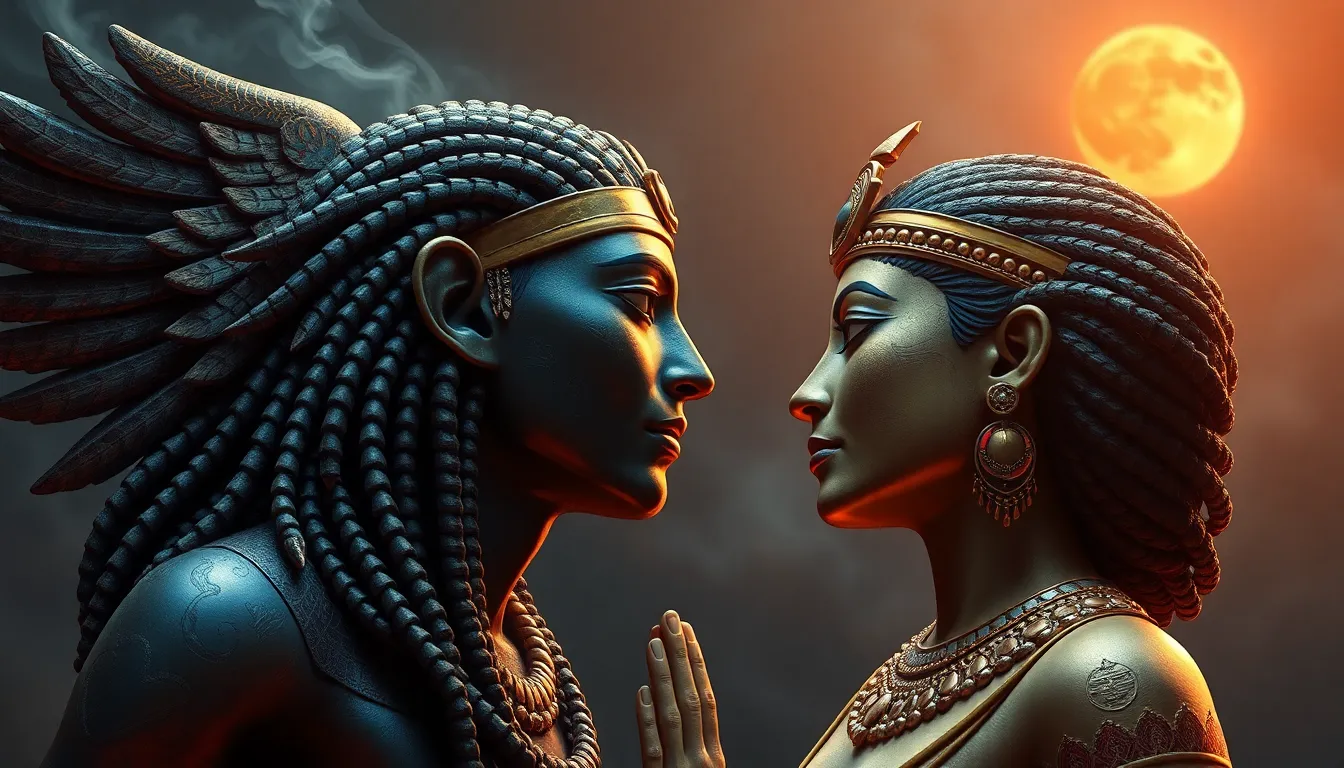
The Trials of Love: The Challenges Faced by Egyptian Deity Couples
I. Introduction
Egyptian mythology is a rich tapestry of stories, symbols, and deities that have captivated the imagination for millennia. It serves not only as a religious framework for ancient Egyptians but also as a reflection of their values, beliefs, and the human experience. Central to these myths are the relationships among the gods, particularly their expressions of love and the myriad challenges they face.
Love, in its various forms, plays a significant role in the narratives of Egyptian deities. From romantic to familial bonds, these relationships often mirror the complexities of human emotions and social dynamics. This article aims to explore the challenges faced by divine couples in Egyptian mythology, examining how their trials reflect universal themes of love and struggle.
II. The Nature of Love in Egyptian Mythology
In Egyptian mythology, love is portrayed in multiple dimensions, including:
- Romantic Love: The passionate and often tumultuous relationships between deities.
- Familial Love: Bonds between family members, highlighting loyalty and protection.
- Platonic Love: Friendships and alliances that transcend romantic interest.
The idealization of love among the gods often reflects the aspirations of humans, suggesting that divine love is pure, noble, and powerful. However, the interplay between love and power can complicate these relationships, as divine couples navigate not only their affections but also the responsibilities and rivalries that come with their positions.
III. The Divine Couples: A Brief Introduction
Several significant couples in Egyptian mythology exemplify the complexities of love and partnership:
- Osiris and Isis: The quintessential couple representing resurrection and fidelity.
- Hathor and Horus: A goddess of love and motherhood paired with a god of kingship and protection.
- Nut and Geb: The sky goddess and earth god whose love was fundamental to creation.
These couples not only play vital roles in the mythological narratives but also symbolize various aspects of life, death, and rebirth, embodying the essence of the cosmic order in ancient Egyptian culture.

IV. External Challenges: Interference from Other Deities
Divine relationships in Egyptian mythology are often fraught with external challenges, primarily stemming from the jealousy and rivalry among gods. Such conflicts can disrupt harmony and lead to strife among divine couples.
Examples of these challenges include:
- Set’s Jealousy: Set’s enmity towards Osiris and Isis leads to betrayal and conflict, showcasing how jealousy can poison even the strongest bonds.
- Ra’s Authority: As the sun god, Ra’s decisions and actions often have far-reaching implications for the relationships among other deities.
These divine politics create a backdrop of tension, highlighting how power struggles can impact love and loyalty.
V. Internal Challenges: Personal Struggles and Growth
Beyond external influences, divine couples face internal challenges that test their character and resolve. These struggles often lead to significant personal growth and transformation.
Key internal challenges include:
- Character Flaws: Deities are not immune to weaknesses—pride, anger, and insecurity can hinder their relationships.
- Trials of Betrayal: Instances of betrayal, such as Set’s actions against Osiris, force the affected deities to confront their vulnerabilities and evolve.
- Experiences of Loss: The death of Osiris and the subsequent resurrection by Isis exemplify how loss can lead to profound personal development.
These trials reflect the human experience of love, illustrating that growth often emerges from hardship.
VI. Symbolism of Love and Struggle in Egyptian Art and Literature
The challenges faced by divine couples are vividly represented in Egyptian art and literature. Artistic depictions in temples and tombs often illustrate the strength and vulnerability of these relationships.
Examples include:
- Hieroglyphics: Symbolic representations of love and struggle, depicting the relationships between gods.
- Myths and Stories: Narratives that recount the trials and tribulations of couples, such as the story of Osiris and Isis.
Such representations hold cultural significance, serving as reminders of the complexities of love and the enduring nature of these myths.
VII. Lessons from the Trials of Love
The trials faced by Egyptian deity couples offer valuable lessons for human relationships. Key takeaways include:
- Resilience: Love often requires overcoming significant obstacles, whether external or internal.
- Understanding Flaws: Acknowledging character flaws can lead to deeper connections and personal growth.
- Universality: The challenges of love are not confined to mythology; they resonate across cultures and time periods.
The enduring legacy of these love myths continues to inform our understanding of relationships today.
VIII. Conclusion
In summary, the trials faced by Egyptian deity couples illuminate the complexities of love in mythology. From external conflicts and divine rivalries to personal struggles and growth, these narratives reveal the multifaceted nature of love and its relevance in human experiences.
The importance of love in mythology transcends time, offering timeless insights into the human condition. As we explore the trials of love, we recognize that these stories remain relevant, teaching us about resilience, understanding, and the enduring power of connection.