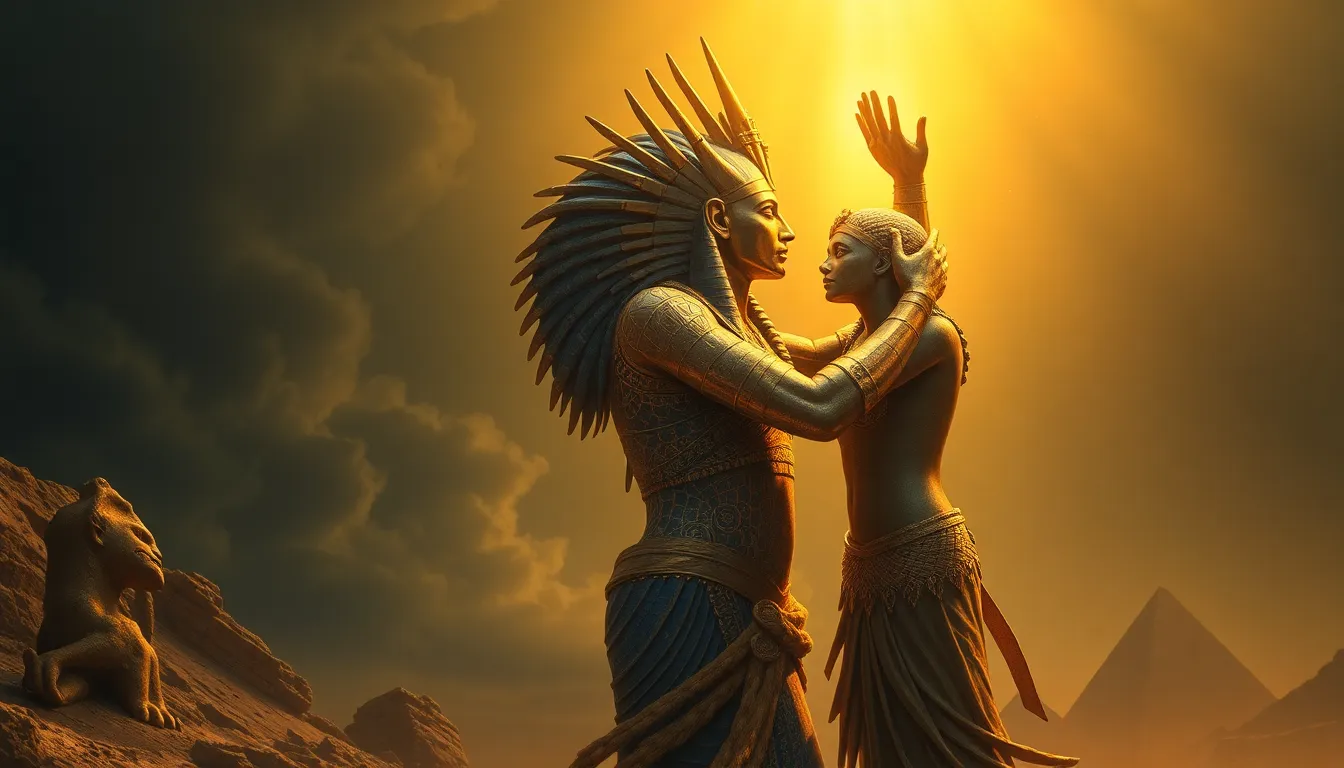
The Tragic Love of Osiris: A Story of Death and Resurrection
I. Introduction
Osiris, one of the most revered deities in ancient Egyptian mythology, embodies the themes of love, death, and resurrection. As the god of the afterlife, Osiris symbolizes the cycle of life and the hope for rebirth. His story, intertwined with that of his devoted wife Isis, paints a poignant picture of love transcending even death itself.
This article aims to delve into the tragic love story of Osiris and Isis, examining their profound connection and the implications of their myth within the broader context of Egyptian beliefs and customs.
II. The Characters of the Myth
A. Osiris: The God of the Afterlife
Osiris holds a significant position in Egyptian mythology as the god who governs the realm of the dead. He is often depicted as a mummified figure, symbolizing resurrection and eternal life.
- Role in Egyptian mythology: Osiris was considered the first king of Egypt, who brought civilization and agricultural practices to humanity.
- Symbolism of fertility and rebirth: He represents not only the afterlife but also the fertility of the land, as his resurrection is linked to the annual flooding of the Nile, which revitalizes the soil.
B. Isis: The Devoted Wife
Isis, the wife of Osiris, is revered as a powerful goddess of magic, motherhood, and fertility. Her love for Osiris is a central theme in their story.
- Her significance as a goddess: Isis is often depicted as a protective figure, embodying the ideal of marital devotion.
- The depth of her love for Osiris: Her relentless pursuit of Osiris after his death showcases her unwavering dedication and strength.
C. Set: The Antagonistic Brother
Set, the brother of Osiris, is known for his jealousy and ambition, which ultimately lead to his betrayal of Osiris.
- Set’s jealousy and ambition: Set is often associated with chaos and disorder, representing the darker aspects of nature.
- The role of Set in Osiris’s demise: His desire for power drives him to commit fratricide, setting off a chain of events that affect the entire world.
III. The Story of Osiris and Isis
A. The Beginning of Their Love
The tale of Osiris and Isis begins with their union, a symbol of love and harmony. Together, they ruled over Egypt, bringing civilization, agriculture, and prosperity to the land.
- Osiris and Isis’s union: Their love affair is celebrated in many myths, reflecting the deep bond between them.
- Their contributions to civilization: Osiris is credited with teaching agriculture, while Isis is associated with domesticity and healing.
B. Set’s Betrayal and Osiris’s Death
However, their idyllic reign is shattered by Set’s treachery. In a fit of jealousy, Set devises a cunning plan to eliminate Osiris.
- The plot devised by Set: Set tricks Osiris into a coffin, which he then throws into the Nile, leading to Osiris’s death.
- The impact of Osiris’s death: The world is plunged into chaos, and Isis is heartbroken, setting off on a desperate quest to find her husband.
IV. The Quest for Resurrection
A. Isis’s Journey to Find Osiris
Determined to resurrect her beloved Osiris, Isis embarks on a perilous journey filled with challenges and trials.
- Her determination and bravery: Despite the overwhelming grief, Isis’s love fuels her determination to find Osiris.
- The trials she faces: She encounters various obstacles, including hostile creatures and the wrath of Set, yet her resolve never wavers.
B. The Role of Anubis and Thoth
During her quest, Isis receives assistance from other deities, notably Anubis and Thoth, who guide her through the challenges of the afterlife.
- Guidance from other deities: Anubis, the god of mummification, and Thoth, the god of wisdom, play crucial roles in helping Isis navigate the complexities of death.
- The significance of rituals and magic: Isis employs powerful magic to revive Osiris, demonstrating the importance of rituals in Egyptian beliefs.
V. The Resurrection of Osiris
A. The Transformation into the God of the Underworld
Through her relentless efforts, Isis successfully resurrects Osiris, transforming him into the god of the underworld.
- How Osiris becomes a symbol of eternal life: His resurrection signifies hope and the promise of life after death.
- The establishment of his role in the afterlife: Osiris becomes the judge of the dead, a protector of souls seeking passage to the afterlife.
B. The significance of resurrection in Egyptian beliefs
Osiris’s resurrection represents a crucial aspect of Egyptian spirituality and philosophy.
- Osiris as a model for human resurrection: His story serves as an archetype for the belief in life after death, influencing burial practices and the concept of the afterlife.
- The connection to the annual flooding of the Nile: The cycle of rebirth in nature mirrors Osiris’s resurrection, reinforcing the agricultural significance of his myth.
VI. The Legacy of Osiris and Isis
A. Cultural Impact on Ancient Egypt
The love story of Osiris and Isis left an indelible mark on Egyptian culture, influencing religious practices and artistic expressions.
- Worship practices: Temples were built in their honor, and rituals dedicated to Osiris and Isis were widespread, emphasizing their roles in life and death.
- Artistic representations: Their love story has been depicted in various forms of art, from sculptures to paintings, capturing the essence of their bond.
In conclusion, the tragic love story of Osiris and Isis not only illustrates the profound depths of love and devotion but also encapsulates the core beliefs of ancient Egyptian society regarding death and resurrection. Their legacy continues to resonate, reminding us of the eternal cycle of life.