The Temples of Ancient Egypt: A Reflection of Power
I. Introduction
Ancient Egyptian civilization, known for its rich history and remarkable achievements, stands as a testament to human ingenuity and spirituality. The civilization thrived along the banks of the Nile, contributing to advancements in writing, architecture, and governance. Among its most significant structures are the temples, which served not only as places of worship but also as centers of political power and authority.
Temples played a crucial role in the societal and political landscape of Ancient Egypt, acting as hubs where the divine intersected with the earthly realm. They were places where the pharaohs sought favor from the gods and solidified their divine right to rule. This article explores how temples served as symbols of divine authority and political power throughout Ancient Egyptian history.
II. Historical Context of Egyptian Temples
The architectural evolution of Egyptian temples mirrors the development of the civilization itself, showcasing a journey from simple structures to grand edifices that dominated the landscape.
- Early Dynastic Period: The earliest temples were modest and primarily made of mudbrick. They were often dedicated to specific deities and served as places for offerings.
- Middle Kingdom: This period saw the introduction of more complex designs, including the use of stone and the addition of massive columns.
- New Kingdom: The height of temple architecture occurred during this era, characterized by monumental structures such as Karnak and Luxor.
- Ptolemaic Era: Temples built during this time reflected Greek influence while maintaining traditional Egyptian elements.
Key historical events, such as the unification of Upper and Lower Egypt and the establishment of the New Kingdom, significantly influenced temple construction. Major pharaohs like Ramses II and Hatshepsut dedicated vast resources to the building of temples, leaving a lasting impact on the landscape and the religious practices of the time.
III. Architectural Features of Egyptian Temples
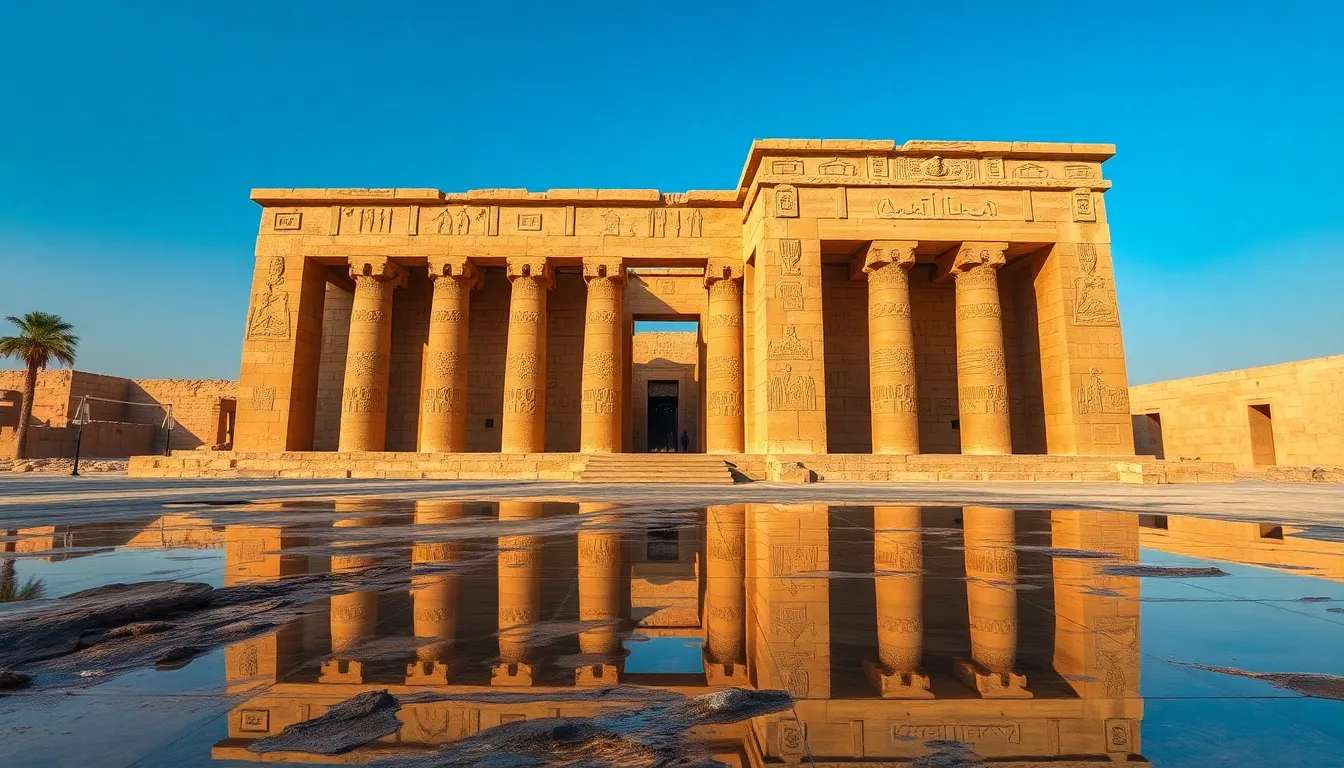
The design of Egyptian temples was not only functional but also imbued with deep symbolism. Typical temples followed a specific layout that included:
- Forecourt: An open area leading to the entrance, often adorned with massive statues.
- Hypostyle Hall: A grand hall filled with towering columns, symbolizing the support of the heavens.
- Sanctuary: The innermost chamber, housing the statue of the deity, accessible only to the high priests.
Symbolism in architectural features was paramount. For example:
- Columns: Often designed to resemble lotus and papyrus plants, symbolizing creation and rebirth.
- Obelisks: Tall, four-sided monuments that represented the sun’s rays and were often placed at temple entrances.
- Reliefs and Hieroglyphics: Walls adorned with detailed carvings depicted religious rituals and the pharaoh’s divine connection.
Notable temples like Karnak, Luxor, and Abu Simbel showcase these architectural features, each reflecting the grandeur and religious devotion of their time.
IV. Temples as Centers of Worship and Ritual
Temples were not merely places for the architecture to impress; they were vibrant centers of worship and community life. The priesthood played a vital role in temple activities, performing daily rituals to honor the gods and maintain cosmic order.
- Daily Rituals: Each day began with the opening of the temple doors, allowing the sunlight to reach the deity’s statue, symbolizing rebirth.
- Festivals: Major festivals, such as the Opet Festival, involved grand processions and public celebrations to honor the gods.
- Community Gathering: Temples served as educational centers where priests taught the community about religious practices and the importance of the gods.
V. Temples and Political Authority
The relationship between pharaohs and the gods was central to the political landscape of Ancient Egypt. Pharaohs were seen as divine beings, and temples served as instruments to solidify their power.
- Divine Right: Pharaohs constructed temples to showcase their devotion and establish their authority as intermediaries between the gods and the people.
- Propaganda: Temples often depicted the pharaoh’s victories and divine favor, reinforcing their power and legitimacy.
- Case Studies: Hatshepsut’s Mortuary Temple at Deir el-Bahari is an example of using temple architecture to promote her reign and divine connection.
VI. Economic Influence of Temples
Temples were significant economic centers that played a crucial role in the local and national economies of Ancient Egypt.
- Landholders: Temples owned vast tracts of land, cultivated for agriculture, which provided food for the priesthood and offerings to the deities.
- Trade Centers: Many temples facilitated trade, serving as hubs where goods were exchanged and distributed.
- Temple Economies: The wealth generated by temples contributed to the national treasury and supported construction projects and military campaigns.
VII. Legacy of Ancient Egyptian Temples
The influence of Ancient Egyptian temples extends far beyond their time, leaving an indelible mark on later cultures and religious practices.
- Cultural Influence: Ancient Egyptian architectural styles inspired later civilizations, including the Greeks and Romans.
- Archaeological Significance: Many temples remain well-preserved, providing insight into ancient religious practices and societal structures.
- Modern Interpretations: Today, ancient temples are celebrated as symbols of human creativity, drawing tourists and scholars alike.
VIII. Conclusion
In summary, the temples of Ancient Egypt were more than mere architectural marvels; they were essential to understanding the civilization’s religious beliefs, political structures, and economic systems. They served as reflections of the intertwined nature of religion and power, showcasing the divine authority of the pharaohs and their role in the spiritual life of the people.
The enduring legacy of these temples continues to resonate in contemporary society, reminding us of the profound intersection of architecture, religion, and political power in Ancient Egypt. As we explore these magnificent structures, we gain insight into the values and beliefs that shaped one of history’s most remarkable civilizations.