The Temple of the Divine King: Exploring the Abu Simbel Complex
I. Introduction
Abu Simbel, a site of breathtaking beauty and historical significance, is home to two massive rock temples that were built during the reign of Pharaoh Ramses II over 3,200 years ago. Located on the western bank of Lake Nasser in southern Egypt, these temples stand as a testament to the grandeur of ancient Egyptian civilization. The purpose of this article is to delve into the rich history, architectural brilliance, and cultural importance of the Abu Simbel complex, as well as its enduring legacy in modern times.
Abu Simbel is not only a remarkable architectural achievement but also a symbol of ancient Egypt’s power and religious devotion. Its strategic location and monumental scale reflect the might of Ramses II and the spiritual beliefs of the time.
II. Historical Context
The reign of Pharaoh Ramses II, also known as Ramses the Great, lasted from 1279 to 1213 BC and is often regarded as the apex of ancient Egyptian civilization. This period was characterized by remarkable achievements in art, architecture, and military prowess. Ramses II is particularly remembered for his extensive building projects, including temples, monuments, and cities that showcased Egypt’s wealth and power.
During this era, Egypt experienced a cultural renaissance and a consolidation of political power. The construction of the Abu Simbel temples was part of Ramses II’s campaign to immortalize his legacy and affirm his divine status as a ruler. The temples were constructed between 1264 and 1244 BC, strategically positioned to intimidate Egypt’s southern neighbors, particularly Nubia.
III. Architectural Marvels
The Abu Simbel complex consists of two main temples: the Great Temple of Ramses II and the Small Temple of Hathor, dedicated to the goddess Hathor and Ramses II’s favorite wife, Nefertari.
A. Description of the Great Temple of Ramses II
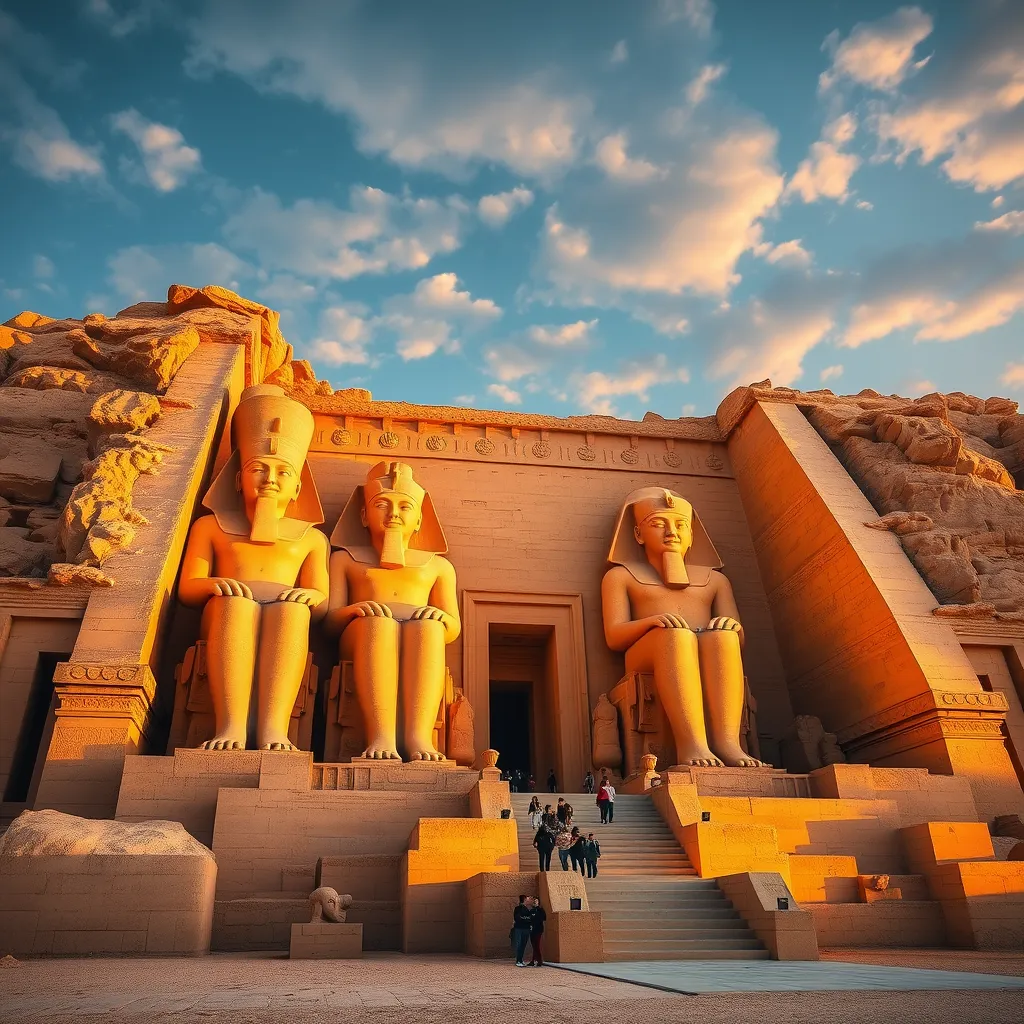
The Great Temple is a colossal structure, measuring 33 meters high and 38 meters wide, carved out of the sandstone cliffs. This temple is renowned for its monumental façade, which features four towering statues of Ramses II seated on a throne. Each statue is approximately 20 meters tall and symbolizes the king’s power and divine protection.
- Size and scale: The temple is a magnificent example of rock-cut architecture, designed to impress and instill awe.
- Iconic façade and statues: The grand entrance is flanked by three additional smaller statues, representing the king’s family, further highlighting Ramses’ divine lineage.
B. The Small Temple of Hathor
The Small Temple, while smaller in scale, is equally impressive in its artistry. It is dedicated to the goddess Hathor and features intricate carvings and reliefs that celebrate her nurturing and protective qualities.
- Architectural features: The temple features six columns with floral motifs, creating a serene and sacred atmosphere.
- Representation of Queen Nefertari: Nefertari is depicted alongside Hathor in several reliefs, showcasing the deep bond between the goddess and the queen.
IV. Symbolism and Artistry
The design of the Abu Simbel temples is rich in religious symbolism. The alignment of the temples is particularly noteworthy: twice a year, on February 22 and October 22, the sun illuminates the inner sanctum of the Great Temple, highlighting the statues of Ramses II, Amun, Ra-Horakhty, and Ptah.
The iconography and reliefs within the temples depict significant historical events and divine narratives, further asserting Ramses II’s role as a god-king. The artistry showcases the extraordinary skill of ancient Egyptian craftsmen and their deep understanding of religious themes.
The portrayal of Ramses II as a divine ruler is evident throughout the temple complex. By aligning himself with the gods and showcasing his victories, Ramses cemented his legacy as a powerful and revered leader.
V. The Relocation Project
In the 1960s, the construction of the Aswan High Dam posed a significant threat to the Abu Simbel temples, as rising waters threatened to submerge the site. In response, an international campaign led by UNESCO was launched to save this irreplaceable heritage.
- The threat of the Aswan High Dam: The dam was essential for Egypt’s development but endangered numerous archaeological sites.
- International efforts to save the temples: A global fundraising effort was initiated, garnering support from various nations and organizations.
- Details of the relocation process: The temples were meticulously dismantled and relocated to a higher plateau, a feat of engineering that was completed in 1968.
VI. Cultural Impact and Legacy
Today, Abu Simbel stands as a symbol of Egypt’s rich cultural heritage. It plays a vital role in contemporary Egyptian culture, drawing millions of visitors each year who marvel at its grandeur and historical significance.
The site is also an essential part of Egypt’s tourism industry, offering educational opportunities for visitors to learn about ancient civilization, art, and architecture. Furthermore, UNESCO’s designation of Abu Simbel as a World Heritage site ensures ongoing preservation efforts, safeguarding this incredible legacy for future generations.
VII. Visiting Abu Simbel
For those interested in experiencing the majesty of Abu Simbel, getting there involves a bit of planning. The nearest major city is Aswan, from where visitors can take organized tours or drive. Here are some tips for tourists:
- How to get there: Flights are available to Aswan, and from there, travelers can opt for a bus or boat ride to Abu Simbel.
- Tips for tourists: Arrive early to avoid crowds and take advantage of the cooler morning temperatures. Guided tours can enhance the experience by providing historical context.
- Attractions and experiences in the surrounding area: Explore Lake Nasser, visit the nearby temples of Philae, and experience the local culture in Aswan.
VIII. Conclusion
In conclusion, the Abu Simbel complex is a monumental testament to the grandeur of ancient Egypt and the enduring legacy of Pharaoh Ramses II. Its historical, architectural, and cultural significance make it a site of profound importance, not only for Egypt but for the world.
As we reflect on the magnificence of Abu Simbel, it is crucial to appreciate and protect such ancient heritage sites. They provide invaluable insights into our past and connect us to the stories of those who came before us, reminding us of the importance of preserving our shared history for future generations.