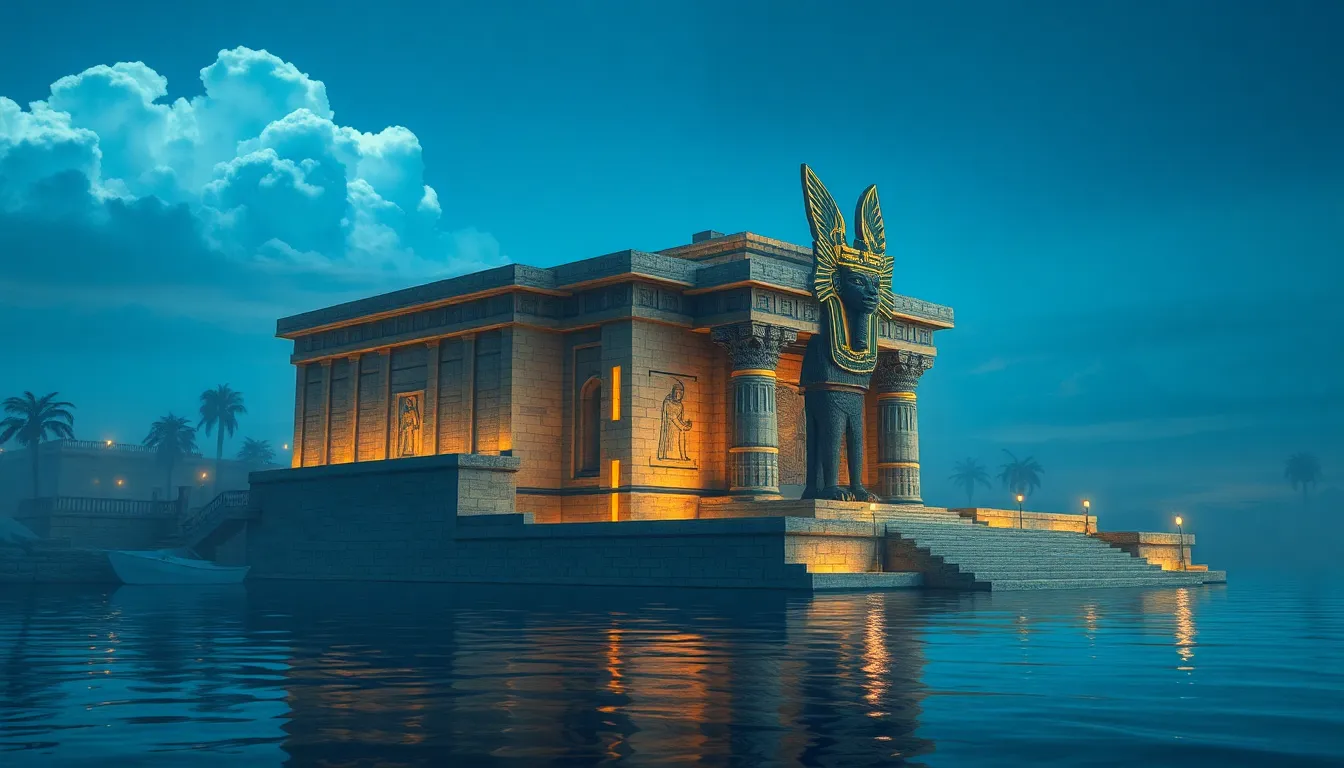
The Temple of Sobek: The Nile’s Sacred Guardian
I. Introduction
The Temple of Sobek, located in the ancient city of Crocodilopolis (modern-day Faiyum), is a remarkable testament to the religious and cultural significance of Sobek, the crocodile-headed god of ancient Egypt. This temple not only serves as a focal point for understanding the worship of Sobek but also highlights the intricate relationship between the ancient Egyptians and the life-giving Nile River.
Sobek was revered as a protector of the Nile, symbolizing fertility and the abundance of resources it provided. The temple’s strategic location along the banks of the Nile underscores its importance as a religious site and a center of agricultural prosperity.
II. Historical Context
The origins of the Temple of Sobek can be traced back to the Middle Kingdom of Egypt, around 2000 BCE, when the worship of Sobek became increasingly prominent. The temple underwent various phases of construction and renovation, particularly during the Ptolemaic period, when Greek influence permeated Egyptian culture.
Throughout its history, the temple played a crucial role in ancient Egyptian civilization as a site for worship, pilgrimage, and agricultural festivals. Its significance was not only religious but also socio-political, as it served to reinforce the authority of the ruling pharaohs through divine association with Sobek.
III. Architectural Features
The design and layout of the Temple of Sobek reflect the architectural prowess of ancient Egyptians. The temple complex includes:
- A grand entrance adorned with massive pylons.
- A hypostyle hall with intricately carved columns.
- Sanctuaries dedicated to Sobek and other deities.
Notable sculptures and inscriptions within the temple depict Sobek in various forms, often accompanied by other deities such as Hathor and Osiris. The use of limestone and sandstone in construction showcases the advanced building techniques employed by the ancient Egyptians.
IV. Sobek: The God and His Symbolism
Sobek is characterized by his unique attributes and representations. Often depicted with the head of a crocodile and the body of a man, he embodies the dual nature of creation and destruction. Sobek’s association with the Nile emphasizes his role as a god of fertility, as the river’s annual flooding brought nutrient-rich silt that supported agriculture.
Crocodiles were revered and feared in ancient Egypt. They represented both the dangers of the Nile and its life-sustaining qualities. The cultural significance of these creatures is evident in the various crocodile cults that arose, which often involved the mummification of crocodiles as offerings to Sobek.
V. Religious Practices and Rituals
The Temple of Sobek was the center of numerous religious practices and rituals. Major ceremonies included:
- The annual flooding festival, celebrating the life-giving waters of the Nile.
- Rituals to appease Sobek and ensure a bountiful harvest.
- Processions featuring sacred crocodiles, believed to be manifestations of the god.
Offerings and dedications to Sobek were integral to these rituals, often involving agricultural produce, incense, and livestock. The role of priests and priestesses was vital, as they conducted ceremonies, maintained the temple, and served as intermediaries between the divine and the worshippers.
VI. The Temple’s Role in the Community
The Temple of Sobek served as a significant center for pilgrimage, attracting worshippers from across Egypt. This influx of visitors had a profound economic impact on the surrounding area, promoting trade and commerce. Markets and workshops flourished, catering to the needs of pilgrims and tourists alike.
The temple also influenced local culture and identity, becoming a symbol of the community’s connection to the Nile and its deities. Festivals held at the temple fostered a sense of unity among the people, reinforcing their shared beliefs and traditions.
VII. Archaeological Discoveries
Recent excavations at the Temple of Sobek have uncovered a wealth of artifacts that provide insight into the worship practices and daily life of ancient Egyptians. Findings include:
- Statues and reliefs depicting Sobek and other deities.
- Tools and pottery used in religious rituals.
- Inscribed offerings and dedications from worshippers.
Ongoing research and preservation efforts aim to protect this vital archaeological site, ensuring that future generations can appreciate the rich history and cultural significance of the Temple of Sobek.
VIII. Conclusion
The enduring legacy of the Temple of Sobek is a testament to the ancient Egyptians’ reverence for the Nile and its deities. Today, the temple stands as an important site for modern Egyptology, attracting researchers and tourists alike who seek to understand the complexities of ancient beliefs.
As we reflect on the importance of preserving ancient heritage, the Temple of Sobek serves as a reminder of the deep connections between culture, religion, and the natural world. Its continued exploration and conservation will ensure that the stories of Sobek and the people who worshipped him live on for generations to come.