The Temple of Anubis: Guardian of the Underworld
I. Introduction
Anubis, the ancient Egyptian god, is widely recognized as the guardian of the underworld and the protector of the dead. His role was crucial in guiding souls through the afterlife, ensuring a safe passage and a favorable judgment before Osiris, the god of the afterlife. The Temple of Anubis held immense importance in ancient Egyptian religion, serving as a site for rituals and ceremonies that honored this enigmatic deity. This article aims to explore the historical context, architectural features, rituals, and lasting legacy of the Temple of Anubis, providing a comprehensive overview of its significance in Egyptian mythology.
II. Historical Context of Anubis
The origins of Anubis can be traced back to the earliest periods of ancient Egyptian religion, where he was depicted as a jackal or a man with a jackal head. He was primarily associated with mummification and the afterlife, symbolizing the protection of the deceased. Over time, Anubis’ role evolved; he transitioned from a funerary deity to a more complex figure representing the balance between life and death.
Anubis was culturally significant, as he was believed to oversee the embalming process and the rituals associated with death. Worship practices included:
- Offerings of food and incense at his shrines.
- Recitations of prayers and hymns dedicated to him.
- Festivals celebrating his role in the afterlife.
III. Architectural Features of the Temple
The Temple of Anubis was designed with a layout that reflected its sacred purpose. It typically featured:
- Forecourt: An open area for public ceremonies.
- Inner Sanctuary: The most sacred space, often containing a statue of Anubis.
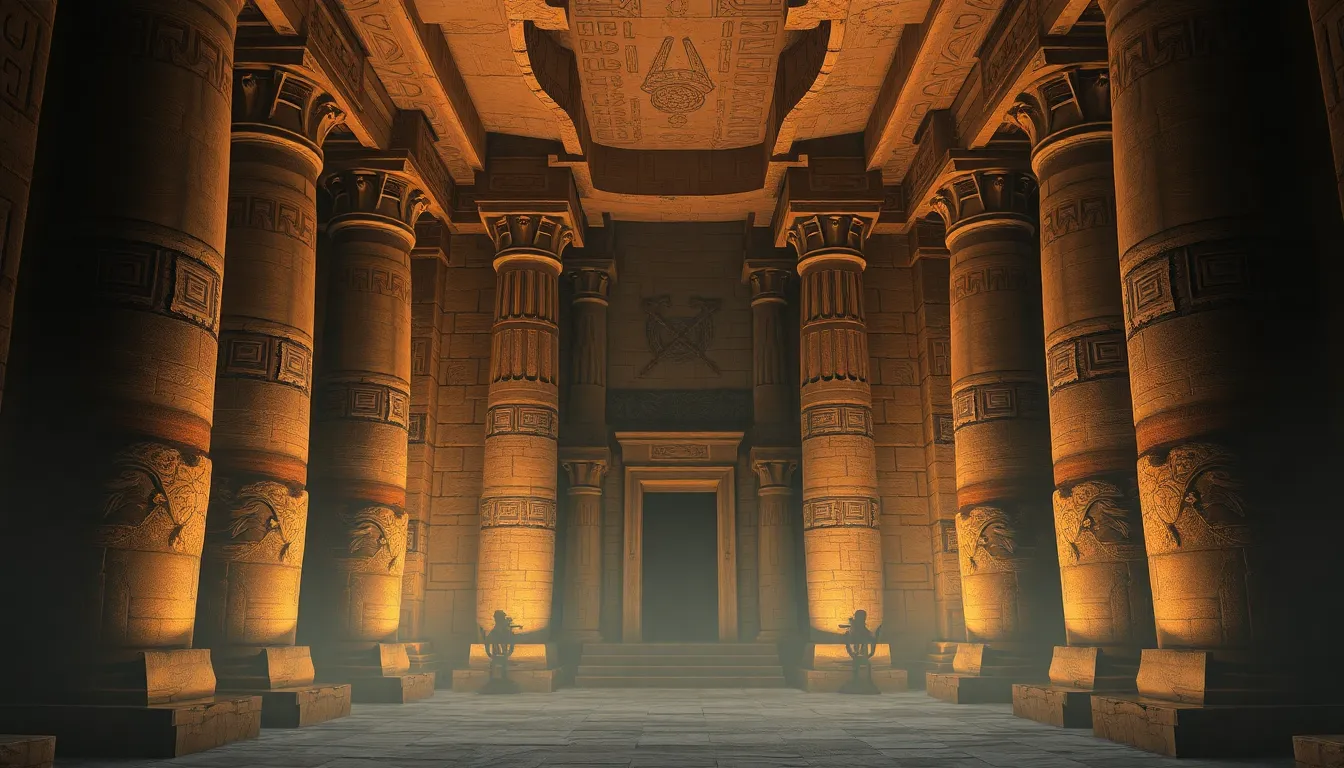
- Hypostyle Hall: A grand hall filled with columns, symbolizing the support of the heavens.
Symbolism was prevalent in the architectural elements. For instance, the jackal motifs represented Anubis’ connection to the dead, while the use of black stone symbolized fertility and rebirth, reflecting the cycle of life and death.
When comparing the Temple of Anubis to other temples dedicated to deities like Osiris or Isis, it becomes evident that Anubis’ temple was uniquely focused on the funerary aspects, highlighting his role as a guide in the afterlife.
IV. The Role of Anubis as the Guardian of the Underworld
Mythologically, Anubis plays a vital role in several narratives surrounding the afterlife. One of the most significant myths involves his assistance to the deceased during the Judgment of the Dead, where he weighed the heart of the deceased against the feather of Ma’at, the goddess of truth and justice.
His duties included:
- Preparing the body for burial through mummification.
- Guiding souls through the Duat, or underworld.
- Protecting the dead from malevolent spirits.
Anubis is often depicted in ancient art and literature as a black jackal or a man with a jackal head, symbolizing his connection to the earth and the afterlife. These visual representations reinforce his dual nature as both a protector and a guide.
V. Rituals and Practices at the Temple
The Temple of Anubis was a hub of various ceremonies dedicated to the god. Among these rituals were:
- Funerary Rites: Essential for ensuring a safe passage for the deceased.
- Mummification Practices: Rituals performed by priests to preserve the body.
- Annual Festivals: Celebrations held to honor Anubis and seek his protection.
Priests and priestesses played a pivotal role in these activities, often donning specific garments and performing elaborate rituals to invoke Anubis’ blessings. Their responsibilities included:
- Conducting ceremonies and offerings at the temple.
- Overseeing the mummification process.
- Reciting prayers and spells to ensure the safety of the deceased.
VI. Archaeological Discoveries and Findings
Major excavations of the Temple of Anubis have uncovered a wealth of artifacts and structures that provide insight into ancient Egyptian beliefs. Significant findings include:
- Statues of Anubis: Many depictions showcasing his role as a protector.
- Funerary Items: Objects buried with the dead to accompany them in the afterlife.
- Inscribed Texts: Hieroglyphics detailing rituals and prayers dedicated to Anubis.
These discoveries have contributed greatly to our understanding of ancient Egyptian religion, revealing the intricate beliefs surrounding death and the afterlife.
VII. The Legacy of Anubis and His Temple
Anubis continues to influence modern interpretations of the afterlife, often being depicted in literature, films, and art as a symbol of death and guardianship. His portrayal in contemporary culture reflects the enduring fascination with ancient Egyptian mythology.
Efforts to preserve and conserve the Temple of Anubis are ongoing, as archaeologists and historians strive to maintain this crucial site for future generations. The temple serves as a reminder of the complex beliefs that shaped ancient Egyptian society and their perceptions of life and death.
VIII. Conclusion
In summary, Anubis holds a significant place in Egyptian mythology as the guardian of the underworld, with the Temple of Anubis serving as a central site for worship and rituals. The architectural grandeur and the rich historical context surrounding the temple highlight its importance in ancient Egyptian culture.
The continuing fascination with Anubis and his temple reflects humanity’s enduring curiosity about the afterlife and the lessons imparted by the guardianship of the underworld. Anubis teaches us about the importance of honoring our dead and the belief in a journey beyond this life.