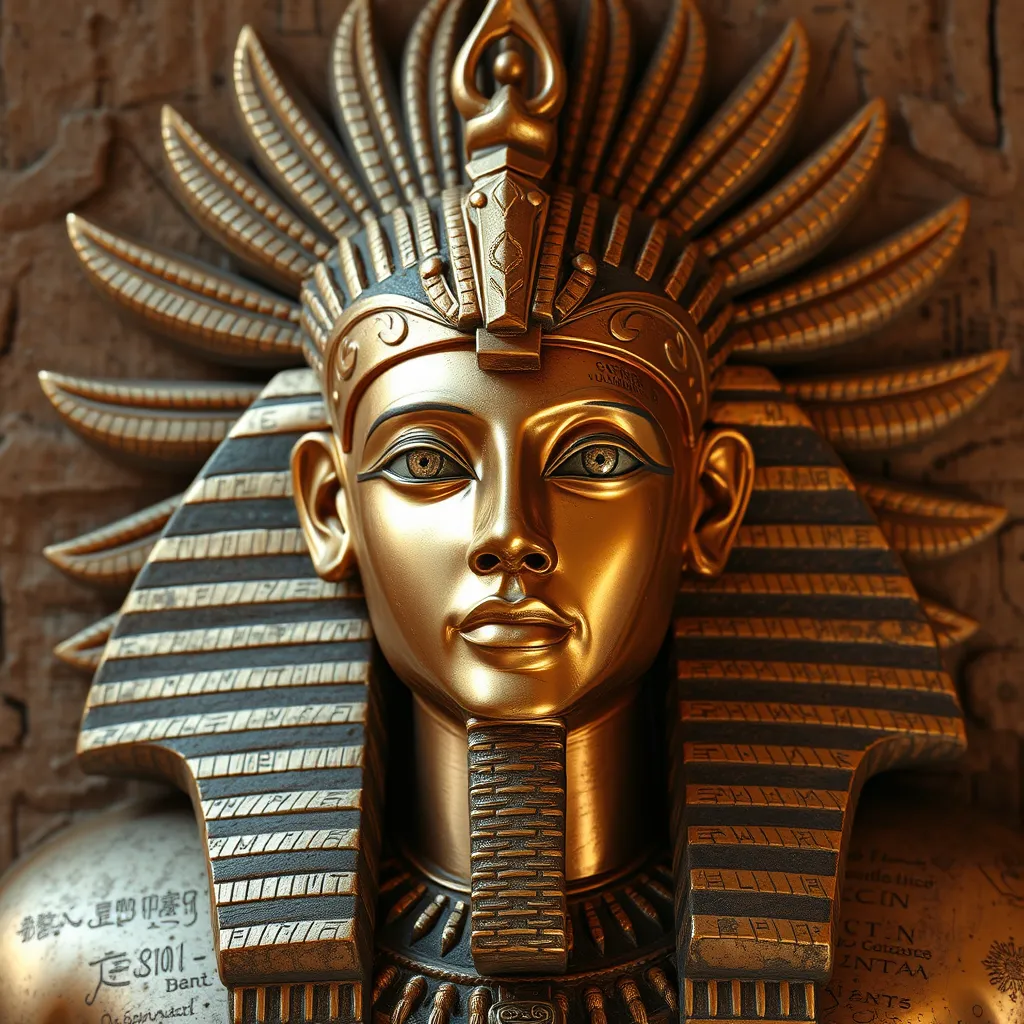
The Sun King’s Legacy: The Lasting Impact of Ancient Egyptian Culture
I. Introduction
The Sun King, a title often associated with the powerful pharaohs of Ancient Egypt, particularly in reference to Akhenaten, represents a pivotal figure in the rich tapestry of Egyptian history. His reign showcased the grandeur of Ancient Egyptian civilization, which has fascinated historians, archaeologists, and the general public for centuries.
Ancient Egyptian culture is renowned for its monumental architecture, complex religious beliefs, and significant contributions to art and literature. Understanding this legacy allows us to appreciate not just the achievements of the past but also their influence on modern societies.
This article will explore the various aspects of the Sun King’s reign and the enduring legacy of Ancient Egyptian culture, examining its historical context, architectural innovations, religious practices, artistic contributions, governance, and literary advancements.
II. The Historical Context of the Sun King
The term “Sun King” can refer to various rulers, but in the context of Ancient Egypt, it is often linked to the pharaoh Akhenaten, known for his radical shift towards monotheism and his worship of the sun deity Aten. His reign lasted from around 1353 to 1336 BCE, during the 18th Dynasty of the New Kingdom.
Ancient Egyptian civilization dates back over 5,000 years, renowned for its incredible contributions to human culture, including the development of writing, advancements in mathematics, and profound architectural achievements. Key achievements during the Sun King’s reign include:
- Establishment of a new religious order centered around Aten.
- Construction of the city of Akhetaten (modern-day Amarna), a center for worship and administration.
- Promotion of artistic styles that deviated from traditional representations.
III. Architectural Marvels and Innovations
One of the most remarkable aspects of Ancient Egyptian culture is its architecture, characterized by grand structures that have stood the test of time. The construction of temples, pyramids, and tombs served both religious and political purposes.
During the Sun King’s reign, significant architectural innovations included:
- The construction of the Temple of Aten in Akhetaten, which featured open-air worship spaces.
- Innovations in the design and layout of urban spaces, emphasizing light and openness.
The influence of Egyptian architecture has permeated through the ages, inspiring various civilizations, including the Greeks and Romans. Today, the preservation and restoration of ancient sites continue to provide insights into the ingenuity of ancient builders and their societal values.
IV. Religious Beliefs and Practices
Ancient Egyptian religion was a complex system of beliefs involving numerous gods and goddesses, rituals, and the afterlife. The Sun King played a pivotal role in shaping these beliefs, particularly through the promotion of Aten as the sole deity.
The key elements of Ancient Egyptian religious practices included:
- Worship of a pantheon of gods, with a focus on the sun god Ra.
- Elaborate burial practices reflecting beliefs in the afterlife.
- Rituals and festivals celebrating the gods and the cycles of nature.
The lasting influence of Egyptian beliefs has permeated through various contemporary religions, demonstrating the foundational role that these ancient practices played in shaping spiritual thought.
V. Art and Aesthetics
Ancient Egyptian art is characterized by its distinct style, which maintained consistency over millennia. Key characteristics include:
- Symbolism and use of color to convey meaning.
- Hierarchical proportions, where the size of figures indicated their social status.
- Focus on themes of life, death, and the afterlife.
The Sun King’s reign marked a departure from traditional artistic conventions, introducing more naturalistic representations and new forms of expression. This shift has inspired countless modern artists, who draw upon these ancient styles to create contemporary works.
VI. Governance and Society
The political structure of Ancient Egypt was highly centralized, with the pharaoh at its apex. The Sun King, as a divine ruler, shaped the governance and social hierarchies of his time. His policies included:
- Centralization of power and the establishment of Akhetaten as the capital.
- Reforms that aimed to diminish the power of the priesthood of Amun.
- Promotion of trade and diplomacy with neighboring regions.
The influence of Egyptian governance is evident in modern political systems, where the concept of a centralized authority with divine or semi-divine status can still be observed.
VII. Language and Literature
The development of hieroglyphics was one of Ancient Egypt’s most significant contributions to human civilization. This writing system facilitated the documentation of religious texts, administrative records, and literary works. Key literary contributions include:
- The Pyramid Texts, which detail rituals and beliefs about the afterlife.
- The Story of Sinuhe, an early example of narrative literature.
The impact of Egyptian literature on subsequent cultures is profound, influencing Greek and Roman writers and contributing to the evolution of storytelling and literary forms.
VIII. Conclusion
The Sun King’s reign marked a transformative period in Ancient Egyptian culture, characterized by religious innovation, architectural achievements, and artistic expression. His impact is still felt today, as the legacies of Ancient Egypt continue to shape various aspects of modern life.
Reflecting on the enduring legacy of Ancient Egypt highlights the importance of preserving cultural heritage, as it enriches our understanding of human history and the interconnectedness of civilizations.
In conclusion, the Sun King’s era serves as a reminder that the past is not merely a series of events but a foundation upon which contemporary societies are built. By valuing and preserving this heritage, we ensure that the stories of our ancestors continue to inspire future generations.