The Starry Nile: Myths Connecting Water and the Cosmos
I. Introduction
The Nile River, often referred to as the lifeblood of ancient Egypt, has held profound significance in the hearts and minds of its people. Flowing through a vast desert landscape, the Nile provided a unique contrast, showcasing the power of water in a predominantly arid environment. Its annual floods not only nurtured the land but also shaped the cultural and religious practices of the Egyptians.
In ancient Egyptian mythology, water is frequently linked to celestial themes, making the Nile a focal point of connection between Earth and the cosmos. This article aims to explore the intertwining of water and celestial myths in ancient Egypt, delving into the various aspects that highlight the Nile’s importance in both life and the afterlife.
II. The Nile as a Life Source
The historical importance of the Nile River cannot be overstated. It was essential for:
- Agriculture: The annual flooding of the Nile deposited nutrient-rich silt along its banks, creating fertile land ideal for growing crops.
- Transportation: The river served as a vital trade route, facilitating the movement of goods and people.
- Settlement: Many of Egypt’s greatest cities were established along the Nile, capitalizing on its resources.
In mythology, water symbolizes life and fertility. The Egyptians believed that the Nile was a divine gift, a manifestation of the god Hapi, who represented the fertility of the land. The river’s ability to sustain life made it a central element in their cosmological views, reinforcing the connection between nature and divinity.
III. The Celestial Nile: Stars and Constellations
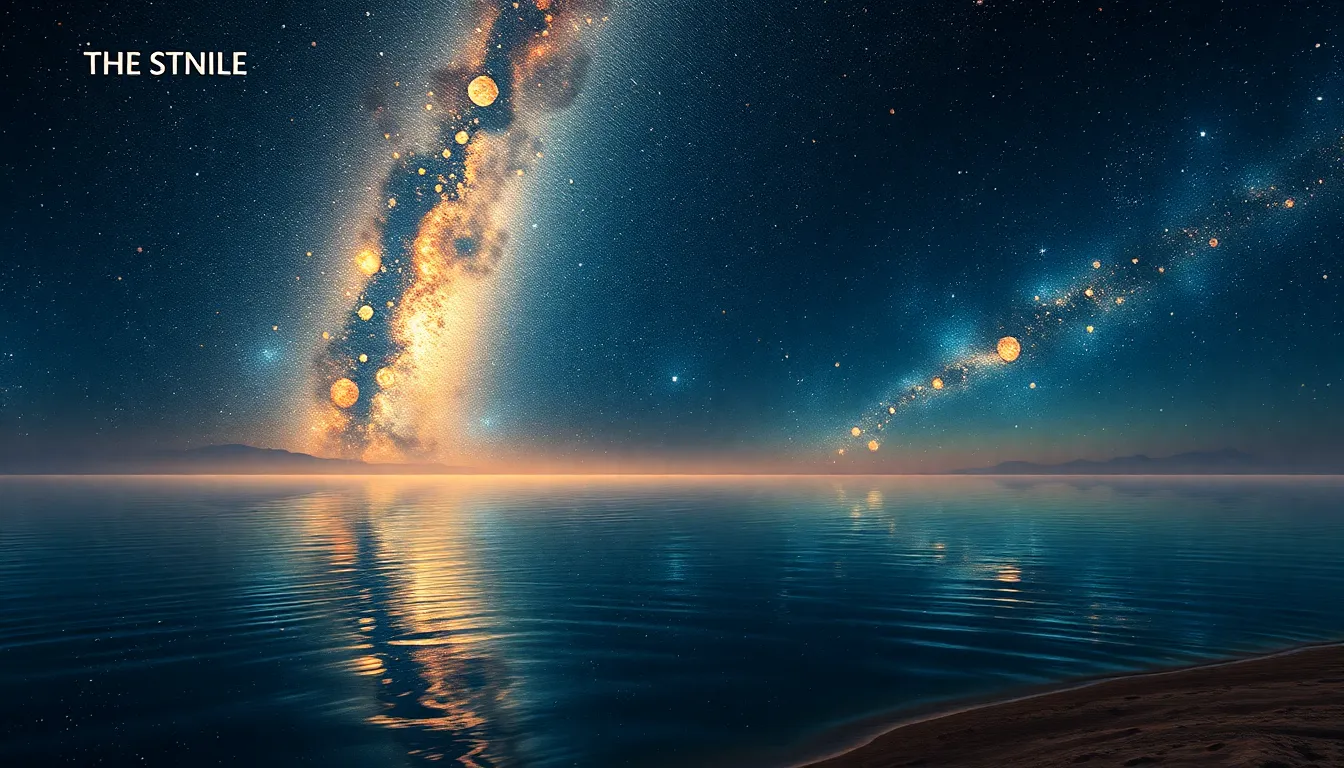
The connection between the Nile and the cosmos is also evident in the star constellations that were revered by the Egyptians. The Milky Way was often seen as a celestial reflection of the Nile, an ethereal river flowing across the night sky. This connection was significant for several reasons:
- The Milky Way was thought to be the pathway to the afterlife, linking the souls of the deceased with the divine.
- Constellations like Orion were associated with Osiris, the god of the afterlife, reinforcing the relationship between celestial bodies and the Nile.
Myths surrounding these celestial connections often depicted the Nile as a bridge between the earthly realm and the heavens, emphasizing the importance of both water and stars in Egyptian belief systems.
IV. Deities of Water and the Cosmos
Key deities associated with water in Egyptian mythology include:
- Hathor: Goddess of love and joy, often linked to the Nile as a source of nourishment and fertility.
- Sobek: The crocodile god representing the Nile’s strength and ferocity, embodying both the destructive and life-giving aspects of water.
These deities had celestial counterparts as well. For example, Hathor was often associated with the Milky Way, while Sobek was linked to the stars that governed the Nile’s flooding cycles. Myths that illustrated their relationships with the Nile often highlighted the dual nature of water—its ability to provide life while also holding the potential for chaos and destruction.
V. The Flooding of the Nile and Cosmic Cycles
One of the most significant astronomical events in ancient Egypt was the annual inundation of the Nile, which occurred during the summer months. This flooding was not only crucial for agriculture but also held deep cosmic significance:
- The flooding was synchronized with the heliacal rising of Sirius, the brightest star in the sky, marking the start of the Egyptian New Year.
- Myths often explained this relationship, portraying Sirius as the goddess Isis, whose tears for her deceased husband Osiris caused the Nile to rise.
Cultural rituals and festivals celebrated the inundation, emphasizing the connection between the cyclical nature of the Nile and the cosmic order. These events reinforced the belief that the heavens and earth were inextricably linked, with the Nile acting as a conduit between the two.
VI. The Nile and Afterlife Beliefs
The Nile also played a vital role in Egyptian beliefs about the afterlife. It was considered a pathway for the souls of the dead, leading them to the afterworld. The connections between water, rebirth, and the cosmos are evident in various myths:
- The river was thought to cleanse the souls of the deceased, preparing them for their journey to the stars.
- The concept of rebirth was symbolized by the rising waters of the Nile, paralleling the cycle of life, death, and resurrection.
In this way, the Nile became a symbol of immortality, connecting the living with their ancestors and the divine. The river’s flow mirrored the eternal cycle of the cosmos, reinforcing the belief that life continues beyond the physical realm.
VII. Contemporary Interpretations and Cultural Legacy
Today, the myths of the Nile continue to inspire modern culture. Artists, writers, and filmmakers often draw upon the rich imagery and themes associated with the river and its celestial connections. Examples include:
- Literary works that explore the themes of life, death, and rebirth in the context of the Nile’s enduring presence.
- Artistic interpretations of the Nile as both a physical and spiritual entity, often incorporating celestial motifs.
The influence of these ancient myths persists, reminding contemporary society of the importance of nature and the cosmos in shaping human experience. The Nile remains a symbol of cultural identity and historical legacy, bridging the past with the present.
VIII. Conclusion
In summary, the myths surrounding the Nile River illustrate a profound connection between water and the cosmos that permeated ancient Egyptian culture. From its role as a life source to its celestial associations, the Nile was integral to the Egyptians’ understanding of their world and their place within it.
These enduring themes reflect the universal human experience of seeking meaning in the natural world, highlighting the importance of preserving such myths in cultural memory. The connection between the Nile and the cosmos serves as a reminder of the intricate relationships between life, death, and the universe, inviting us to reflect on our own connections to these timeless elements.