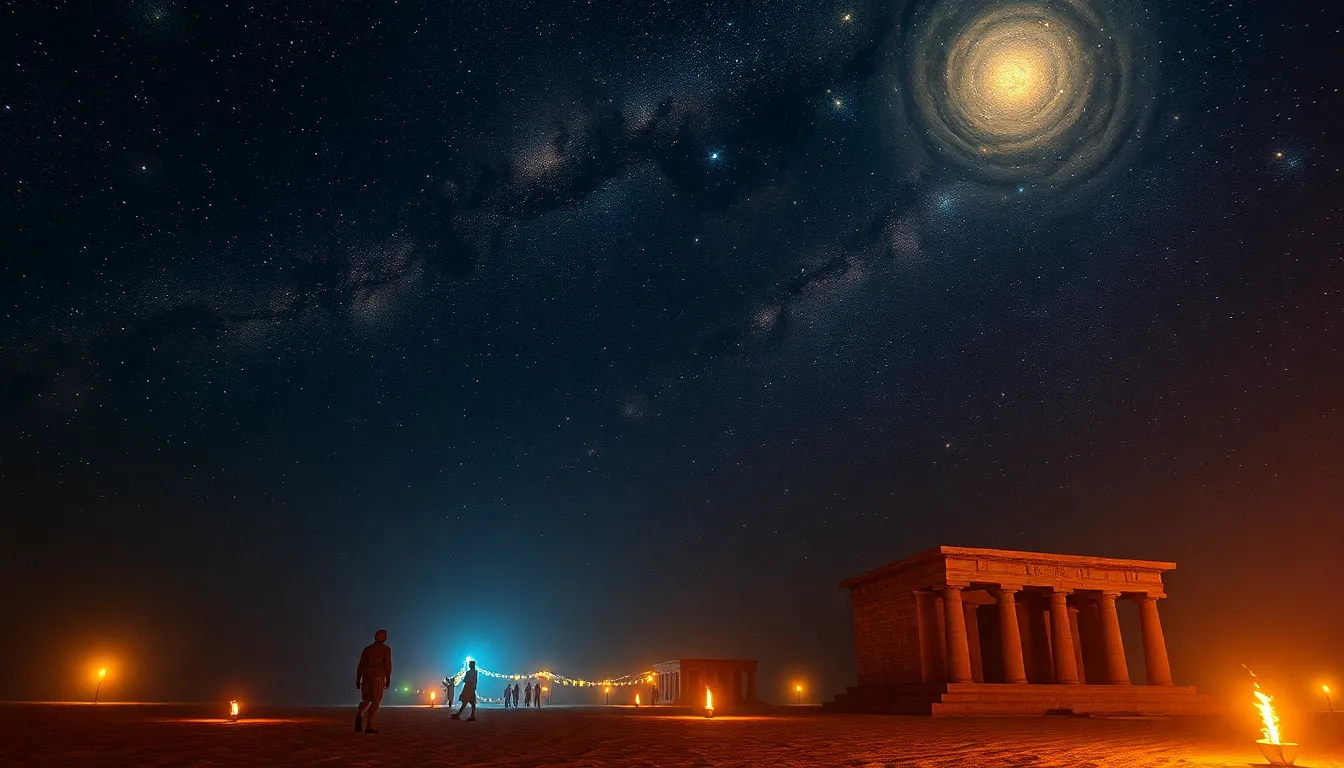
The Starry Night: Egyptian Festivals Celebrating the Cosmos
I. Introduction
The ancient Egyptians had a profound reverence for the cosmos, viewing the heavens not just as a backdrop to their daily lives but as a vital component of their spiritual and cultural identity. The stars, planets, and celestial phenomena shaped their understanding of time, agriculture, and the divine. This article explores the significant festivals that celebrated celestial events, revealing how these moments were interwoven with the fabric of ancient Egyptian life.
II. The Role of Astronomy in Ancient Egypt
A. Understanding the sky: The influence of celestial bodies on Egyptian life
Astronomy played a crucial role in ancient Egyptian society. The Egyptians were keen observers of the night sky, and they developed a calendar based on the lunar and solar cycles, which was essential for agricultural planning. The heliacal rising of the star Sirius, for instance, marked the beginning of the Nile’s inundation, a vital period for crop cultivation.
B. Key astronomical concepts and their significance in Egyptian mythology
Several astronomical concepts were pivotal in Egyptian mythology:
- Nut: The goddess of the sky, often depicted as a woman arching over the earth.
- Ra: The sun god, symbolizing life, warmth, and growth.
- Osiris: The god of the afterlife, associated with the cycle of life and death, often linked to the movement of stars.
III. Major Egyptian Festivals Linked to Celestial Events
A. The Opet Festival: A Celebration of the Nile and the Stars
1. Historical background and significance
The Opet Festival was one of the most significant celebrations in ancient Egypt, held annually in Thebes (modern-day Luxor). It celebrated the fertility of the Nile and the connection between the gods and the pharaoh. This festival was particularly associated with the god Amun, whose celestial form was closely linked to the sun and the stars.
2. Activities and rituals associated with the festival
During the Opet Festival, the following activities took place:
- Processions of the sacred barque of Amun along the Nile.
- Rituals conducted by priests to invoke the blessings of the gods.
- Feasting, music, and dancing to honor the deities.
- Offerings made to the gods under the starry sky.
B. The Wepet-Renpet Festival: New Year’s Celebration and the Cosmos
1. Origins and importance of the New Year festival
The Wepet-Renpet festival marked the Egyptian New Year, coinciding with the flooding of the Nile and the heliacal rising of Sirius. This event symbolized rebirth and renewal, providing a time for reflection and celebration.
2. Celestial alignments celebrated during this festival
During Wepet-Renpet, the Egyptians celebrated:
- The alignment of the Nile’s flooding with the rising of Sirius.
- The transition of the solar year, marking a new cycle of life and growth.
IV. The Importance of the Nile in Celestial Festivals
A. The connection between the Nile River and the cosmos
The Nile River was not just a source of life for the Egyptians; it was also viewed as a divine entity. The river’s annual flooding was closely linked to celestial events, and its waters were seen as a reflection of the heavens.
B. How the river’s flooding seasons aligned with astronomical events
The flooding of the Nile typically occurred around July, coinciding with the heliacal rising of Sirius. This alignment reinforced the Egyptians’ belief in the interconnectedness of the earth and the cosmos, influencing their agricultural practices and spiritual outlook.
V. Deities and Celestial Bodies in Egyptian Festivals
A. Key deities representing celestial phenomena (e.g., Nut, Ra)
Many Egyptian deities were directly associated with celestial bodies:
- Nut: The sky goddess, often depicted with stars covering her body.
- Ra: The sun god, whose journey across the sky was celebrated daily.
- Horus: The sky god represented by the falcon, linked with the sun and the stars.
B. Myths and stories that intertwine deities with the cosmos during festivals
Festivals often included retellings of myths that illustrated the relationships between these deities and the cosmos, emphasizing themes of creation, rebirth, and the cycle of life.
VI. Rituals and Observances During Cosmic Celebrations
A. Traditional practices performed under the stars
During cosmic celebrations, the Egyptians engaged in various traditional practices:
- Stargazing to track celestial movements.
- Offering prayers and sacrifices to the gods.
- Creating altars and shrines under the open sky.
B. The role of music, dance, and art in honoring the cosmos
Music and dance were integral to these festivals, with performers often dressed in celestial motifs. Artisans created beautiful artworks depicting the gods and stars, reinforcing the cultural connection to the cosmos.
VII. Modern Interpretations and Revivals of Ancient Festivals
A. Contemporary celebrations inspired by ancient traditions
Today, many festivals in Egypt draw inspiration from ancient traditions, celebrating the connection between the Nile and the cosmos. These events often incorporate music, dance, and art, reflecting the enduring legacy of ancient practices.
B. The impact of tourism and cultural preservation on these festivals
Tourism has played a significant role in the revival and preservation of these ancient festivals. Efforts to celebrate and maintain these traditions have fostered a renewed interest in Egypt’s rich cultural heritage, allowing both locals and visitors to connect with the celestial past.
VIII. Conclusion
The celestial festivals of ancient Egypt offer a fascinating glimpse into the importance of the cosmos in shaping their cultural and spiritual life. These celebrations, rich with meaning and tradition, continue to resonate today, highlighting the enduring legacy of the stars in human experience. The connection between the Nile and the heavens serves as a poignant reminder of humanity’s quest for understanding and connection to the universe.