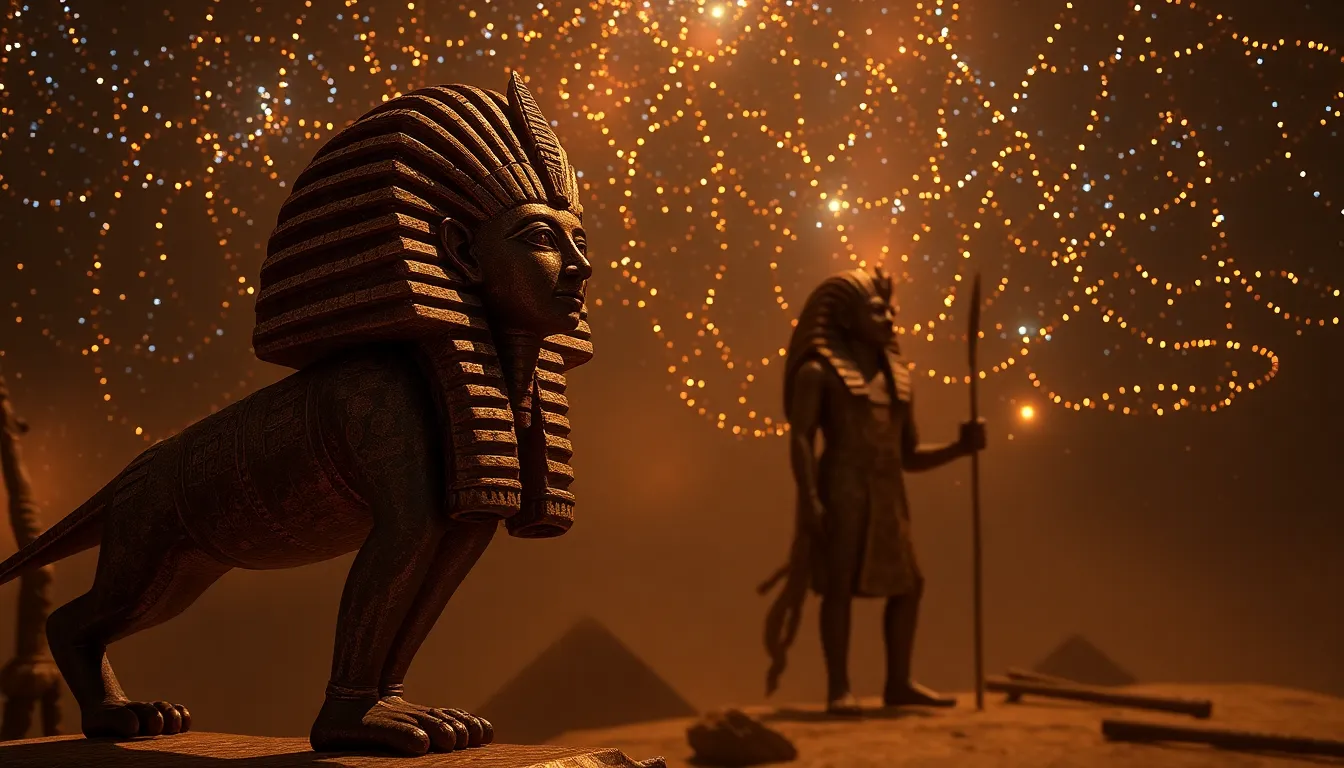
The Starry Legacy: How Egyptian Myths Influenced Later Cultures
I. Introduction
Egyptian mythology is a rich tapestry of stories, beliefs, and rituals that shaped the ancient civilization of Egypt. It served not only as a means of understanding the world but also as a framework for society, influencing art, architecture, and governance. The purpose of this article is to explore how Egyptian myths have transcended time and geography, impacting various cultures throughout history.
Key themes in Egyptian mythology include creation, death, the afterlife, and the cyclical nature of life. Prominent figures such as Ra, Osiris, and Isis played significant roles in these narratives, which helped convey moral and existential lessons to the people.
II. The Foundations of Egyptian Mythology
A. Key deities and their roles
At the heart of Egyptian mythology are numerous deities, each with unique attributes and responsibilities. Some of the most important include:
- Ra: The sun god, embodying creation and life.
- Osiris: The god of the afterlife, resurrection, and fertility.
- Isis: The goddess of magic, motherhood, and fertility, known for her devotion to Osiris.
- Horus: The sky god, often depicted as a falcon, representing kingship and protection.
B. Major myths and their narratives
Egyptian mythology is replete with compelling stories, including:
- The Creation Myth: This narrative describes how the universe emerged from a primordial chaos, often represented by the waters of Nun.
- The Osiris Myth: The tale of Osiris’s death and resurrection, which symbolizes the cycle of life and the promise of the afterlife.
C. The importance of mythology in ancient Egyptian society
Mythology was integral to ancient Egyptian society, providing a framework for understanding natural phenomena and human existence. It influenced religious practices, governance, and social norms, instilling a sense of order and morality among the people.
III. The Transmission of Egyptian Myths
A. Early interactions with neighboring cultures
Egypt’s geographic location facilitated interactions with neighboring cultures, such as Nubia and Mesopotamia. These interactions often led to the exchange of myths and religious ideas, enriching both Egyptian and foreign traditions.
B. The spread of Egyptian mythology through trade and conquest
As trade routes expanded and Egypt engaged in military conquests, the reach of its mythology grew. Egyptian ideas about the afterlife, gods, and cosmology began to influence surrounding civilizations.
C. The role of art and literature in preserving and sharing myths
Art and literature played pivotal roles in the transmission of Egyptian myths. Temple inscriptions, papyrus texts, and sculptures served to record and disseminate these stories, ensuring their survival for centuries.
IV. Influences on Greek and Roman Cultures
A. Adoption of Egyptian deities and concepts in Greek mythology
The Greeks were fascinated by Egyptian mythology, often incorporating Egyptian deities into their pantheon. For instance, the Greek version of Isis became widely worshipped, and her attributes were blended with those of Greek goddesses.
B. The impact of Egyptian thought on Roman religion and philosophy
Roman culture was heavily influenced by Egyptian religion, particularly in the realms of mystery cults and philosophical thought. The Roman adoption of Egyptian symbols and rituals reflects this profound influence.
C. Examples of literary and artistic representations of Egyptian myths in Greco-Roman culture
Numerous artistic works from the Greco-Roman period depict Egyptian myths, showcasing the stylistic integration of these narratives. Notable examples include:
- Statues of Isis in various temples.
- Literary references in works by authors such as Plutarch and Herodotus.
V. The Legacy in Abrahamic Religions
A. Egyptian influences on early Jewish texts and traditions
Elements of Egyptian mythology can be observed in early Jewish texts. The story of the Exodus, featuring divine intervention and themes of liberation, resonates with various Egyptian narratives.
B. The integration of Egyptian mythological themes in Christian theology
Christian theology also reflects Egyptian influences, particularly in concepts of resurrection and eternal life, reminiscent of Osiris’s narrative.
C. The perception of Egyptian mythology in Islamic texts and culture
Islamic culture recognizes Egyptian figures, often portraying them in a historical context that reflects the stories of the prophets and moral lessons, albeit with a different theological lens.
VI. Egyptian Mythology in the Modern Era
A. Revival of interest in Egyptian myths during the Renaissance
The Renaissance saw a revival of interest in ancient cultures, including Egypt. Artists and scholars sought to rediscover and reinterpret Egyptian myths, leading to a surge in artistic representations.
B. Egyptian mythology in contemporary literature, film, and art
Today, Egyptian mythology continues to captivate audiences. It appears in:
- Literature, such as novels and poems inspired by ancient themes.
- Films that explore the grandeur of ancient Egypt.
- Visual arts that depict Egyptian scenes and deities.
C. The role of Egyptology in understanding and interpreting these myths today
Egyptology has advanced our understanding of Egyptian myths, providing context through archaeological findings and textual analysis that enhance our appreciation of this ancient belief system.
VII. Comparative Analysis with Other Mythologies
A. Similarities and differences between Egyptian myths and those of other ancient cultures
A comparative analysis reveals both unique elements and shared themes among mythologies. For instance, creation myths from Mesopotamia and Hindu traditions often parallel Egyptian narratives but differ in their interpretations and details.
B. The universal themes present in Egyptian mythology and their relevance across cultures
Universal themes such as life, death, rebirth, and the search for meaning are prevalent in Egyptian mythology, resonating with cultures worldwide.
C. Case studies of cross-cultural mythological exchanges
Cross-cultural exchanges can be illustrated through the adoption of Egyptian motifs in Hellenistic art or the influence of Egyptian mythology on Hindu cosmology, showcasing the interconnectedness of human belief systems.
VIII. Conclusion
In summary, Egyptian mythology has significantly influenced various cultures throughout history, from ancient Greek and Roman societies to contemporary thought. Its themes of life, death, and the divine continue to resonate, inspiring both artistic expression and philosophical inquiry.
The lasting impact of Egyptian mythology underscores the importance of preserving these ancient narratives, as they provide valuable insights into the human experience and help us understand our cultural heritage.
Ultimately, preserving mythological legacies for future generations enriches our understanding of ourselves and the world around us.