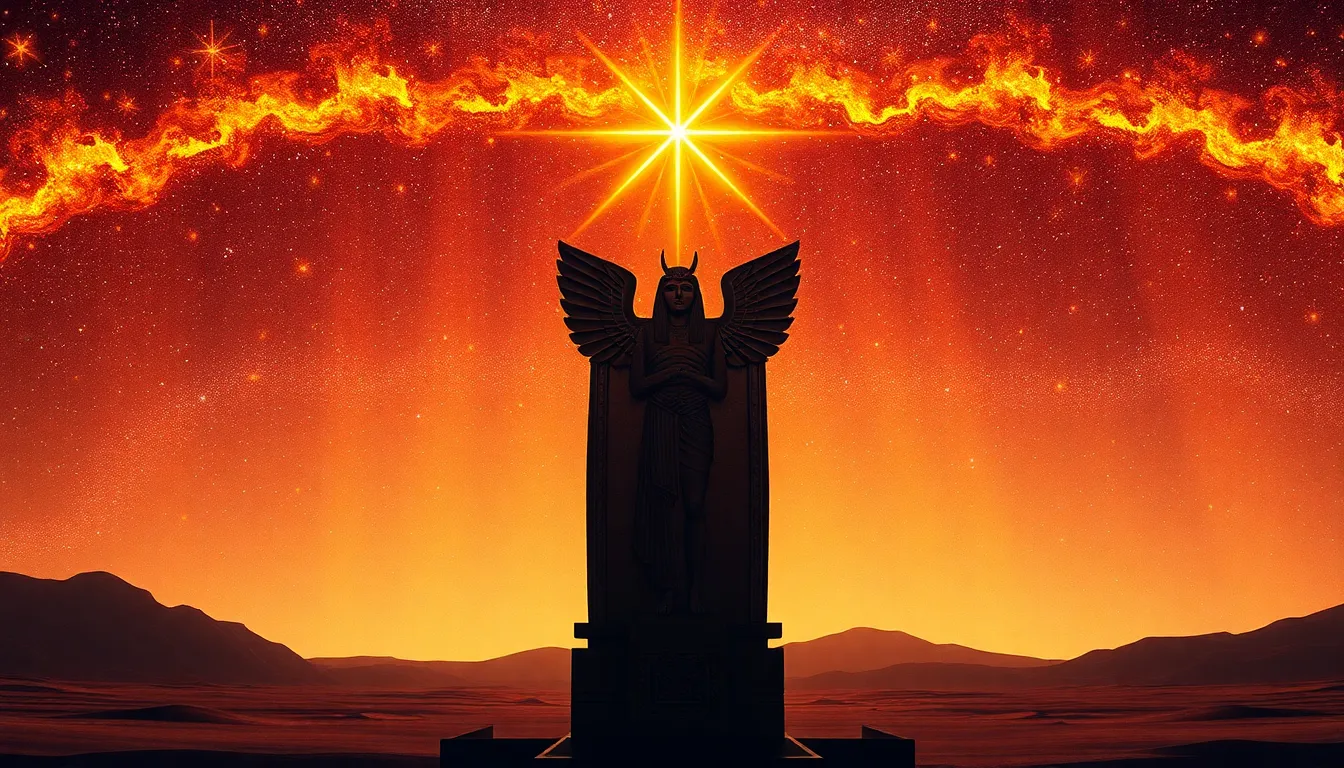
The Starry Guardians: How Egyptian Deities Watched Over the Night Sky
I. Introduction
Egyptian mythology is a rich tapestry woven with stories of gods and goddesses who governed the forces of nature and the cosmos. Among these deities, many held significant roles in the realm of astronomy, reflecting the ancient Egyptians’ profound connection with the night sky. The celestial sphere was not merely a backdrop to their lives but an integral part of their cultural and religious practices.
The night sky was of paramount importance in ancient Egyptian culture, influencing their navigation, agriculture, and spiritual beliefs. This article aims to explore the various roles that deities played in the celestial realm, focusing on their influence and significance in the lives of the ancient Egyptians.
II. The Significance of the Night Sky in Ancient Egypt
The ancient Egyptians were keen observers of the heavens, and the night sky held profound significance in their daily lives.
- The Role of Astrology: Astrology played a crucial role in decision-making, from agriculture to governance. The rising and setting of stars and planets were believed to influence events on earth.
- Cultural and Religious Importance: Constellations and celestial bodies were often associated with gods and myths, providing a framework for understanding the universe. For example, the constellation Orion was linked to Osiris, the god of the afterlife.
- Influence on Architecture: The alignment of monuments and temples with celestial events demonstrated the importance of the stars in their architectural designs. The pyramids, notably, were aligned with specific stars to honor the gods.
III. Key Egyptian Deities Associated with the Night Sky
A. Nut: The Goddess of the Sky
Nut, the goddess of the sky, played a central role in Egyptian cosmology. She was often depicted as a woman arching her body over the earth, her body adorned with stars.
- Mythological Background: According to mythology, Nut was born from the primordial waters of chaos, and her body represented the heavens. She was married to Geb, the god of the earth.
- Symbolism: Nut’s arching form symbolized the sky enveloping the earth, and she was believed to swallow the sun each night, giving birth to it each morning.
B. Geb: The God of the Earth
Geb, the god of the earth, was intimately connected to Nut, forming a cosmic balance between sky and earth.
- Relationship with Nut: Geb and Nut’s relationship symbolizes the duality of existence—earth and sky, male and female, life and death.
- Depictions: Geb was often depicted lying on the ground, with crops growing from his body, linking him to fertility and the sustenance of life.
IV. The Role of Other Celestial Deities
A. Osiris: God of the Afterlife and the Stars
Osiris, one of the most important deities in Egyptian mythology, was associated with the afterlife and the stars.
- Connection to Orion: Osiris was often linked to the constellation Orion, representing his role as a god of resurrection and rebirth.
- Symbolism: His association with the stars emphasized the belief in the afterlife, as the souls of the deceased were thought to join him among the stars.
B. Thoth: The God of Wisdom and the Moon
Thoth, the god of wisdom, writing, and the moon, played a crucial role in Egyptian astronomy and timekeeping.
- Lunar Cycles: Thoth was associated with the lunar calendar, which was vital for agriculture and religious festivals.
- Role in Navigation: As a god of wisdom, Thoth aided in navigation and understanding the cycles of the moon, which were essential for timing various activities.
V. Mythological Stories and Celestial Events
The night sky is rich with mythological stories that reflect the ancient Egyptians’ beliefs and values.
- Creation Myths: Many creation myths involve the night sky, such as the story of how Nut and Geb emerged from the primordial chaos.
- Star Myths: The journey of the sun through the underworld, where it battles darkness each night, symbolizes the eternal struggle between light and dark.
- Festivals and Rituals: Celestial phenomena, such as the heliacal rising of Sirius, were celebrated with festivals that honored the gods and their connection to the stars.
VI. The Influence of the Night Sky on Egyptian Art and Architecture
The night sky profoundly influenced Egyptian art and architecture.
- Depictions of Celestial Deities: Temples and tombs often featured elaborate depictions of Nut, Geb, and other celestial deities, reinforcing their importance in the afterlife.
- Astronomical Alignments: The pyramids and other monuments were meticulously aligned with stars and constellations, reflecting the Egyptians’ sophisticated understanding of astronomy.
- Artistic Representations: Constellations were artistically represented in tomb paintings and reliefs, often depicting the deceased’s journey into the afterlife.
VII. Modern Interpretations and Discoveries
Recent archaeological findings have shed light on the sophisticated astronomical knowledge of the ancient Egyptians.
- Archaeological Findings: Discoveries of star charts and alignments in temples have revealed the extent of their astronomical knowledge.
- Contemporary Relevance: Ancient Egyptian star lore continues to influence modern astronomy and cultural narratives, inspiring a deeper appreciation for the cosmos.
- Influence in Modern Culture: The themes of resurrection and celestial navigation found in Egyptian mythology can still be seen in contemporary literature and media.
VIII. Conclusion
The relationship between Egyptian deities and the night sky is a testament to the ancient Egyptians’ profound understanding of the cosmos. From the goddess Nut to the god Osiris, each deity played a significant role in shaping their worldview and influencing their cultural practices.
The legacy of Egyptian astronomy and mythology endures, inviting us to explore further the mysteries of the stars and the stories they tell. The night sky, once a source of wonder for the ancients, continues to inspire and captivate us today.