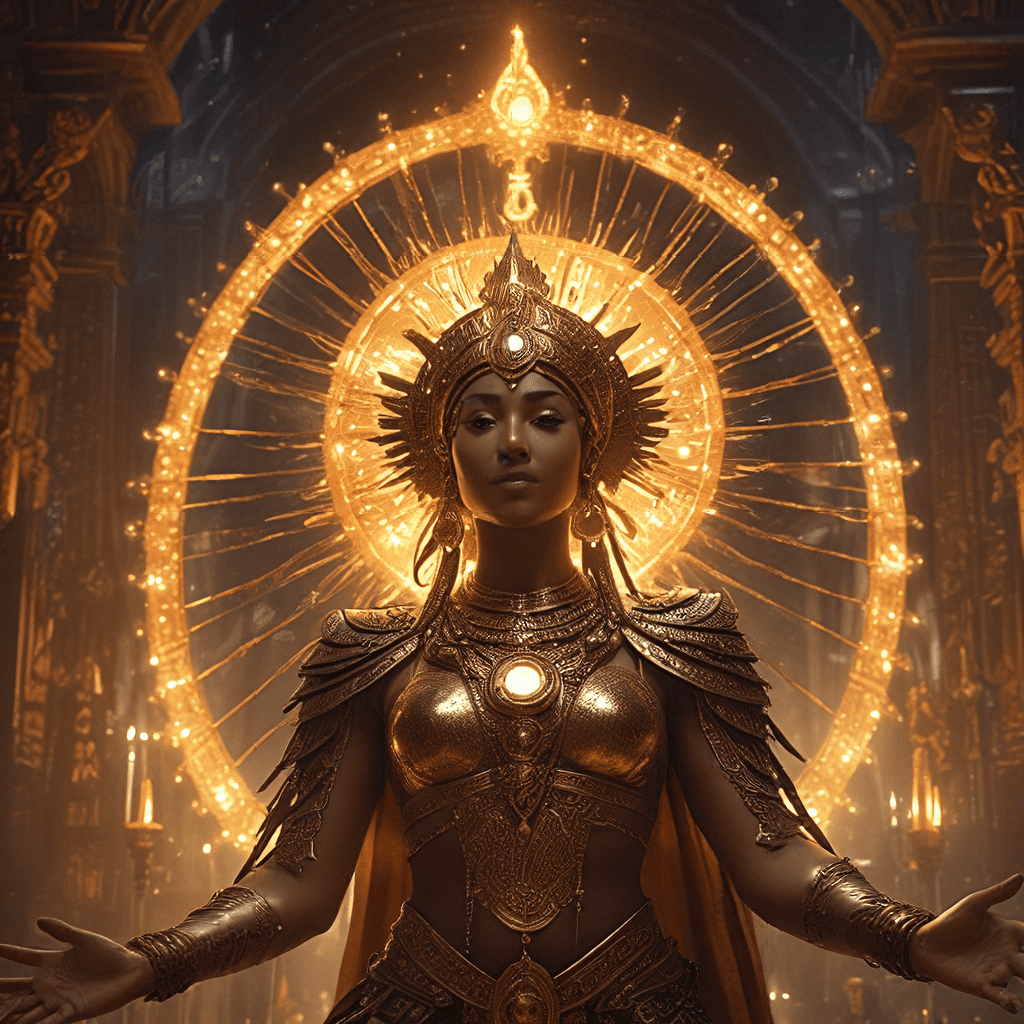
The Spirit of Light: Understanding the Significance of the Ra Festival
In the ancient Egyptian world, where the sun held a paramount position in the cosmos, the Ra Festival stood as a testament to the power and importance of the sun god. This annual celebration was not merely a religious event but a profound reflection of the Egyptians’ deep understanding of the universe, the cycle of life, and their connection to the divine.
1. Introduction: The Power of the Sun God Ra
Ra, the sun god, was considered the creator of all that existed. He was the source of life, light, and warmth, and his daily journey across the sky represented the continuous cycle of life, death, and rebirth. Egyptians believed that Ra’s power extended beyond the physical world, influencing the afterlife and shaping the destiny of humanity.
The Ra Festival was the ultimate expression of reverence for this mighty deity. It was a time for Egyptians to celebrate his power, acknowledge his role in creation, and seek his favor for a bountiful year ahead. The festival was a vibrant tapestry of rituals, ceremonies, and offerings, all designed to honor the sun god and his celestial journey.
2. The Myth of Ra: Creation and Cosmic Order
The myth of Ra’s creation is a fascinating one. It tells of how Ra, emerging from the primordial waters of Nun, brought order to the chaos and gave birth to the world. He was often depicted as a falcon-headed god, symbolizing his dominion over the sky and his swiftness. Ra was also associated with the scarab beetle, another symbol of creation and the cyclical nature of life.
The myth goes on to describe Ra’s daily journey across the sky in his solar barque. As he sailed through the heavens, he battled the forces of darkness and chaos, ensuring the continuation of life. This journey had a profound parallel to the Egyptian understanding of the afterlife, where the deceased soul embarked on a similar voyage to reach the realm of Osiris.
3. The Annual Celebration: The Ra Festival and its Importance
The Ra Festival, also known as the Feast of the New Year or the Feast of the Sun, was a major celebration in ancient Egypt. It typically took place during the month of Thoth, corresponding to the late summer or early fall season. The exact timing of the festival varied depending on the location and the specific year.
This festival was a time of both religious and social significance. It was a way for Egyptians to reaffirm their faith in Ra, seek his blessings, and offer thanks for the bounty of the land. The festival also served as an opportunity for communities to come together, socialize, and strengthen their social bonds.
4. Key Rituals and Ceremonies: A Journey Through the Festival
The Ra Festival was a multi-day event, filled with elaborate rituals and ceremonies. Some of the key elements of the festival included:
1. **Procession:** A grand procession would be held, featuring priests carrying the sacred barque of Ra, adorned with offerings and symbols. The procession would wind its way through the city, culminating in the temple of Ra.
2. **Offering Ceremony:** Inside the temple, priests would offer sacrifices to Ra, including incense, bread, wine, and animals. These offerings were a symbolic way of expressing gratitude and seeking favor from the sun god.
3. **Theatrical Performances:** The festival often included theatrical performances and mimes, retelling the myth of Ra’s creation and his journey across the sky. These performances served to reinforce the importance of the sun god and his role in the cosmic order.
5. The Barque of Ra: Navigating the Afterlife and the Cycle of Life
The barque of Ra, depicted as a sacred boat, held a central place in the Ra Festival. It was believed to be the vessel in which Ra traveled across the sky each day, bringing light and life to the world. The barque was also associated with the afterlife, signifying the journey of the deceased soul to the realm of Osiris.
The Egyptians believed that the deceased soul had to navigate a similar journey to Ra’s, overcoming obstacles and challenges. The barque, therefore, became a powerful symbol of hope and renewal, reminding Egyptians of the possibility of eternal life and the cycle of rebirth.
6. The Eye of Ra: Divine Power and the Goddess Hathor
The Eye of Ra, also known as Wadjet or the Uraeus, was a powerful symbol of Ra’s divine power. It was often depicted as a serpent or a sun disk with a serpent’s head. The Eye of Ra represented the destructive and fierce aspect of the sun god, capable of both creating and destroying.
The Eye of Ra was also associated with the goddess Hathor, who was considered Ra’s daughter or consort. Hathor, known for her beauty, power, and motherhood, embodied the feminine aspect of the sun god. The Eye of Ra, representing Hathor’s power, symbolized the protective and nurturing aspects of the sun god.
7. The Significance of the Benben Stone: The Foundation of the World
The Benben Stone, a sacred stone that emerged from the waters of Nun, played a crucial role in the myth of Ra’s creation. This stone, often depicted as a pyramid, was considered the foundation of the world, the point from which Ra began his creation. The Benben Stone was a symbol of stability, order, and the beginning of all things.
The Benben Stone was also associated with the obelisk, a tall, slender monument that was often placed in front of temples. The obelisk represented the rising sun, symbolizing Ra’s power and the connection between the earthly realm and the celestial world.
8. The Ra Festival and its Symbolism: A Celebration of Life, Renewal, and Hope
The Ra Festival was a celebration of life, renewal, and hope. It was a time for Egyptians to acknowledge the power of the sun god, celebrate the cycle of life, and seek his blessings for a bountiful year. The festival also served as a reminder of the importance of order, justice, and the triumph of good over evil.
The rituals and ceremonies of the Ra Festival were designed to reinforce these values and beliefs. The procession, the offerings, and the theatrical performances all served to remind Egyptians of the power and importance of the sun god, and the hope for a brighter future.
9. The Legacy of the Ra Festival: Impact on Egyptian Culture and Beliefs
The Ra Festival played a significant role in shaping Egyptian culture and beliefs. It was a central element of Egyptian religion, embodying the key values and beliefs of the civilization. The festival’s influence extended beyond the religious sphere, impacting Egyptian art, literature, and daily life.
The imagery and symbolism of the Ra Festival were incorporated into various aspects of Egyptian culture. Temples, tombs, and other monuments were adorned with scenes depicting the journey of Ra, the barque, and the Eye of Ra. These images served as a reminder of the power and importance of the sun god and the eternal cycle of life and rebirth.
10. Conclusion: The Enduring Power of the Sun God and his Festival
The Ra Festival, with its rich symbolism and profound meaning, stands as a testament to the enduring power of the sun god in ancient Egypt. It was a celebration of life, renewal, and hope, reflecting the Egyptians’ deep understanding of the universe, the cycle of life, and their connection to the divine. The festival’s legacy continues to inspire and captivate, offering a window into the fascinating world of ancient Egyptian beliefs and traditions.