The Sphinx in Ancient Egyptian Religion
I. Introduction
The Sphinx is one of the most iconic symbols of Ancient Egyptian culture, embodying a rich tapestry of mythology, religion, and artistry. This monumental statue, with the body of a lion and the head of a human, has fascinated historians, archaeologists, and tourists alike. Its significance extends beyond mere architectural marvel; it represents the intersection of power, protection, and the divine in the ancient world. This article aims to delve into the multifaceted role of the Sphinx in Ancient Egyptian religion and culture, exploring its historical context, symbolism, and lasting legacy.
II. Historical Context of the Sphinx
A. Origins and construction of the Great Sphinx of Giza
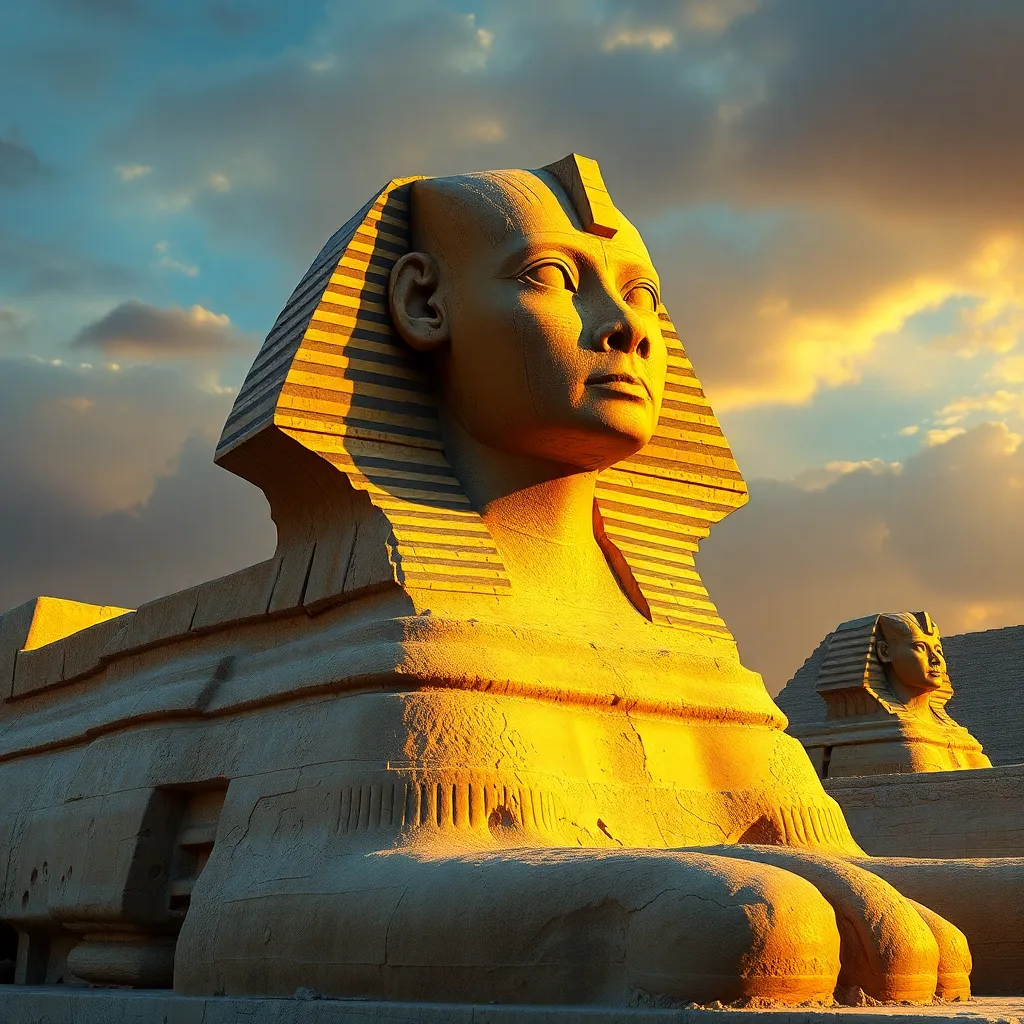
The Great Sphinx of Giza, located on the Giza Plateau near Cairo, is believed to have been constructed during the reign of Pharaoh Khafre, around 2500 BCE. This grand structure, measuring approximately 73 meters (240 feet) long and 20 meters (66 feet) high, is carved from limestone and originally featured a painted face and body.
B. The Sphinx in relation to other pyramids and monuments
The Sphinx is strategically positioned near the Pyramids of Giza, specifically Khufu’s pyramid, which is one of the Seven Wonders of the Ancient World. This proximity underscores its importance in the funerary complex, symbolizing the pharaoh’s connection to the divine and the afterlife.
III. Symbolism of the Sphinx
A. The hybrid nature: Lion and human representation
The Sphinx’s hybrid form of a lion’s body and a human head signifies a blend of strength and wisdom. The lion, a powerful predator, represents dominance and protection, while the human head embodies intelligence and rationality.
B. Interpretations of strength, protection, and wisdom
In Ancient Egyptian culture, the Sphinx was seen as a guardian, protecting sacred spaces and serving as a symbol of royal power. Its association with wisdom also ties it to the divine, representing the pharaoh’s role as a mediator between the gods and the people.
IV. The Sphinx and Egyptian Mythology
A. Connection to the sun god Ra and the pharaohs
The Sphinx is often linked to the sun god Ra, representing the pharaoh’s divine right to rule. The alignment of the Sphinx with the rising sun symbolizes rebirth and the eternal cycle of life, death, and resurrection.
B. Role in mythological narratives and religious texts
In various mythological narratives, the Sphinx serves as a guardian of knowledge and truth. It is often depicted as posing riddles, challenging those who seek to pass, which reflects the importance of wisdom and the quest for knowledge in Ancient Egyptian thought.
V. The Sphinx in Religious Practices
A. Rituals and offerings associated with the Sphinx
Ancient Egyptians performed numerous rituals and offered sacrifices to the Sphinx to ensure its favor and protection. These practices often included:
- Incense offerings
- Food sacrifices
- Burial rites for the deceased near the Sphinx
B. Its importance in funerary practices and afterlife beliefs
The Sphinx was integral to the funerary practices of the ancient Egyptians. It was believed to watch over the tombs of pharaohs, protecting their souls as they journeyed to the afterlife. The presence of the Sphinx was thought to ensure a safe passage to the realm of the gods.
VI. Influence of the Sphinx on Ancient Egyptian Art
A. Depictions of the Sphinx in sculpture and hieroglyphics
The Sphinx’s influence permeated various forms of Ancient Egyptian art. It was commonly depicted in:
- Statues and reliefs
- Hieroglyphic inscriptions
- Wall paintings in tombs
B. Artistic styles and variations throughout different dynasties
Different dynasties showcased varied artistic styles in their representations of the Sphinx, reflecting the evolving aesthetic sensibilities of Ancient Egyptian society. From the original grandeur of the Great Sphinx to smaller versions found in temples, each depiction carried its own cultural significance.
VII. The Sphinx in Modern Interpretations
A. Archaeological findings and restoration efforts
In recent years, archaeological efforts have focused on uncovering the mysteries surrounding the Sphinx. Restoration projects have aimed to preserve its integrity against erosion and environmental damage, ensuring that it continues to stand as a testament to Ancient Egyptian civilization.
B. The Sphinx’s impact on contemporary culture and tourism
The Sphinx remains a powerful symbol in contemporary culture, drawing millions of tourists each year. It has inspired countless works of art, literature, and film, reinforcing its status as a cultural icon. Its enigmatic presence continues to spark curiosity and fascination, securing its place in the collective imagination.
VIII. Conclusion
The Sphinx holds a paramount position in Ancient Egyptian religion and culture, symbolizing strength, wisdom, and the divine connection between the pharaohs and the gods. Its historical significance, coupled with its rich symbolism and influence on art and religion, makes it a pivotal figure in understanding Ancient Egyptian civilization. Today, the Sphinx endures as a lasting legacy of a remarkable culture, captivating the hearts and minds of people around the world.