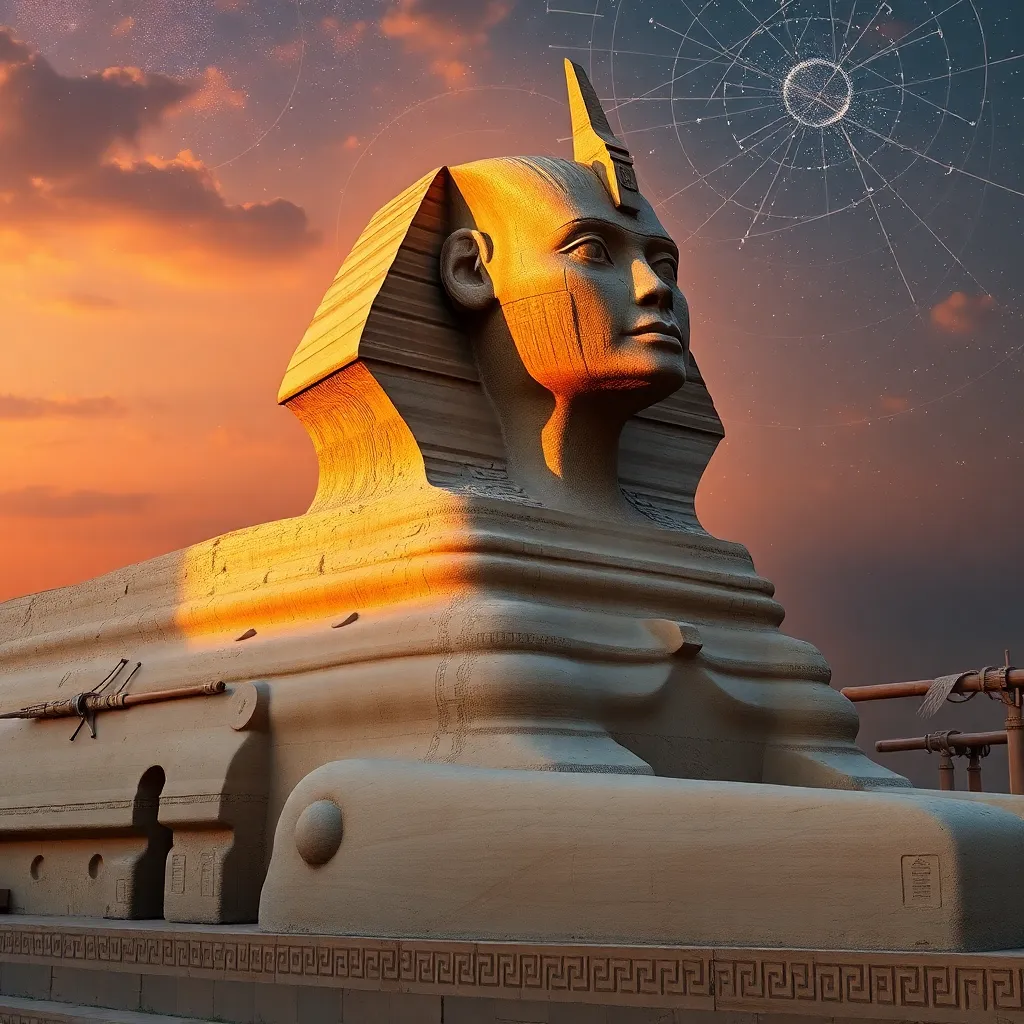
The Sphinx in Ancient Egyptian Astronomy
I. Introduction
The Great Sphinx of Giza stands as one of the most iconic and enigmatic symbols of ancient Egypt. Carved from limestone, this massive statue of a reclining lion with a human head has captured the imaginations of historians, archaeologists, and tourists alike. Its grandeur and mystery are further amplified by its connection to the rich tapestry of ancient Egyptian culture, particularly in the realm of astronomy.
Astronomy played a pivotal role in Ancient Egyptian civilization, influencing everything from agricultural practices to religious beliefs. The Egyptians were keen observers of the celestial bodies, weaving their movements into their understanding of the world and the afterlife. This article aims to explore the intricate relationship between the Sphinx and ancient Egyptian astronomy, shedding light on how this monumental figure relates to the cosmos.
II. Historical Context of the Sphinx
The Sphinx was constructed during the reign of Pharaoh Khafre, around 2500 BCE, making it one of the oldest monumental statues in the world. Its architectural significance lies not just in its size—approximately 66 feet high and 240 feet long—but also in the artistry and engineering prowess it demonstrates.
Located on the Giza Plateau, the Sphinx is strategically positioned near the Great Pyramids, which were built as monumental tombs for the pharaohs. This proximity is significant, as it suggests a complex relationship between the Sphinx and these grand structures, potentially serving a protective and symbolic function.
In Ancient Egyptian mythology, the Sphinx is often associated with the sun god Ra and the protective aspect of the lion, symbolizing strength and guardianship. This connection further intertwines the Sphinx with the celestial themes prevalent in Egyptian belief systems.
III. Ancient Egyptian Astronomy: An Overview
Ancient Egyptians were adept astronomers, relying on celestial observations to inform their agricultural cycles and religious practices. They developed a calendar based on the lunar and solar cycles, which helped them predict the annual flooding of the Nile—a vital event for their agriculture.
Key astronomical practices included:
- Tracking the heliacal rising of Sirius, which marked the start of the Nile’s inundation.
- Aligning temples and monuments with celestial events, such as solstices and equinoxes.
- Utilizing sundials and water clocks to measure time based on the sun’s position.
The significance of celestial bodies was deeply embedded in Egyptian religion and life, with stars and planets often associated with gods and goddesses. For example, the star Sirius (Sopdet) was linked to the goddess Isis, while the planet Venus was associated with Hathor.
IV. The Sphinx’s Orientation and Celestial Alignments
The Sphinx is oriented to face the rising sun in the east, which is significant in Egyptian cosmology. This positioning suggests a deliberate alignment with celestial phenomena, emphasizing the Sphinx’s role as a marker of time and a connection to the divine.
Analysis of the Sphinx’s alignment reveals intriguing connections to various stars and constellations:
- The Sphinx is aligned with the constellation of Leo, reflecting the lion’s symbolic importance in Egyptian culture.
- Research suggests potential alignments with the sun during the equinoxes, marking critical points in the agricultural calendar.
- Some studies propose that the Sphinx may have been aligned to mark specific celestial events, such as the heliacal rising of Sirius.
V. The Sphinx and the Constellation of Leo
The lion, represented by the Sphinx, holds a significant place in Ancient Egyptian culture, symbolizing strength, power, and protection. The constellation Leo, which depicts a lion, is thought to have been linked to the Sphinx in a variety of ways.
The alignment of the Sphinx with the constellation Leo suggests that the statue may have served as a terrestrial representation of celestial themes. This connection raises fascinating interpretations:
- The Sphinx as a guardian of the pharaohs, linking the earthly rulers to the celestial realm.
- The potential for the Sphinx to serve as a marker for astronomical events associated with the lion, such as the summer solstice.
- Interpretations that view the Sphinx as embodying the duality of life and death, bridging the terrestrial and the divine.
VI. The Role of the Sphinx in Religious and Astronomical Practices
The Sphinx served multiple roles in ancient Egyptian society, particularly in religious and astronomical contexts. As a symbol of protection, the Sphinx was believed to guard the Giza Plateau and the tombs of the pharaohs.
Various rituals and ceremonies were likely associated with the Sphinx, particularly during significant celestial events:
- Ceremonies to honor the sun god Ra, possibly conducted at sunrise when the Sphinx would be bathed in the first light.
- Festivals celebrating the flooding of the Nile, which were closely tied to astronomical observations.
- The representation of the Sphinx in ancient texts and inscriptions, often highlighting its importance in the afterlife and protection of the deceased.
VII. Modern Interpretations and Astronomical Research
In contemporary times, the Sphinx continues to be the subject of extensive research, with modern scholars employing advanced technology to uncover its astronomical significance. Techniques such as satellite imaging and ground-penetrating radar have provided new insights into the Sphinx’s alignment and construction.
Some key areas of modern research include:
- Studies exploring the Sphinx’s alignment with the constellation Leo and other celestial bodies.
- Investigations into the potential role of the Sphinx in ancient calendars and timekeeping.
- Debates regarding the true purpose and symbolism of the Sphinx in the context of ancient Egyptian religion and astronomy.
VIII. Conclusion
The Sphinx stands as a testament to the sophisticated understanding of astronomy possessed by the ancient Egyptians. Its alignment with celestial bodies, particularly the constellation of Leo, underscores its significance as both a cultural icon and an astronomical marker.
The enduring mystery surrounding the Sphinx invites continued exploration and reflection on the intersection of culture, religion, and astronomy in ancient civilizations. As modern technology unveils more about this iconic structure, it reminds us of the profound ways in which ancient peoples engaged with the cosmos, leaving a legacy that continues to captivate our imaginations today.