The Sphinx and the Power of Myth in Ancient Society
I. Introduction
The Sphinx, a magnificent creature with the body of a lion and the head of a human, stands as one of the most iconic symbols of ancient Egypt. It has captivated the imagination of scholars, historians, and tourists alike for centuries. The Sphinx not only served as a monumental guardian of ancient tombs and temples but also played a significant role in the interplay of mythology and society in ancient cultures. This article aims to explore the multifaceted intersections of mythology and society through the lens of the Sphinx, shedding light on its origins, symbolism, and enduring legacy.
II. The Origins of the Sphinx
A. Historical context of the Sphinx in ancient Egypt
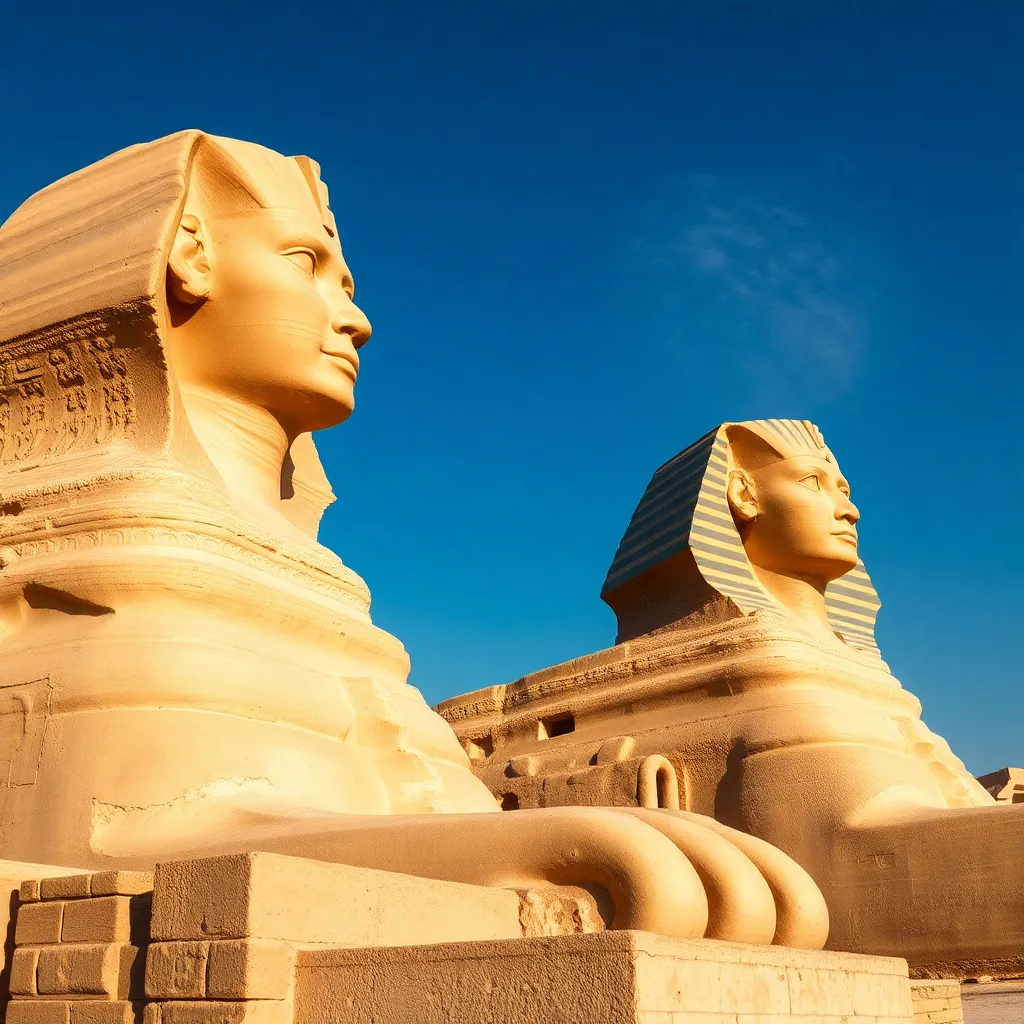
The Great Sphinx of Giza, the most famous of its kind, dates back to the reign of Pharaoh Khafre (c. 2570 BC) during the Fourth Dynasty of the Old Kingdom. Carved from a single block of limestone, it stands approximately 66 feet high and 240 feet long, making it the largest monolithic statue in the world. The Sphinx is believed to have been constructed as a guardian figure for the funerary complex of Khafre, embodying the pharaoh’s divine power and connection to the gods.
B. Evolution of the Sphinx’s symbolism over time
Initially, the Sphinx symbolized strength and protection, serving as a guardian against evil forces. Over time, its imagery evolved, reflecting the changing religious beliefs and political landscape of ancient Egypt. By the New Kingdom, the Sphinx had become associated with the sun god Ra and the concept of kingship, further solidifying its role as a protective and regal figure.
III. The Sphinx in Egyptian Mythology
A. Role of the Sphinx in Egyptian religious beliefs
In Egyptian mythology, the Sphinx was seen as a powerful symbol of the pharaoh’s authority and divine right to rule. It represented the fusion of human intellect and animal strength, epitomizing the balance between wisdom and power. The Sphinx was often associated with the sun, particularly in its connection to the journey of the sun god Ra across the sky.
B. Connection to deities and the afterlife
The Sphinx’s connection to the afterlife is also significant, as it was believed to guard the entrances to the underworld. It symbolized the transition from life to death, watching over the souls of the deceased as they embarked on their journey to the afterlife. In this context, the Sphinx served as a bridge between the mortal realm and the divine.
IV. The Sphinx as a Cultural Icon
A. Representation of power and guardianship
The Sphinx has long been a representation of power, guardianship, and sovereignty. Its imposing presence served to intimidate invaders and reassure the citizens of ancient Egypt of their pharaoh’s strength and divine favor. The Sphinx’s lion body symbolized courage and strength, while its human head represented intelligence and wisdom.
B. Influence on art, architecture, and literature
- Art: The Sphinx’s image has been reproduced in countless artworks, ranging from ancient carvings to modern paintings, symbolizing enigma and majesty.
- Architecture: The architectural style of the Sphinx influenced the design of temples and other monumental structures, inspiring later civilizations.
- Literature: The Sphinx has been featured in various literary works, from ancient texts to contemporary novels, often symbolizing mystery and wisdom.
V. Myths Surrounding the Sphinx
A. The riddle of the Sphinx and its implications
One of the most famous myths surrounding the Sphinx is that of its riddle, which was famously posed to travelers in ancient Greek mythology. The riddle stated:
What walks on four legs in the morning, two legs at noon, and three legs in the evening?
The answer, of course, is a human being, symbolizing the stages of life. This myth illustrates the Sphinx as a gatekeeper of knowledge and wisdom, testing the worthiness of those who sought to pass.
B. Analysis of famous myths and their meanings
Myths involving the Sphinx often revolve around themes of knowledge, power, and the duality of human nature. The story of Oedipus, who solved the riddle and defeated the Sphinx, serves as a powerful metaphor for the triumph of intellect over brute strength. This narrative emphasizes the importance of wisdom and the consequences of hubris.
VI. The Sphinx’s Impact on Ancient Society
A. The Sphinx as a symbol of national identity
The Sphinx has long served as a symbol of national identity for Egypt. Its stature and grandeur evoke a sense of pride and connection to the past. As a national emblem, the Sphinx represents the strength and resilience of Egyptian civilization throughout history.
B. The role of the Sphinx in governance and royal propaganda
Pharaohs often used the imagery of the Sphinx in their propaganda to project power and divine authority. By associating themselves with this majestic creature, rulers sought to legitimize their reign and reinforce their status as intermediaries between the gods and the people.
VII. The Legacy of the Sphinx in Modern Culture
A. Continued fascination with the Sphinx in contemporary society
The Sphinx continues to captivate people worldwide, drawing millions of visitors to Egypt each year. Its enigmatic presence serves as a reminder of the rich tapestry of ancient Egyptian history and mythology.
B. The Sphinx’s influence on modern literature and media
In contemporary literature and media, the Sphinx remains a potent symbol of mystery and intrigue. It has inspired countless adaptations, from novels and films to video games, proving that the allure of the Sphinx transcends time and culture.
VIII. Conclusion
In summary, the Sphinx serves as a profound representation of the intersection of mythology and society in ancient Egypt. Its role as a guardian, symbol of power, and cultural icon illustrates the complexities of human belief and the enduring nature of myth. The Sphinx’s legacy continues to shape our understanding of ancient cultures and the human experience, reminding us of the timeless power of myth in shaping civilizations.