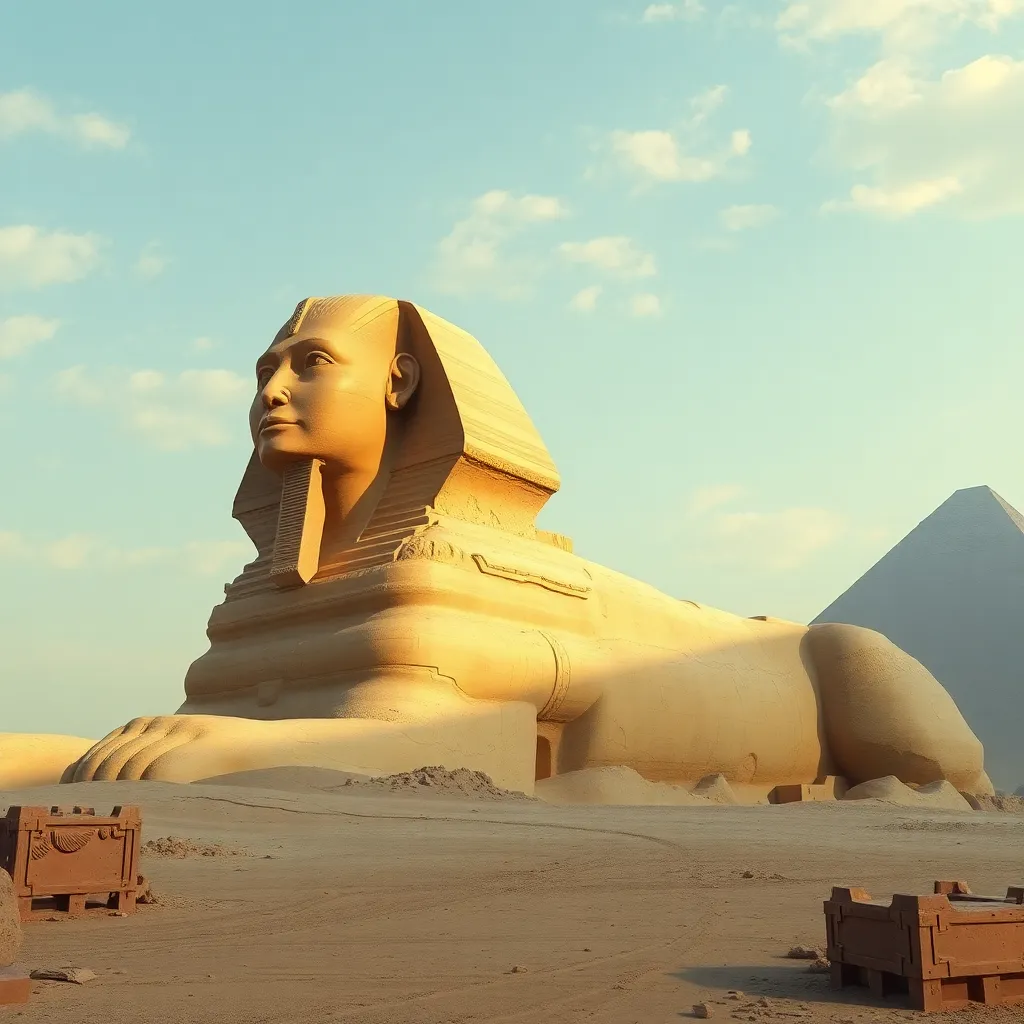
The Sphinx and the Concept of Truth in Egyptian Mythology
I. Introduction
The Sphinx is one of the most iconic symbols of ancient Egypt, representing a unique blend of human intellect and animal strength. With the body of a lion and the head of a human, the Sphinx serves as a powerful emblem of the pharaohs and the divine authority they wielded.
Truth, or Ma’at, holds a central place in Egyptian mythology. It embodies order, justice, and harmony, contrasting with chaos and deception. This dichotomy is reflected in various mythological narratives, where the quest for truth is often portrayed as a noble endeavor.
The purpose of this article is to explore the multifaceted relationship between the Sphinx and the concept of truth in Egyptian mythology, examining its historical significance, symbolic meanings, and enduring legacy.
II. The Sphinx: A Symbol of Power and Knowledge
A. Historical background of the Sphinx
The Great Sphinx of Giza, constructed around 2500 BCE during the reign of Pharaoh Khafre, is the largest monolithic statue in the world. It is believed to serve as a guardian for the Giza Plateau, protecting the tombs of the pharaohs. The Sphinx’s construction reflects the advanced engineering skills of ancient Egyptians and their dedication to monumental architecture.
B. Iconography and representation in art
In Egyptian art, the Sphinx is often depicted in various forms, including small statuettes and large stone carvings. Its representation typically includes:
- The lion’s body symbolizes strength and ferocity.
- The human head represents intelligence and wisdom.
- Often adorned with a royal headdress, reinforcing its connection to pharaonic authority.
C. Role of the Sphinx in Egyptian society
The Sphinx was not only a physical landmark but also a cultural icon. It embodied the ideals of courage and wisdom, serving as a model for the pharaohs and the elite. The Sphinx was associated with protection, as it was believed to ward off evil spirits and safeguard the sacred spaces of the dead.
III. The Riddle of the Sphinx: A Test of Wisdom
A. The story of Oedipus and the Sphinx
One of the most famous tales involving the Sphinx is the myth of Oedipus. In this story, the Sphinx terrorizes the city of Thebes, posing a riddle to all who attempt to pass. Those who fail to answer correctly are devoured by the creature.
B. Analysis of the riddle and its implications
The riddle posed by the Sphinx is:
“What walks on four legs in the morning, two legs at noon, and three legs in the evening?”
This riddle encapsulates the journey of human life, symbolizing the stages of existence—infancy, adulthood, and old age. The answer, “a human,” highlights the importance of self-awareness and the understanding of one’s place in the world.
C. Connection between wisdom and truth in the riddle
Oedipus’s ability to solve the riddle signifies his wisdom and insight. However, this wisdom is paradoxical, as it ultimately leads to his tragic downfall. The riddle emphasizes the complexity of truth in Egyptian mythology, illustrating that knowledge can be both enlightening and destructive.
IV. Truth in Egyptian Mythology: Concepts and Beliefs
A. Definition of truth (Ma’at) in Egyptian culture
Ma’at represents the ancient Egyptian concept of truth, balance, and cosmic order. It is personified by the goddess Ma’at, who is often depicted with an ostrich feather, symbolizing truth and justice. The pharaohs were seen as the earthly embodiments of Ma’at, tasked with maintaining harmony and order in the universe.
B. The duality of truth and deception in mythology
Egyptian mythology presents a duality where truth is constantly challenged by chaos and deception. Deities such as Set represent disorder, while others like Osiris embody truth and resurrection. This duality reflects the constant struggle faced by both gods and humans in their pursuit of harmony.
C. The role of deities in upholding or challenging truth
Various deities play significant roles in the maintenance of Ma’at. Key figures include:
- Osiris: God of the afterlife and resurrection, representing eternal truth.
- Set: God of chaos and disorder, often opposing Osiris.
- Anubis: God of mummification and the afterlife, ensuring the truthful judgment of souls.
V. The Sphinx as a Guardian of Truth
A. The Sphinx in funerary practices
The Sphinx was often placed in proximity to tombs, serving as a guardian for the deceased. Its presence was believed to protect the souls of the dead as they journeyed to the afterlife and faced judgment before Osiris.
B. Symbolism of the Sphinx in the afterlife
In the afterlife, the Sphinx symbolizes the balance between wisdom and strength. It acts as a protector of sacred knowledge, ensuring that only the worthy may access the truths of existence beyond death.
C. The Sphinx’s role in protecting sacred knowledge
The Sphinx’s mythological role extends to safeguarding the mysteries of life and death. It embodies the idea that true knowledge must be earned through wisdom and introspection, reinforcing the importance of seeking truth in both the material and spiritual realms.
VI. Comparative Analysis: The Sphinx and Other Mythological Creatures
A. Similarities with other cultures’ sphinx-like figures
The concept of a sphinx-like creature exists in various cultures, including:
- Greek Sphinx: A creature with a woman’s head and a lion’s body, known for posing riddles.
- Persian Sphinx: Often depicted with wings, symbolizing protection and wisdom.
B. Connections with themes of truth and knowledge in other mythologies
Across different cultures, sphinx-like figures often embody themes of knowledge and truth, serving as guardians of sacred wisdom or as challenges to be overcome. This reflects a universal archetype in mythology, where knowledge is both revered and feared.
C. The universal significance of the Sphinx archetype
The Sphinx archetype transcends cultural boundaries, representing the eternal quest for truth and understanding. It encourages individuals to confront their fears and seek wisdom, reinforcing the notion that truth is a journey rather than a destination.
VII. The Legacy of the Sphinx in Modern Culture
A. Influence on literature and art
The Sphinx has inspired countless works of literature and art throughout history. From classical Greek tragedies to modern novels, its enigmatic presence continues to fascinate. Artists often depict the Sphinx as a symbol of mystery and the unknown.
B. The Sphinx as a symbol in contemporary discussions of truth
In contemporary discourse, the Sphinx represents the complexities of truth in our world. It serves as a metaphor for the challenges faced in discerning fact from fiction, particularly in an age of information overload.
C. Reinterpretations of the Sphinx in modern storytelling
Modern reinterpretations of the Sphinx often explore its themes of knowledge and identity. Filmmakers and authors utilize the Sphinx to delve into psychological narratives, reflecting the ongoing human struggle for truth and self-discovery.
VIII. Conclusion
In summary, the Sphinx stands as a profound symbol of power and knowledge in Egyptian mythology, intricately linked to the concept of truth. Its role as a guardian of sacred wisdom and protector of the afterlife underscores the importance of seeking truth in all aspects of life.
The enduring legacy of the Sphinx in modern culture serves as a reminder of the timeless nature of these themes. As we navigate an increasingly complex world, the quest for truth remains as relevant today as it was in ancient Egypt.
Ultimately, the Sphinx invites us to reflect on our own understanding of truth, encouraging a journey of wisdom, introspection, and enlightenment.