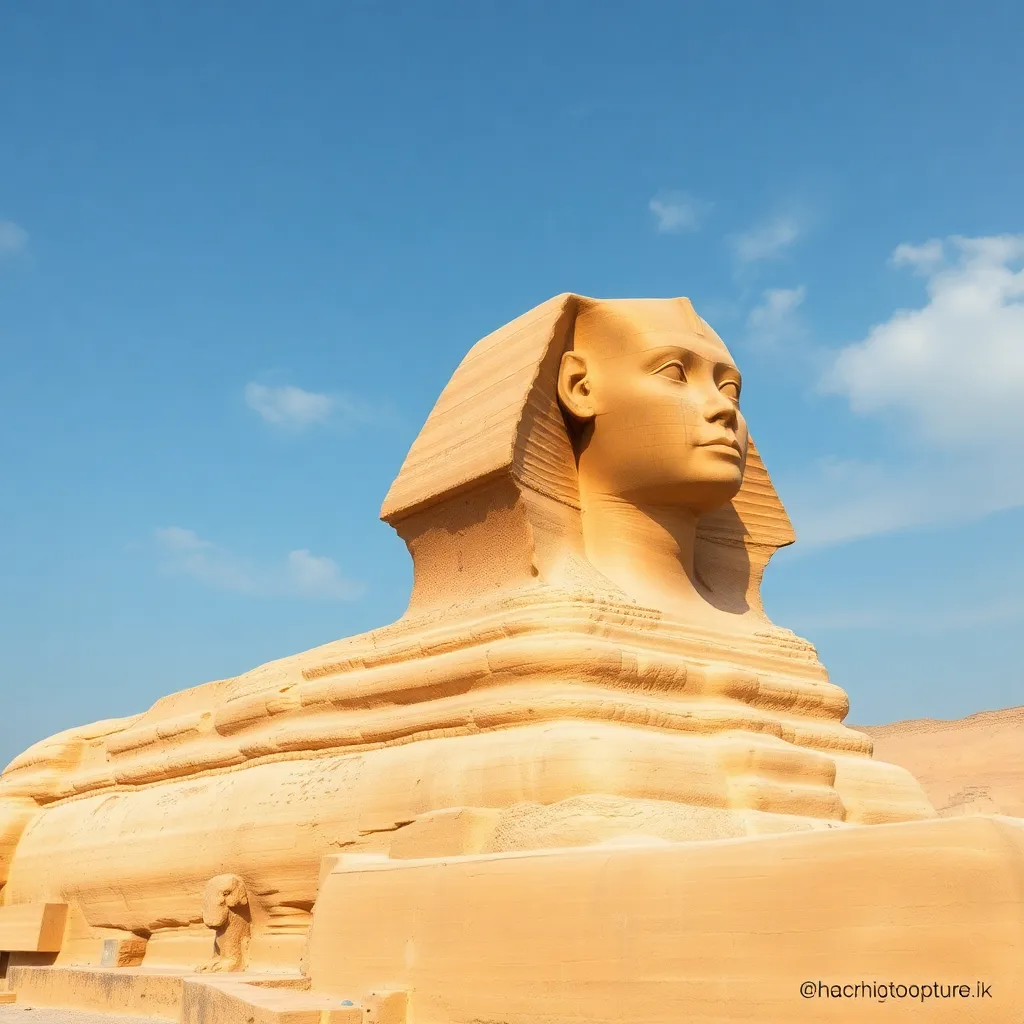
The Sphinx and Its Role in Egyptian Cosmology
I. Introduction
The Sphinx, a monumental statue with the body of a lion and the head of a human, stands as one of the most enduring cultural icons of ancient Egypt. Its grand presence on the Giza Plateau has captivated the imagination of historians, archaeologists, and tourists alike. As a symbol of strength and wisdom, the Sphinx embodies the complex beliefs and values of ancient Egyptian society.
In ancient Egyptian culture, the Sphinx held significant importance, serving not only as a guardian of sacred spaces but also as a representation of the pharaoh’s divine power. This article aims to explore the Sphinx’s multifaceted role in Egyptian cosmology, delving into its historical context, symbolism, mythological connections, and its significance in religious practices.
II. Historical Context of the Sphinx
The Great Sphinx of Giza, believed to have been constructed during the reign of Pharaoh Khafre around 2500 BCE, showcases remarkable architectural ingenuity. Carved from limestone, it measures approximately 73 meters long and 20 meters high, making it one of the largest and oldest statues in the world.
Throughout history, several prominent figures have been connected to the Sphinx. Pharaoh Khafre, who is often associated with the Sphinx, is believed to have commissioned its construction as a tribute to himself and as a protector of the Giza Plateau. Additionally, the Sphinx has been linked to various dynasties and rulers who sought to maintain its legacy and significance.
Located on the Giza Plateau, the Sphinx is part of a complex that includes the Great Pyramid of Giza and other significant structures, which together served as a monumental testament to ancient Egyptian civilization.
III. Symbolism of the Sphinx
The Sphinx is rich in symbolism, representing various attributes that were highly valued in ancient Egyptian culture.
- Representation of strength and wisdom: The lion’s body signifies power and courage, while the human head symbolizes intelligence and reason, merging the qualities of both beasts and humans.
- The fusion of human and animal forms: This hybrid form reflects the ancient Egyptians’ belief in the interconnectedness of nature and divinity.
- The Sphinx as a guardian figure: Positioned at the entrance of temples and tombs, the Sphinx served as a protector, warding off evil spirits and ensuring the safety of sacred spaces.
IV. The Sphinx in Egyptian Mythology
The Sphinx is deeply embedded in Egyptian mythology, linking it to various mythological narratives and tales.
One of the most significant stories involves the Sphinx’s connection to Osiris and Isis, where the Sphinx is often viewed as a protector of the knowledge and sacredness associated with these deities. This connection emphasizes themes of resurrection and the afterlife, central to Egyptian belief systems.
When comparing the Sphinx to other mythological creatures, such as the Greek Sphinx, which posed riddles to travelers, it becomes evident that while both serve as guardians, the Egyptian Sphinx is more aligned with protective and divine qualities rather than the malevolent characteristics seen in other cultures.
V. Cosmological Significance of the Sphinx
The Sphinx’s role extends beyond earthly matters into the realm of cosmology.
- The Sphinx in relation to celestial bodies: Some scholars suggest that the Sphinx was aligned with constellations, particularly Leo, signifying the pharaoh’s connection to the heavens.
- Alignment with the stars and solstices: The positioning of the Sphinx may have been deliberate to mark astronomical events, serving as a calendar for important dates in the Egyptian religious calendar.
- The Sphinx as a representation of the afterlife: Its lion body signifies the protective nature of the Sphinx as a guide for souls in the afterlife, aligning with the beliefs surrounding the journey into the next world.
VI. The Sphinx and Ancient Egyptian Religion
In the context of ancient Egyptian religion, the Sphinx is associated with several deities, most notably Ra, the sun god, and Horus, the sky god.
Rituals and offerings were often made at the Sphinx to honor these deities and seek their favor. The Sphinx’s presence at Giza contributed to its significance as a religious site, where ceremonies were held to ensure the pharaoh’s divine connection to the gods.
Moreover, the Sphinx played a vital role in funerary practices, symbolizing the transition of the soul to the afterlife and providing protection for the deceased. Its imposing figure served as a reminder of the divine power that governed the afterlife.
VII. Modern Interpretations and Theories
In contemporary times, the Sphinx continues to be the subject of fascination and debate among archaeologists and historians. Numerous discoveries have shed light on its construction and purpose, although many questions remain unanswered.
The Sphinx has also made its mark in popular culture, appearing in films, literature, and art, further cementing its status as a global symbol of mystery and ancient wisdom.
Current theories about the Sphinx’s purpose and meaning vary widely, ranging from interpretations of its astronomical alignments to its role as a political symbol during the reign of Khafre. The ongoing exploration of its history keeps the intrigue surrounding the Sphinx alive.
VIII. Conclusion
In conclusion, the Great Sphinx of Giza holds a multifaceted role in Egyptian cosmology, intertwining themes of strength, wisdom, and divine protection. Its historical significance, rich symbolism, and connections to mythology and religion illustrate the complexity of ancient Egyptian beliefs.
The enduring legacy of the Sphinx continues to inspire curiosity and admiration, serving as a reminder of humanity’s quest for understanding and the cultural symbols that shape our perceptions of the past. As we delve deeper into the mysteries of ancient symbols, we gain valuable insights into the human experience and the cultures that have shaped our world.