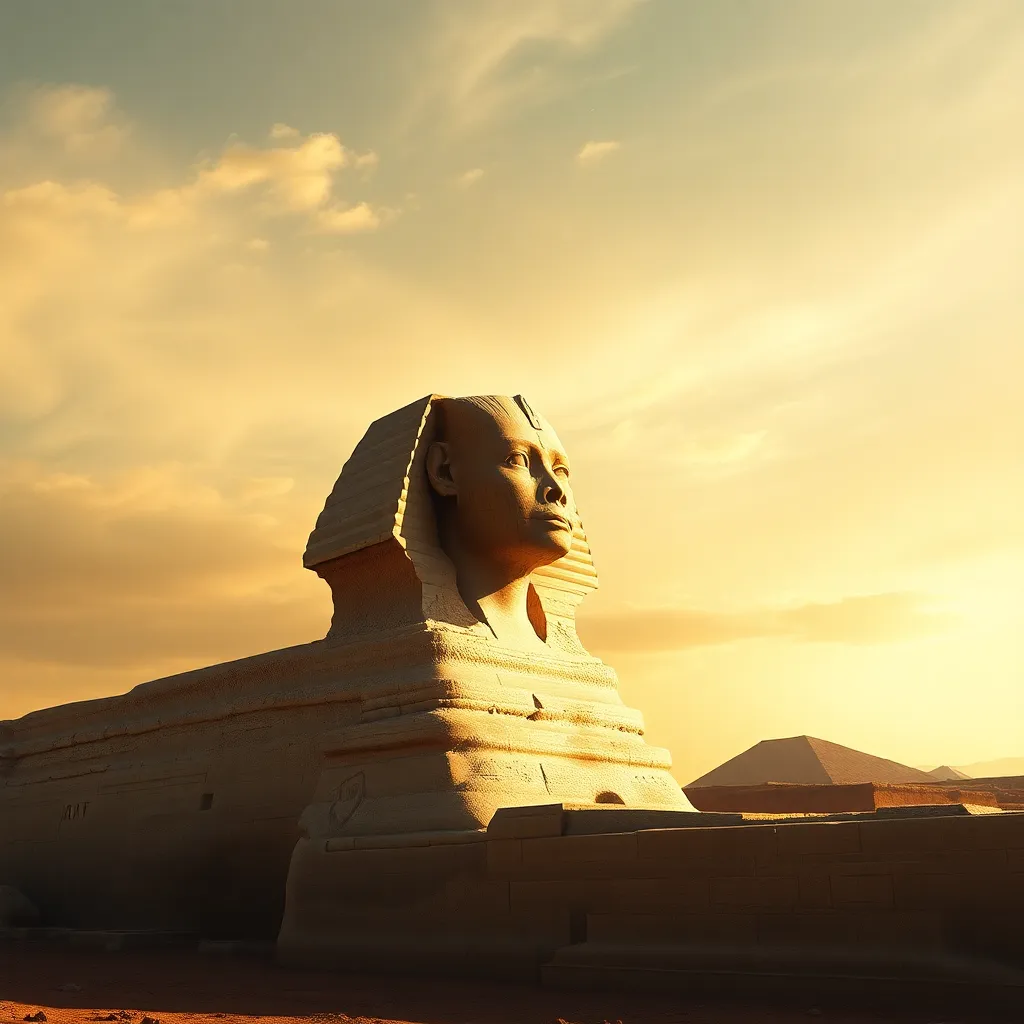
The Sphinx: A Symbol of the Eternal Enigma
I. Introduction
The Great Sphinx of Giza is one of the most recognizable monuments in the world, standing as a testament to the ingenuity and artistry of ancient Egyptian civilization. Its historical significance stretches back over 4,500 years, embodying the mysteries and complexities of a bygone era. As a symbol of enigma, the Sphinx invites deeper exploration into its multifaceted symbolism and the questions that continue to surround it.
This article aims to delve into the historical context, architectural marvel, and rich symbolism of the Sphinx. By examining its cultural relevance and the ongoing intrigue it inspires, we seek to uncover the layers of meaning that make the Sphinx a lasting icon of mystery.
II. Historical Context of the Sphinx
To understand the Sphinx, it is essential to consider its historical context:
- Origin and construction in ancient Egypt: The Sphinx is believed to have been constructed during the reign of Pharaoh Khafre (c. 2558–2532 BC), serving as a guardian for the nearby pyramids.
- Cultural and religious significance: The Sphinx represented the divine nature of the pharaohs, combining human intellect with the strength of a lion, symbolizing power and protection.
- Comparison with other ancient monuments: Alongside the Pyramids of Giza, the Sphinx stands as a remarkable achievement of engineering, rivaled by few other ancient structures.
III. Architectural Marvel
The Sphinx is not only an enigmatic figure but also an architectural marvel:
- Description of the Sphinx’s physical characteristics: Carved from a single limestone ridge, the Sphinx measures about 73 meters long and 20 meters high, showcasing the precision of ancient Egyptian craftsmanship.
- Theories surrounding its construction techniques: Various theories exist regarding the methods used to construct the Sphinx, with suggestions ranging from the use of simple tools to more sophisticated engineering techniques.
- The Sphinx in relation to the Pyramids of Giza: Positioned strategically on the Giza plateau, the Sphinx aligns with the pyramids, symbolizing the connection between the mortal realm and the divine.
IV. Symbolism of the Sphinx
The Sphinx embodies profound symbolism that reflects ancient Egyptian beliefs:
- The duality of human and lion forms: This combination emphasizes the balance between intelligence and strength, a representation of the ideal ruler.
- Interpretations of strength and wisdom: The Sphinx is often seen as a guardian, representing the wisdom of the pharaohs and their role in maintaining order.
- The Sphinx as a guardian of sacred knowledge: In many ancient myths, the Sphinx is portrayed as a protector of secrets, challenging those who seek knowledge to prove their worth.
V. The Sphinx in Mythology and Literature
The Sphinx has left an indelible mark on mythology and literature:
- Role in ancient Egyptian myths: The Sphinx features prominently in various myths, often associated with the sun god Ra and the pharaohs who were considered living gods.
- Influence on later Western literature and art: The image of the Sphinx has been adapted by countless authors and artists, symbolizing mystery and the unknown.
- The Sphinx as a metaphor in contemporary narratives: In modern storytelling, the Sphinx often represents the challenges of knowledge and the journey towards enlightenment.
VI. Modern Interpretations and Mysteries
Despite centuries of study, the Sphinx continues to be a source of intrigue:
- Archaeological studies and discoveries: Ongoing excavations around the Sphinx have revealed artifacts and structures that provide insights into its historical context.
- Ongoing debates about its purpose and origins: Scholars continue to debate the original function of the Sphinx, with theories ranging from a guardian statue to a representation of the pharaoh’s power.
- The Sphinx in popular culture: The Sphinx has been featured in numerous films, games, and literature, solidifying its status as a cultural icon.
VII. The Sphinx as a Cultural Icon
As a cultural icon, the Sphinx transcends its origins:
- Representation in global art and architecture: The Sphinx’s image has inspired countless artworks, from ancient sculptures to contemporary designs.
- Impact on national identity in Egypt: The Sphinx is a symbol of Egyptian heritage, embodying the country’s rich history and cultural legacy.
- Symbol of the enigma in philosophical discussions: The Sphinx often serves as a metaphor in philosophical discourse, representing the quest for knowledge and understanding.
VIII. Conclusion
In conclusion, the Great Sphinx of Giza stands as a remarkable symbol of mystery and enigma. Its historical significance, architectural beauty, and rich symbolism contribute to its enduring legacy. As we continue to explore the depths of its meaning and the mysteries that surround it, the Sphinx remains a powerful reminder of the complexities of human civilization and the eternal quest for knowledge.
As we reflect on the Sphinx’s impact on culture, literature, and philosophy, we are reminded of the stories it holds, inviting us to delve deeper into the mysteries that continue to fascinate generations. The Sphinx, with its silent gaze, beckons us to uncover the secrets of our past and ponder the enigmas of our future.