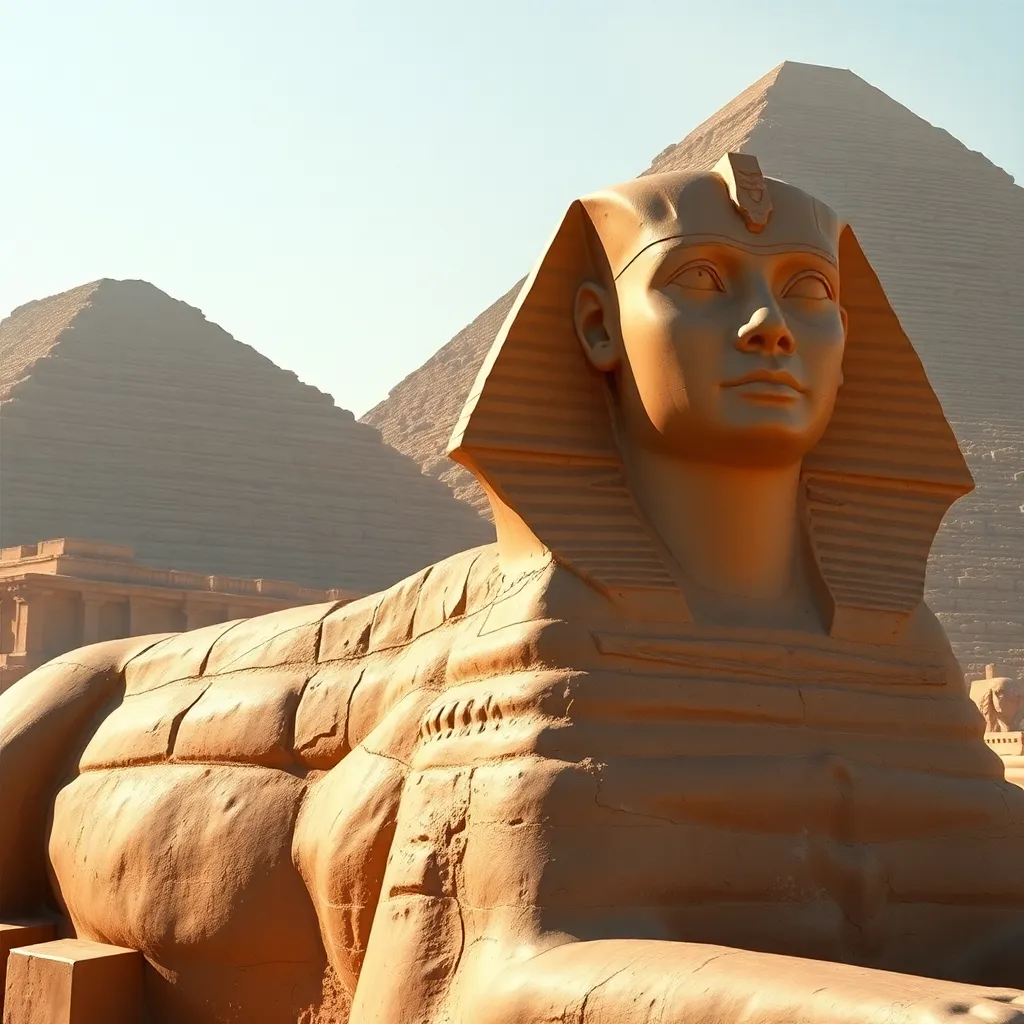
The Sphinx: A Symbol of Kingship and Authority
I. Introduction
The Sphinx, one of the most iconic monuments of ancient Egypt, has captivated the imagination of historians, archaeologists, and the general public for centuries. This mythical creature, with the body of a lion and the head of a human, served not only as a guardian of the tombs but also as a powerful symbol of kingship and authority in ancient Egyptian culture.
The importance of the Sphinx extends beyond its physical presence; it embodies the divine right of pharaohs and their connection to the gods. This article aims to explore the historical context, symbolism, and cultural impacts of the Sphinx, shedding light on its enduring legacy as a symbol of power and authority.
II. Historical Context of the Sphinx
A. Origins and construction of the Great Sphinx of Giza
The Great Sphinx of Giza, located on the Giza Plateau, is believed to have been constructed during the reign of Pharaoh Khafre around 2500 BCE. Carved from a single mass of limestone, the Sphinx measures approximately 73 meters long and 20 meters high, making it one of the largest and oldest statues in the world.
Its construction is a testament to the engineering prowess of the ancient Egyptians and their dedication to monumental architecture. The Sphinx was part of a larger funerary complex, which included the nearby pyramids, reinforcing its role in the realm of the divine.
B. The role of the Sphinx in ancient Egyptian mythology
In ancient Egyptian mythology, the Sphinx represents a powerful protective figure, often associated with the sun god Ra and the pharaohs. It was believed that the Sphinx had the ability to ward off evil spirits and protect the pharaoh’s tomb. This connection to mythology emphasizes the Sphinx’s divine nature and its role in the afterlife.
C. Relationship between the Sphinx and pharaohs
The Sphinx was not just a guardian; it was also a symbol of the pharaoh’s authority and divine right to rule. Pharaohs were often depicted alongside the Sphinx in art and inscriptions, reinforcing their connection to the divine and their role as mediators between the gods and the people.
III. Iconography and Symbolism of the Sphinx
A. Physical characteristics and their symbolic meanings
The Sphinx’s iconic imagery—a lion’s body with a human head—carries significant symbolic meanings. The lion symbolizes strength, courage, and protection, while the human head represents intelligence and wisdom. This fusion of characteristics embodies the ideal qualities of a ruler in ancient Egyptian society.
B. The fusion of human and lion features as a representation of power
- Authority: The lion is often seen as the king of the beasts, while the human head signifies the power of the intellect, presenting an ideal ruler.
- Divine connection: This combination reflects the belief that pharaohs were divine beings, with the strength of a lion and the wisdom of a human.
C. The Sphinx in relation to solar deities and divine kingship
The Sphinx’s alignment and positioning are often linked to solar deities, particularly Ra. As a solar symbol, the Sphinx reflects the pharaoh’s role as the son of Ra, reinforcing the idea of divine kingship. This connection to the sun also symbolizes rebirth and the eternal cycle of life and death.
IV. The Sphinx in Pharaoh’s Mortuary Practices
A. The Sphinx as guardian of tombs and the afterlife
The Sphinx was believed to serve as a guardian of the pharaoh’s tomb, protecting the deceased from intruders and evil spirits. Its imposing presence at the Giza Plateau signifies the importance of safeguarding the pharaoh’s journey into the afterlife.
B. Rituals and offerings associated with the Sphinx
Ancient Egyptians performed various rituals and offerings at the Sphinx to ensure its protection and favor. These included:
- Placing food and drink offerings at the base of the Sphinx.
- Conducting ceremonies to honor the Sphinx as a guardian.
- Creating inscriptions that invoke the Sphinx’s protective powers.
C. The Sphinx’s role in promoting the pharaoh’s divine status
The Sphinx’s presence reinforced the divine status of the pharaoh, serving as a physical manifestation of their power and authority. By being associated with such a monumental figure, pharaohs could legitimize their rule and connect with the divine.
V. The Sphinx in Art and Literature
A. Depictions of the Sphinx in ancient Egyptian art
The Sphinx has been depicted in numerous forms of ancient Egyptian art, ranging from sculpture to wall reliefs. These representations often showcase the Sphinx alongside pharaohs, emphasizing its protective and authoritative roles.
B. References to the Sphinx in ancient texts and literature
Ancient texts and inscriptions frequently mention the Sphinx, often in the context of its protective powers and its relationship with the pharaohs. Notable mentions can be found in:
- The Pyramid Texts, which highlight its role in the afterlife.
- Historical records by travelers and scholars who visited Egypt.
C. The Sphinx’s influence on subsequent cultures and art forms
The Sphinx’s iconic image has influenced various cultures and art forms throughout history, inspiring Greek and Roman sculptures, Renaissance art, and modern interpretations. Its symbolism has persisted, representing authority and mystery across different civilizations.
VI. Modern Interpretations and Controversies
A. Archaeological discoveries related to the Sphinx
Recent archaeological discoveries have shed light on the Sphinx’s construction and purpose. Excavations have revealed additional structures and artifacts that provide insight into its role in ancient Egyptian society.
B. Theories regarding the Sphinx’s purpose and significance
Scholars continue to debate the Sphinx’s original purpose. Some theories suggest it was primarily a tomb guardian, while others posit it served as a solar symbol or a representation of the pharaoh’s power. The ongoing research keeps the Sphinx a topic of intrigue.
C. Contemporary views on the Sphinx as a symbol of authority
Today, the Sphinx is seen as a universal symbol of power and authority, transcending its ancient origins. It continues to serve as a reminder of the grandeur of ancient Egyptian civilization and the enduring fascination with its mysteries.
VII. The Sphinx in Popular Culture
A. Representation of the Sphinx in films, literature, and games
The Sphinx has appeared in various forms of popular culture, including films, literature, and video games. Notable appearances include:
- Films like “The Mummy” and “Night at the Museum.”
- Novels such as Agatha Christie’s “Death on the Nile.”
- Video games like “Assassin’s Creed Origins.”
B. The Sphinx’s impact on modern symbols of power and authority
The Sphinx’s imagery has influenced modern symbols of power, often used in architecture and branding to evoke a sense of strength and mystery. Its presence in contemporary culture underscores its lasting significance.
C. Public perception and fascination with the Sphinx today
Public fascination with the Sphinx remains strong, with millions of tourists visiting the Giza Plateau each year. This interest reflects a broader curiosity about ancient civilizations and their monumental achievements.
VIII. Conclusion
In conclusion, the Sphinx stands as a powerful symbol of kingship and authority in ancient Egyptian culture. Its historical significance, rich symbolism, and cultural influences highlight its role as both a guardian and a divine representation of pharaohs.
The enduring legacy of the Sphinx in history and culture serves as a reminder of the achievements of ancient Egypt and the importance of preserving such historical symbols for future generations. As we continue to explore and interpret its mysteries, the Sphinx remains a source of awe and inspiration that transcends time.