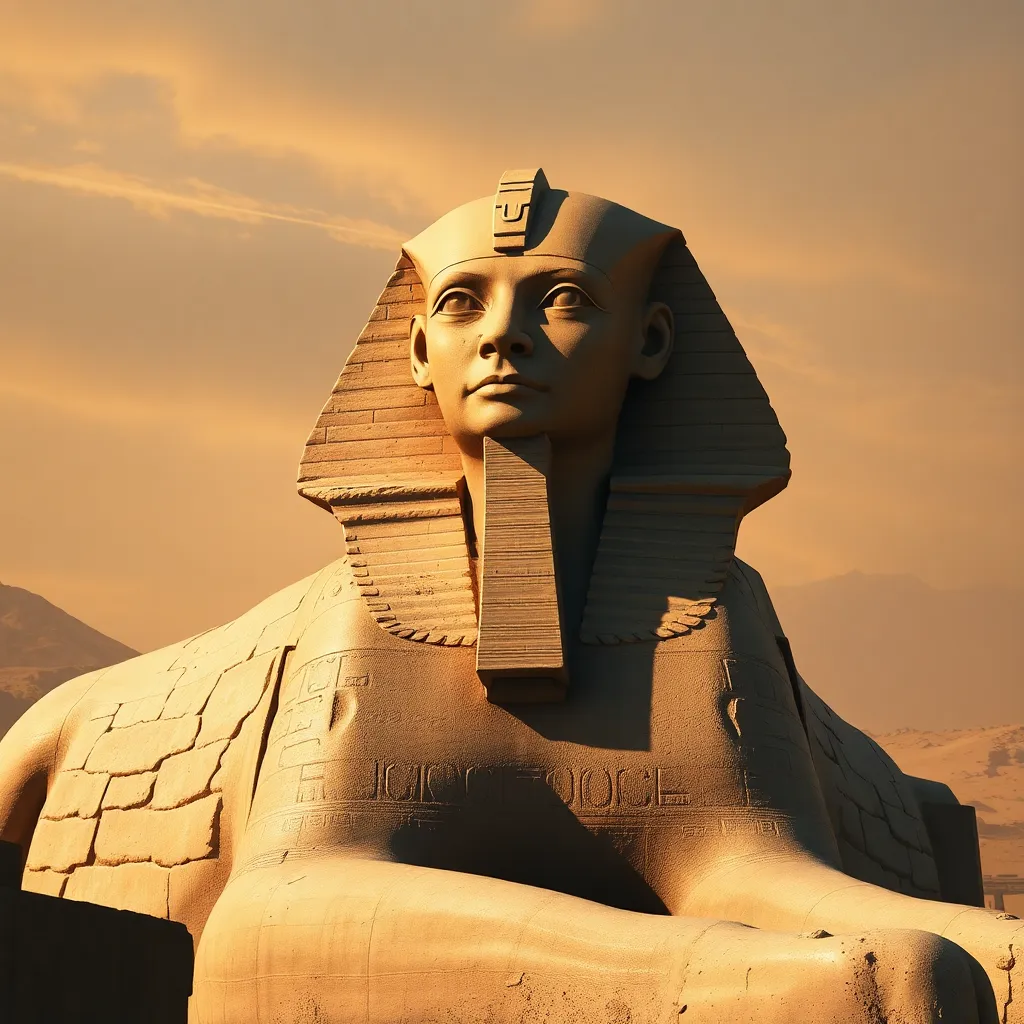
The Sphinx: A Mysterious Guardian of Secrets
I. Introduction
The Great Sphinx of Giza stands as one of the most iconic monuments of ancient Egypt, symbolizing the rich history and complexity of its civilization. This massive limestone statue, with the body of a lion and the head of a pharaoh, captures the imagination of scholars and tourists alike. Its significance in ancient history is profound, as it embodies the fusion of art, religion, and politics in a society that revered both the celestial and the terrestrial.
Yet, the Sphinx is shrouded in mysteries that have intrigued historians and archaeologists for centuries. Questions regarding its origin, purpose, and the secrets it may conceal continue to provoke debate and research. This article aims to explore the historical background, theories about its purpose, enigmatic features, archaeological discoveries, modern cultural significance, and the enduring mysteries of the Sphinx.
II. Historical Background
A. Origins of the Sphinx in ancient Egypt
The Sphinx is believed to have been constructed during the reign of Pharaoh Khafre, around 2500 BCE, as part of the Giza pyramid complex. It is a representation of the pharaoh himself, merging human intellect with the strength and power of a lion. This fusion reflects the Egyptian belief in the divine nature of their kings, who were seen as intermediaries between the gods and the people.
B. The construction and architectural features
Standing at approximately 20 meters (66 feet) high and 73 meters (240 feet) long, the Sphinx is the largest monolithic statue in the world. Carved from a single block of limestone, its face is believed to have originally been painted in vibrant colors, enhancing its grandeur. The precision of its construction showcases the advanced engineering skills of ancient Egyptian builders, highlighting their ability to work with large stone materials and create enduring monuments.
C. Cultural significance in Egyptian mythology
In Egyptian mythology, the Sphinx is often associated with the sun god Ra and the pharaohs’ divine protection. It served as a guardian of sacred sites, embodying the concept of strength and wisdom. The Sphinx’s presence at Giza was not just a physical structure; it was a spiritual sentinel watching over the land and its people.
III. Theories About Its Purpose
A. The Sphinx as a guardian of the Giza Plateau
Many scholars believe that the primary purpose of the Sphinx was to serve as a guardian of the Giza Plateau, protecting the royal tombs from intruders. Its imposing figure would have deterred potential thieves and provided a sense of security to the sacred burial sites of the pharaohs.
B. Various interpretations of its symbolic meaning
- Representation of Royal Power: The Sphinx symbolizes the power and authority of the pharaoh, suggesting that the ruler possesses both strength and wisdom.
- Solar Symbolism: As a creature associated with the sun, the Sphinx may represent the sun’s journey across the sky, connecting the earthly realm with the divine.
- Mythological Connections: Some interpretations link the Sphinx to various myths, including those of Osiris, emphasizing the interplay between life, death, and rebirth.
C. Theories regarding its connection to the Pharaohs
Several theories propose that the Sphinx was constructed as a direct representation of Pharaoh Khafre. Its face is thought to resemble his likeness, suggesting that it served as a personal guardian for the king in the afterlife. This connection to the pharaoh reinforces the idea that the Sphinx was not merely a statue but a vital part of the royal burial complex.
IV. The Enigmatic Features of the Sphinx
A. Physical characteristics and dimensions
The Sphinx’s dimensions are truly remarkable. With a length of 73 meters and a height of 20 meters, it dominates the Giza landscape. The facial features, originally adorned with a ceremonial beard, have eroded over time, yet they continue to convey an aura of majesty and mystery. Its eyes, which are aligned with the rising sun, suggest a connection to the celestial realm.
B. The riddle of the Sphinx in literature and legend
The Sphinx is famously associated with the riddle in Greek mythology, where it posed a question to Oedipus: What walks on four legs in the morning, two legs at noon, and three legs in the evening? This riddle symbolizes the journey of life and the stages of human existence, further enhancing the enigmatic nature of the Sphinx.
C. The significance of its alignment with celestial bodies
The Sphinx is aligned with the constellation Leo, which has led to theories that it was constructed to honor the stars and their influence on human fate. This alignment highlights the ancient Egyptians’ deep understanding of astronomy and their belief in the connection between the cosmos and terrestrial life.
V. Archaeological Discoveries and Excavations
A. Major archaeological findings around the Sphinx
Over the years, numerous archaeological excavations have taken place around the Sphinx, revealing artifacts and structures that provide insights into its history. Discoveries include tools used for construction, remnants of ancient rituals, and inscriptions that speak to the significance of the Sphinx in the context of Egyptian society.
B. Recent discoveries that shed light on its history
Recent excavations have uncovered additional chambers and passageways around the Sphinx, suggesting that there may be more hidden secrets yet to be revealed. These findings continue to spark interest and debate among historians and archaeologists regarding the Sphinx’s purpose and historical context.
C. Ongoing research and exploration of the Sphinx
Research on the Sphinx remains active, with scholars employing modern technology such as Ground Penetrating Radar (GPR) to explore beneath its surface. This ongoing exploration aims to uncover hidden chambers and further understand the monument’s construction and purpose.
VI. The Sphinx in Modern Culture
A. The Sphinx in art, literature, and film
The Sphinx continues to inspire artists, writers, and filmmakers. Its mysterious presence has appeared in various forms of art, from paintings to sculptures, and in films that explore ancient civilizations. The Sphinx frequently symbolizes mystery, wisdom, and the allure of ancient history.
B. Its role in tourism and its impact on the Egyptian economy
As one of the most visited tourist attractions in the world, the Sphinx plays a crucial role in Egypt’s economy. Millions of visitors flock to Giza each year, drawn by its historical significance and breathtaking presence. The revenue generated from tourism supports local businesses and contributes to the preservation of Egypt’s rich cultural heritage.
C. Contemporary interpretations and representations
Contemporary interpretations of the Sphinx often explore its symbolism in relation to modern themes such as identity, power, and the passage of time. Artists use the Sphinx to comment on current social issues, connecting ancient wisdom with contemporary challenges.
VII. The Mysteries Yet to be Unraveled
A. Unanswered questions about the Sphinx’s origins and purpose
Despite extensive research, many questions about the Sphinx remain unanswered. Scholars continue to debate its exact date of construction and the full extent of its purpose within the Giza complex. These mysteries fuel ongoing interest and exploration.
B. Theories regarding hidden chambers and undiscovered secrets
There are numerous theories suggesting that hidden chambers lie beneath or within the Sphinx. These theories speculate that the Sphinx may contain ancient texts or artifacts that could illuminate our understanding of ancient Egyptian civilization.
C. The ongoing allure and fascination with the Sphinx
The Sphinx has captivated the human imagination for millennia. Its grandeur, combined with the mysteries surrounding it, continues to draw researchers and tourists alike. The allure of the Sphinx lies not only in its physical presence but also in its symbolic representation of the unknown.
VIII. Conclusion
In summary, the Great Sphinx of Giza stands as a testament to the ingenuity and creativity of ancient Egyptian civilization. Its historical and cultural importance is unparalleled, and its mysteries continue to inspire curiosity and exploration. As we delve deeper into its history and significance, the Sphinx remains an enduring symbol of mystery, inviting future generations to uncover its secrets and preserve its legacy for years to come.
As we explore the depths of its history, let us advocate for the preservation of this magnificent monument, ensuring that it continues to capture the imagination of all who seek to understand the wonders of ancient Egypt.</