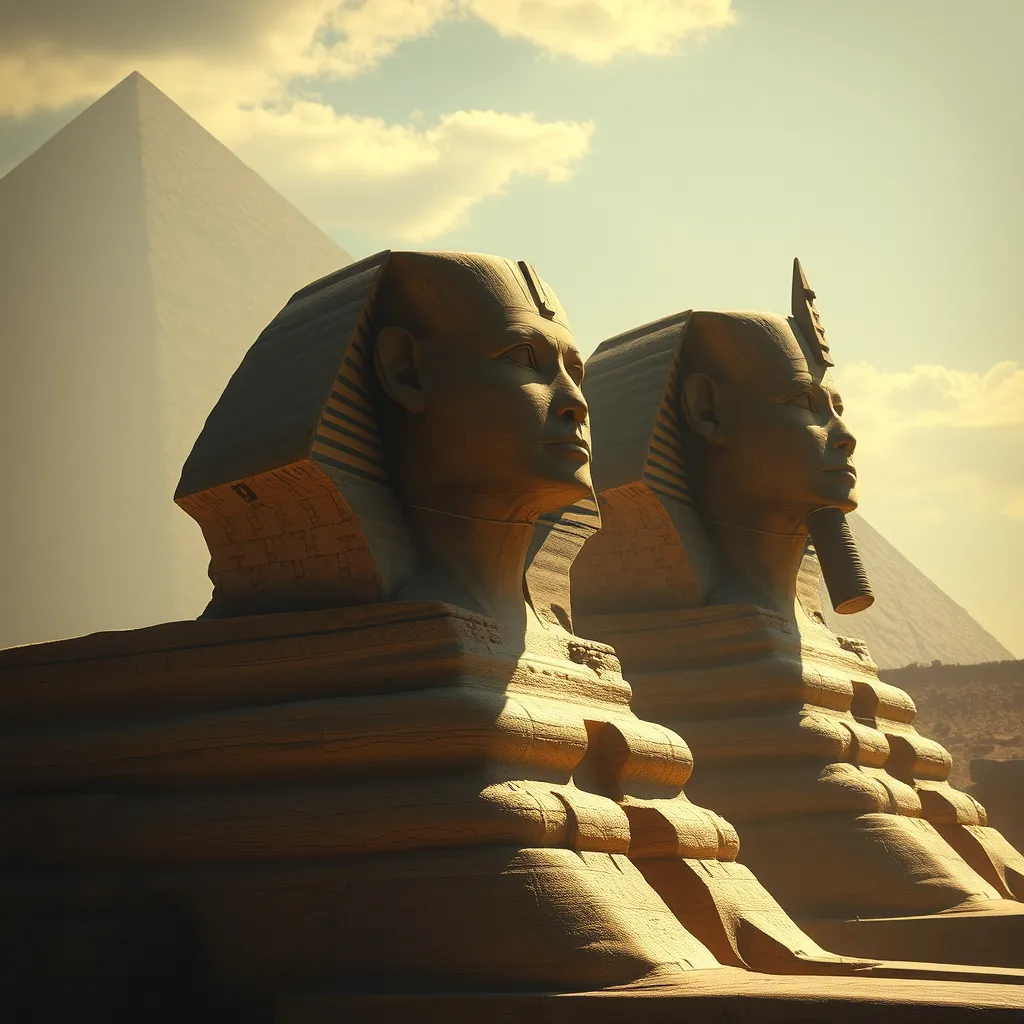
The Shadow of the Sphinx: A Journey Through the Lives of Ancient Egyptian Rulers
I. Introduction
Ancient Egyptian civilization is one of the most fascinating and enduring cultures in human history. Emerging around 3100 BCE, it flourished for thousands of years along the banks of the Nile River, leaving an indelible mark on the world with its remarkable achievements in art, architecture, and governance. At the heart of this civilization were the pharaohs, the rulers who shaped Egypt’s political, cultural, and religious landscape.
The importance of these rulers cannot be overstated; they were seen not only as political leaders but also as divine figures who maintained order and harmony in society. This article aims to explore the lives and legacies of key pharaohs, examining their contributions to one of history’s most iconic civilizations.
II. The Role of the Pharaoh in Ancient Egypt
The pharaoh was the supreme leader of Ancient Egypt, serving as both the political and religious head of state. This dual role was crucial for maintaining the stability and prosperity of the kingdom. The pharaoh was considered a living god, embodying the divine right to rule. This theocratic power granted them significant influence over both governance and the spiritual lives of the people.
Pharaohs were responsible for:
- Maintaining ma’at (order, justice, and harmony) in society.
- Overseeing religious ceremonies and temple constructions.
- Leading military campaigns to protect and expand the kingdom.
- Implementing laws and managing resources for the populace.
III. The Early Dynastic Period: Foundations of Power
The Early Dynastic Period (c. 3100-2686 BCE) marked the unification of Upper and Lower Egypt, a pivotal moment in the formation of the Egyptian state. Narmer, also known as Menes, is credited with this unification and the establishment of the first dynasty around 3100 BCE.
Key innovations during this period included:
- The development of a centralized bureaucracy.
- Advancements in writing, particularly hieroglyphics.
- Establishment of trade networks with neighboring cultures.
IV. The Age of the Pyramids: Iconic Rulers and Their Monuments
The Old Kingdom (c. 2686-2181 BCE) is known as the “Age of the Pyramids,” characterized by the monumental architecture and the powerful rulers such as Djoser, Sneferu, and Khufu. These pharaohs are renowned for their ambitious building projects, especially the construction of pyramids, which served as elaborate tombs for the deceased.
The architectural and cultural significance of these pyramids includes:
- Demonstrating the advances in engineering and labor organization.
- Reflecting the pharaoh’s divine status and the importance of the afterlife.
- Contributing to a shared cultural identity through monumental art and architecture.
The concept of the afterlife was central to Egyptian belief, influencing burial practices that emphasized preservation for eternity. Tombs were filled with offerings, and elaborate rituals were performed to ensure safe passage into the next world.
V. The Middle Kingdom: A Time of Prosperity and Cultural Flourishing
The Middle Kingdom (c. 2055-1650 BCE) was marked by a resurgence of power, stability, and cultural flourishing. Key figures such as Mentuhotep II and Amenemhat III led this period, during which Egypt experienced significant advancements.
Major developments included:
- Increased agricultural production and irrigation techniques.
- Flourishing arts, literature, and philosophy, including notable works like “The Tale of Sinuhe.”
- Expansion of trade routes and diplomatic relations with neighboring regions.
The Middle Kingdom also saw social and political changes, with a greater emphasis on the welfare of the common people, leading to improvements in their quality of life.
VI. The New Kingdom: Empire and Expansion
The New Kingdom (c. 1550-1070 BCE) is often regarded as the height of Ancient Egyptian civilization, characterized by military conquests and territorial expansion. Notable pharaohs such as Hatshepsut, Akhenaten, Tutankhamun, and Ramses II left significant legacies.
During this time:
- Hatshepsut, one of the few female pharaohs, expanded trade networks and initiated monumental construction projects.
- Akhenaten introduced radical religious reforms, promoting the worship of a single deity, Aten, which dramatically altered the Egyptian religious landscape.
- Tutankhamun, though a young ruler, became famous for his intact tomb discovered in 1922, providing insights into burial practices and royal life.
- Ramses II, known as Ramses the Great, is celebrated for his military campaigns, extensive building projects, and the signing of the first known peace treaty.
This era also witnessed the rise of the cult of Amun, further entwining religion with politics and expanding the influence of priestly classes.
VII. Decline and Legacy: The Final Rulers of Ancient Egypt
The decline of Ancient Egypt began in the late New Kingdom, marked by foreign invasions and internal strife. The last native pharaohs struggled to maintain control as foreign powers, such as the Libyans and Nubians, invaded.
Key points during this decline include:
- Internal conflicts weakened the centralized power of the pharaohs.
- Foreign invasions led to the loss of territory and resources.
- The last native pharaohs, like Cleopatra VII, attempted to restore Egypt’s former glory but ultimately succumbed to Roman conquest.
The enduring legacy of these ancient rulers is evident in modern culture, influencing art, literature, and popular imagination. The monumental structures they left behind, such as the Pyramids and temples, continue to attract millions of visitors each year, serving as a testament to their remarkable achievements.
VIII. Conclusion
Reflecting on the lives of ancient Egyptian rulers reveals a rich tapestry of history, culture, and human achievement. Their contributions to civilization, from monumental architecture to religious practices, shaped not only their own society but also laid the groundwork for future civilizations.
The fascination with ancient Egypt and its rulers endures, captivating the imaginations of people around the world. As we continue to explore and learn from their legacies, we gain insights into the complexities of human civilization and the enduring quest for meaning and immortality.
https://www.youtube.com/watch?v=AhuPEp4ct6U