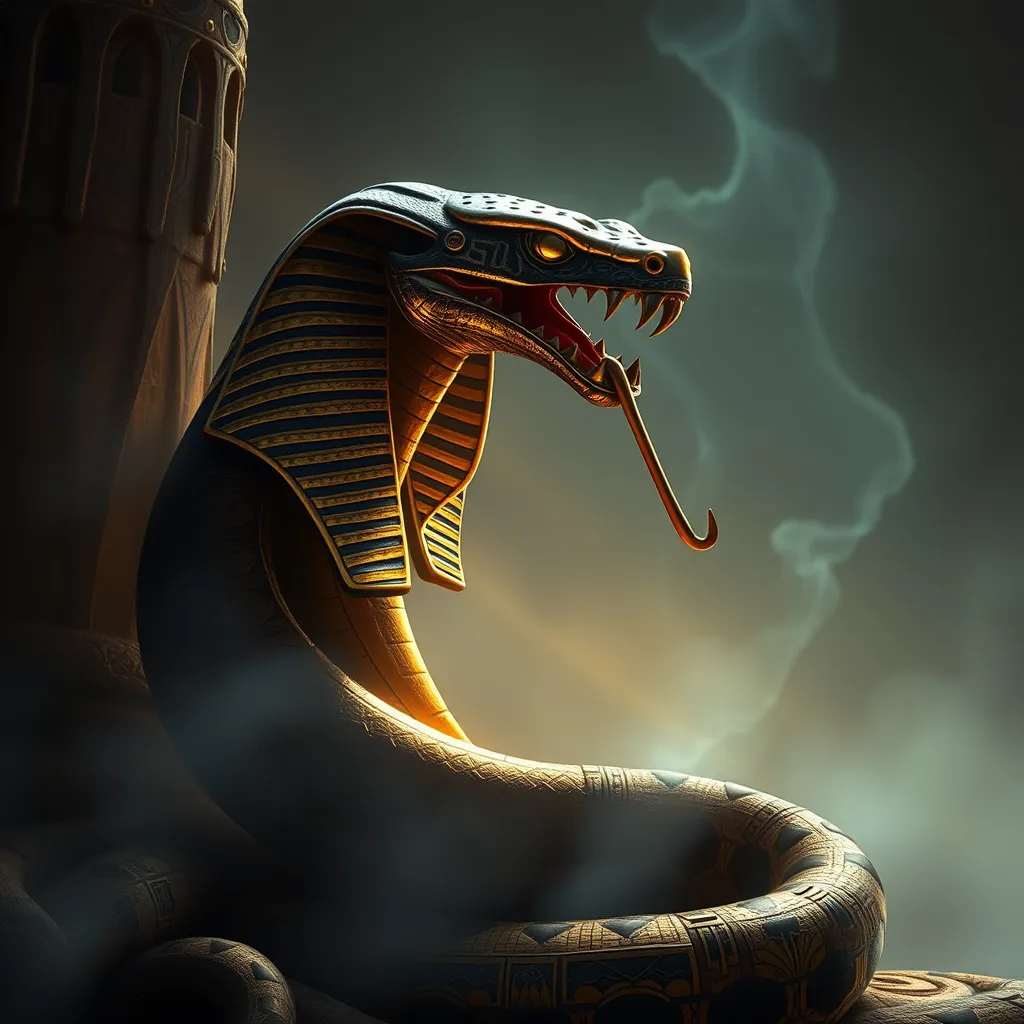
The Serpent’s Trail: The Legacy of Ancient Egypt’s Rulers
I. Introduction
Ancient Egypt, a civilization that flourished along the banks of the Nile for thousands of years, holds a unique place in the tapestry of human history. Its contributions to art, architecture, governance, and culture are unparalleled, making it a focal point of study and fascination for historians and archaeologists alike.
The concept of the “Serpent’s Trail” encapsulates the journey of ancient Egypt’s rulers, symbolizing their divine right to govern and the intricate path they carved through history. This article aims to explore the legacy of these rulers, examining their influence on society, culture, and the world at large.
We will delve into the historical context of ancient Egyptian rule, the divine nature of the Pharaohs, their architectural achievements, contributions to art and culture, economic systems, and the eventual decline of their civilization.
II. The Historical Context of Ancient Egyptian Rule
A. Timeline of ancient Egyptian civilization
Ancient Egyptian civilization is typically divided into several key periods:
- Pre-dynastic Period (c. 5000-3100 BCE)
- Early Dynastic Period (c. 3100-2686 BCE)
- Old Kingdom (c. 2686-2181 BCE)
- Middle Kingdom (c. 2055-1650 BCE)
- New Kingdom (c. 1550-1070 BCE)
- Third Intermediate Period (c. 1070-664 BCE)
- Late Period (c. 664-332 BCE)
- Hellenistic Period (c. 332-30 BCE)
B. Key dynasties and their contributions
Among the numerous dynasties that ruled Egypt, several stand out for their monumental contributions:
- The 4th Dynasty, known for the construction of the Great Pyramid of Giza.
- The 18th Dynasty, which saw the reign of powerful Pharaohs like Hatshepsut and Akhenaten.
- The 19th Dynasty, noted for the military achievements of Ramses II.
C. Influence of geography and culture on governance
The geography of Egypt, with the Nile River providing fertile land and a means of transport, significantly influenced the development of its civilization. This natural resource allowed for agricultural surplus, which in turn supported a complex society and powerful rulers. Additionally, the cultural practices, including religion and art, shaped the governance and societal structure of ancient Egypt.
III. The Pharaohs: Divine Rulers of Egypt
A. Role of the Pharaohs in society and religion
Pharaohs were not just political leaders; they were considered divine intermediaries between the gods and the people. Their authority was legitimized by their supposed descent from the gods, which reinforced their power and mandate to rule.
B. Notable Pharaohs and their achievements
Several Pharaohs left indelible marks on history:
- Ramses II: Known as Ramses the Great, he is famous for his military campaigns and monumental architecture, including the temples at Abu Simbel.
- Cleopatra VII: The last active ruler of the Ptolemaic Kingdom, she is renowned for her intelligence, political acumen, and romantic liaisons with Roman leaders Julius Caesar and Mark Antony.
C. The concept of Ma’at and its significance in leadership
Ma’at, representing truth, balance, and order, was central to ancient Egyptian society. Pharaohs were expected to uphold Ma’at, ensuring justice and harmony throughout the kingdom. This principle guided their actions and policies, reinforcing their legitimacy as rulers.
IV. Architectural Marvels and Their Symbolism
A. The construction of pyramids and temples
Ancient Egyptians constructed monumental structures that served both practical and symbolic purposes. The pyramids, especially the ones at Giza, are among the most recognizable symbols of ancient Egypt, built as tombs for the Pharaohs to ensure their journey into the afterlife.
B. The role of architecture in demonstrating power and legacy
Architecture in ancient Egypt was a testament to the Pharaoh’s power and divine connection. Temples dedicated to gods served as centers of worship and administration, showcasing the Pharaoh’s role as a mediator between the divine and the earthly realm.
C. Analysis of specific sites
Two of the most significant sites include:
- The Pyramids of Giza: Built during the 4th Dynasty, these structures exemplify the ingenuity and ambition of the ancient Egyptians.
- Karnak Temple: This vast complex reflects the religious devotion of the Egyptians, with its extensive array of temples, chapels, and pylons dedicated to the gods.
V. The Art and Culture of Ancient Egypt
A. Artistic styles and their evolution through dynasties
Ancient Egyptian art is characterized by its distinct styles, which evolved over the centuries. From the early dynastic period’s simplicity to the more elaborate and expressive forms of the New Kingdom, art served both religious and political purposes.
B. The impact of rulers on art, literature, and religion
Pharaohs played a crucial role in promoting artistic endeavors, commissioning works that reflected their power and divine status. Literature flourished, with texts like the “Book of the Dead” illustrating beliefs about the afterlife.
C. Preservation of cultural heritage in modern times
Today, efforts to preserve ancient Egyptian art and culture continue, with museums and archaeological sites around the world showcasing this rich heritage. The fascination with ancient Egypt endures in literature, film, and popular culture.
VI. The Economy and Trade Networks
A. Overview of the ancient Egyptian economy
The ancient Egyptian economy was primarily agrarian, supported by the fertile lands along the Nile. Agriculture, particularly the cultivation of wheat and barley, formed the backbone of the economy.
B. Role of rulers in establishing trade routes and relations
Pharaohs facilitated trade by establishing routes and diplomatic relations with neighboring regions, such as Punt and Nubia. These interactions allowed for the exchange of goods, ideas, and culture, enriching Egyptian society.
C. The impact of trade on the legacy of ancient Egypt
Trade not only bolstered the economy but also contributed to the cultural exchange that shaped ancient Egypt. The influx of goods and ideas influenced art, technology, and religion, leaving a lasting legacy.
VII. The Decline of Ancient Egyptian Civilization
A. Factors contributing to the decline of the Pharaohs’ power
The decline of ancient Egyptian civilization can be attributed to several factors, including economic difficulties, internal strife, and loss of centralized power.
B. The role of foreign invasions and internal strife
Invasions by foreign powers, such as the Assyrians and Persians, along with internal conflicts, weakened the authority of the Pharaohs and fragmented the once-unified state.
C. Lasting impacts of decline on subsequent civilizations
The decline of ancient Egypt paved the way for the rise of other civilizations, such as the Greeks and Romans, who were influenced by Egyptian culture and governance.
VIII. Conclusion
In summary, the legacy of ancient Egypt’s rulers is a complex tapestry woven through millennia of history. From the divine nature of the Pharaohs to their monumental architectural achievements, the contributions of ancient Egypt continue to resonate in contemporary culture and scholarship.
As we reflect on the enduring legacy of these rulers, it is evident that their influence transcends time, shaping not only their civilization but also the world beyond. The allure of ancient Egypt remains strong, inviting ongoing exploration and appreciation of its remarkable history.