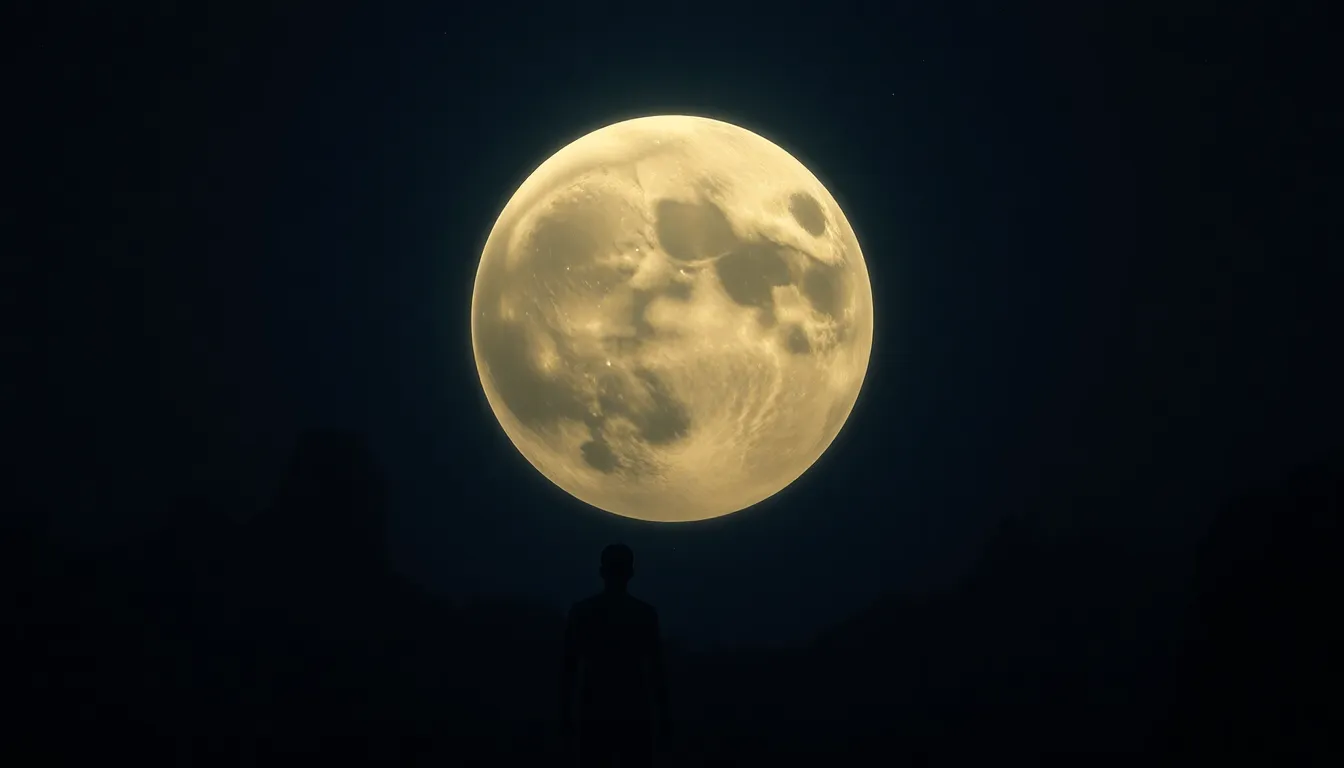
The Role of the Moon in Egyptian Spiritual Practices
I. Introduction
The Moon has held a profound significance in ancient Egyptian culture, influencing not only their mythology but also their daily lives and spiritual practices. Its phases and cycles were believed to have a direct impact on the natural world, agricultural activities, and spiritual rituals. This article aims to explore the lunar influence on spirituality and rituals within ancient Egypt, shedding light on how the Moon shaped their practices and beliefs.
II. Historical Context of Lunar Worship in Ancient Egypt
The worship of lunar deities can be traced back to the earliest dynastic periods of ancient Egypt. As a celestial body that illuminates the night sky, the Moon was revered for its beauty and mysterious nature.
- The emergence of lunar deities in Egyptian mythology: The Egyptians recognized the Moon as a powerful force and associated it with various gods and goddesses who governed the night.
- Key lunar gods and goddesses:
- Thoth: The god of wisdom, writing, and knowledge, often depicted as a man with the head of an ibis or a baboon. Thoth was associated with the Moon and was believed to govern time and the measurement of the lunar calendar.
- Khonsu: A younger lunar deity, Khonsu was the god of the Moon and time. He was often depicted as a young man with a sidelock of youth and a lunar disc on his head, symbolizing his connection to the Moon’s phases.
- Other lunar deities: Various local gods and goddesses were also associated with the Moon, each contributing to the complex tapestry of lunar worship in ancient Egypt.
III. The Moon’s Symbolism in Egyptian Spirituality
In Egyptian spirituality, the Moon held rich symbolism, representing concepts of time, eternity, and the cyclical nature of life.
- The Moon as a symbol of time and eternity: Egyptians viewed the Moon’s cycles as emblematic of the eternal nature of existence, representing the passage of time and the cycle of life, death, and rebirth.
- Lunar phases and their spiritual meanings:
- New Moon: Symbolizing new beginnings and potential, the new moon was a time for setting intentions and initiating new projects.
- First Quarter: A time for growth and development, reflecting the progress of intentions set during the new moon.
- Full Moon: Representing culmination and fulfillment, the full moon was associated with abundance and celebration.
- Last Quarter: A period of reflection and release, the last quarter encouraged letting go of what no longer served one’s spiritual journey.
IV. Lunar Cycles and Agricultural Practices
The Moon played a crucial role in the agricultural practices of ancient Egypt, guiding the timing of planting and harvesting.
- The Moon’s influence on the Egyptian calendar: The ancient Egyptian calendar was based on lunar cycles, with months aligned to the Moon’s phases. This system helped farmers determine the best times for sowing and harvesting crops.
- Agricultural rituals aligned with lunar cycles:
- Farmers would often perform rituals during specific lunar phases to ensure bountiful harvests, invoking the favor of lunar deities.
- Offerings and prayers were made to Thoth and Khonsu to bless the crops and protect them from pests and diseases.
V. Moon Phases and Rituals
The various phases of the Moon were integral to the performance of rituals in ancient Egypt, particularly during important lunar events.
- Significant rituals performed during new and full moons:
- During the new moon, Egyptians would engage in rituals aimed at new beginnings, often involving purification and setting intentions.
- The full moon was celebrated with feasts and ceremonies, honoring the lunar deities and giving thanks for abundance.
- The role of the Moon in death and the afterlife beliefs:
- The Moon was associated with the journey of the soul after death, believed to illuminate the path of the deceased in the afterlife.
- Rituals were performed to ensure that the souls of the departed were guided safely through the underworld, often invoking lunar imagery and symbolism.
VI. Astrology and the Moon in Egyptian Religion
The ancient Egyptians placed great importance on astrology, with the Moon playing a central role in celestial navigation and personal spirituality.
- The Moon’s role in celestial navigation and astrology: The Egyptians believed that the positions of celestial bodies, particularly the Moon, influenced earthly events and individual destinies.
- The significance of lunar calendars in personal and communal spiritual practices:
- Lunar calendars were used to plan religious festivals, agricultural activities, and personal rites of passage.
- Individuals would consult lunar phases to determine auspicious times for personal endeavors, such as marriages and business ventures.
VII. Modern Interpretations of Lunar Spirituality in Egypt
Despite the passage of centuries, the influence of lunar worship remains evident in contemporary Egyptian spirituality.
- Continuation of lunar worship in contemporary practices: Many modern Egyptians still honor the Moon’s cycles, incorporating lunar themes into their spiritual rituals and celebrations.
- Influence of ancient lunar traditions on modern Egyptian spirituality:
- Traditional festivals often reflect ancient lunar practices, with community gatherings occurring during significant lunar phases.
- Modern spiritual seekers may draw upon ancient lunar symbolism in their personal practices, creating a bridge between past and present.
VIII. Conclusion
The Moon played an integral role in ancient Egyptian spiritual practices, influencing everything from agriculture to rituals and beliefs about the afterlife. The enduring legacy of lunar influences in Egyptian culture is a testament to the timelessness of these celestial observations. As modern Egyptians continue to honor the cycles of the Moon, the deep-rooted connection between lunar worship and spirituality persists, enriching their cultural heritage.