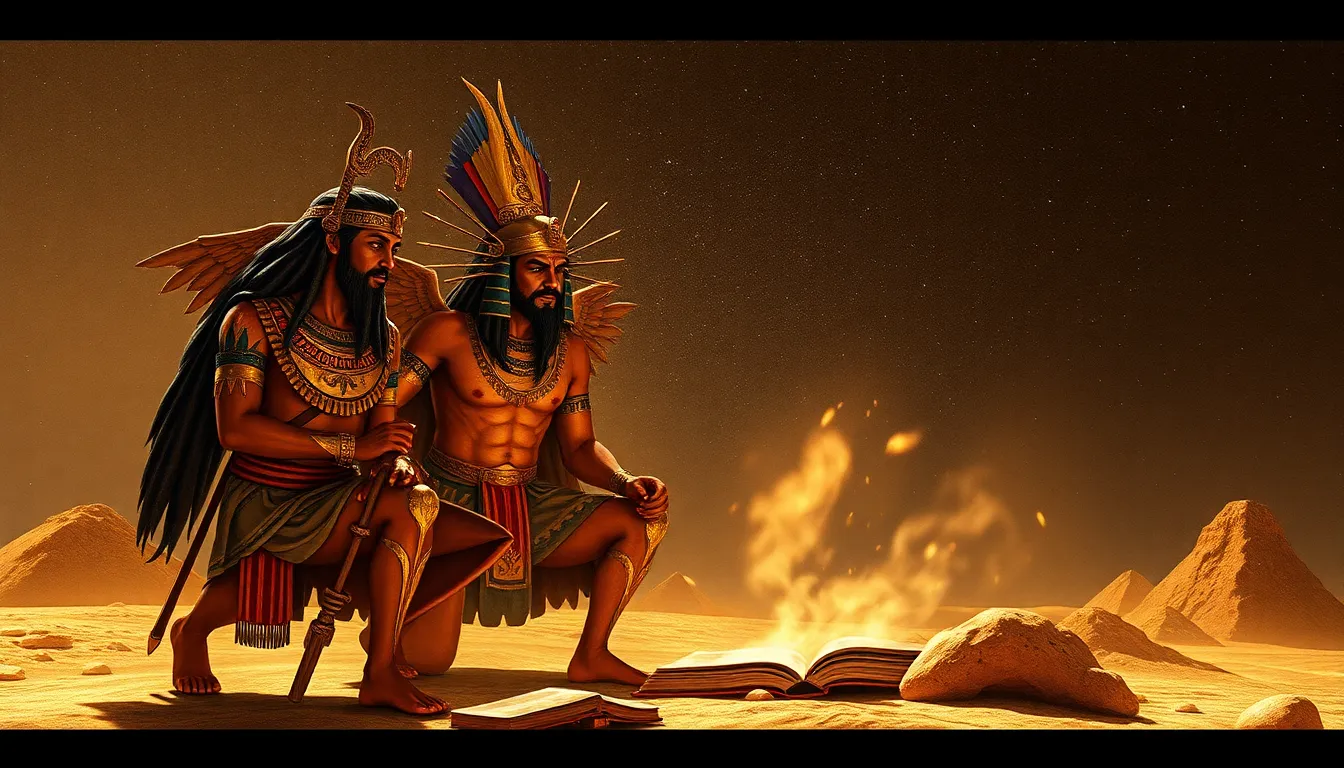
The Role of the Gods in the Book of the Dead
I. Introduction
The Book of the Dead, known in ancient Egyptian as “The Book of Coming Forth by Day,” is a collection of spells, prayers, and incantations intended to assist the deceased in the afterlife. This ancient text serves not only as a guide for the souls of the departed but also as a crucial reflection of the religious beliefs of the time.
The gods played an essential role in ancient Egyptian religion, embodying various aspects of nature, morality, and the universe. Their influence permeated every facet of life and death, making them pivotal figures in the beliefs surrounding the afterlife.
This article explores the significance of the gods in the Book of the Dead, examining their roles, the ceremonies involved, and the relationship between humans and the divine in ancient Egypt.
II. Historical Context of the Book of the Dead
The Book of the Dead did not emerge in a vacuum; its origins can be traced back to earlier funerary texts, such as the Pyramid Texts and the Coffin Texts, which were designed for the elite of society.
A. Origins and Development of the Text
The Book of the Dead began to take shape during the New Kingdom period (circa 1550-1070 BCE) and continued to evolve until the Ptolemaic period. It was written on papyrus scrolls and often accompanied the deceased in their tombs.
B. Evolution of Beliefs About the Afterlife in Ancient Egypt
Beliefs surrounding the afterlife transformed over time, reflecting the changing political and social landscape of ancient Egypt. The emphasis on individual morality and the journey to the afterlife became increasingly pronounced, leading to the development of elaborate funerary practices.
C. Significance of the Gods in Funerary Practices
The gods were central to funerary practices, with rituals often dedicated to appeasing them and gaining their favor. The Book of the Dead served as a vital tool in this regard, detailing the necessary rituals and spells to ensure a safe passage to the afterlife.
III. Key Gods Featured in the Book of the Dead
Several gods are prominently featured in the Book of the Dead, each playing a unique role in the process of death and rebirth.
A. Osiris: The God of the Afterlife
Osiris is perhaps the most significant deity in the context of the afterlife. As the god of resurrection and the ruler of the underworld, he symbolizes the cycle of life, death, and rebirth. The deceased were often identified with Osiris, reflecting their hope for a similar resurrection.
B. Anubis: The Guardian of the Dead and Embalming
Anubis, depicted as a jackal or a man with a jackal head, is the god associated with mummification and the protection of graves. He oversees the embalming process and guides the souls of the departed to the afterlife, ensuring they are prepared for judgment.
C. Ma’at: The Goddess of Truth and Justice
Ma’at represents truth, balance, and cosmic order. She is essential in the weighing of the heart ceremony, where the deceased’s heart is weighed against her feather to determine their worthiness for entering the afterlife.
IV. The Weighing of the Heart Ceremony
One of the most crucial rituals described in the Book of the Dead is the Weighing of the Heart ceremony, a pivotal moment in the judgment of the soul.
A. Description of the Ceremony
In this ceremony, the heart of the deceased is placed on one side of a scale, while Ma’at’s feather is placed on the other. This act symbolizes the balance between a person’s deeds in life and the truth of their character.
B. Role of Gods in the Judgment Process
Osiris presides over the judgment, while Anubis weighs the heart. If the heart is lighter than the feather, the deceased is deemed worthy, allowing them to enter the afterlife. If it is heavier, they face dire consequences.
C. Symbolism of the Heart and Ma’at’s Feather
The heart is considered the seat of intelligence and emotion in ancient Egyptian belief, while Ma’at’s feather symbolizes truth and justice. The balance between these elements is crucial for a successful journey into the afterlife.
V. The Guidance of the Deceased
The gods not only judge but also guide the souls of the deceased throughout their journey in the afterlife.
A. How Gods Assist Souls in Their Journey
Various deities are invoked to assist the deceased, providing protection and guidance against the dangers they may encounter. This divine support is critical for ensuring a safe passage through the afterlife.
B. Importance of Spells and Invocations
The Book of the Dead is filled with spells and invocations intended to summon the gods’ aid. These texts are designed to empower the deceased, enabling them to overcome obstacles and navigate the afterlife successfully.
C. The Role of Deities as Protectors During the Afterlife Journey
Many gods, such as Thoth, the god of wisdom and writing, and Horus, the protector of the pharaohs, serve as guardians for the deceased, ensuring they remain safe from malevolent forces.
VI. The Concept of Divine Judgment
The divine judgment portrayed in the Book of the Dead has profound implications for the moral framework of ancient Egyptian society.
A. The Role of Osiris as the Ultimate Judge
Osiris is seen as the ultimate judge of the dead, embodying the principles of justice and fairness. His judgment is final and determines the fate of the soul.
B. The Moral Implications of Divine Judgment
The concept of divine judgment instilled a sense of accountability among the living, encouraging them to lead virtuous lives in accordance with Ma’at.
C. Impact on the Behavior of the Living
Knowing that their actions would be judged in the afterlife, ancient Egyptians engaged in various rituals and practices aimed at gaining favor with the gods, thereby influencing their behavior and societal norms.
VII. The Relationship Between Humans and the Divine
The connection between humans and the gods was deeply embedded in the daily lives of ancient Egyptians.
A. Rituals and Offerings Made to the Gods
Ancient Egyptians performed numerous rituals and made offerings to the gods, believing that these acts would appease them and ensure divine favor. Common offerings included:
- Food and drink
- Incense
- Small statues and amulets
B. The Interplay Between Faith, Morality, and the Afterlife
The beliefs surrounding the afterlife significantly influenced the moral code of ancient Egyptians. Faith in the gods and the afterlife was intertwined with ethical living, creating a society that valued truth and justice.
C. The Influence of the Gods on Daily Life
The gods were seen as active participants in the world, influencing everything from agriculture to personal relationships. Their favor was sought in all aspects of life, which reinforced the importance of maintaining a harmonious relationship with the divine.
VIII. Conclusion
The gods play a multifaceted role in the Book of the Dead, serving as judges, guides, and protectors in the journey of the deceased. Through their influence, the ancient Egyptians developed a rich tapestry of beliefs and rituals that governed their understanding of life, death, and the afterlife.
These beliefs have left a lasting legacy, influencing not only the culture of ancient Egypt but also the broader understanding of morality and justice in human society. The divine intervention depicted in the Book of the Dead reminds us of the enduring quest for meaning and the hope for immortality that transcends time.