The Role of the Goddess Serqet in Tomb Texts
I. Introduction
Ancient Egyptian beliefs and practices are rich with symbolism, mythology, and a deep reverence for the afterlife. The Egyptians viewed death not as an end, but as a transition to another existence, where the deceased would face judgment and continue their journey. In this context, tomb texts play a crucial role, serving as a guide and protection for the soul in the afterlife. Among the pantheon of deities, Serqet stands out as a significant goddess, associated with protection, healing, and the safeguarding of the deceased against harm.
II. Historical Context of Serqet
Serqet, also known as Selket or Selqet, has her origins in the early periods of Egyptian mythology, where she was primarily recognized as a protective goddess. Over time, her role evolved, and she became associated with various aspects of life and death.
A. Origins and evolution of Serqet in Egyptian mythology
Serqet is believed to have originated in the Nile Delta, with her worship dating back to the Old Kingdom. Initially, she was viewed as a goddess of fertility and childbirth but gradually became linked to the protection of the dead and the afterlife. Her evolution reflects the changing beliefs and practices of ancient Egyptians regarding death and the afterlife.
B. Representations of Serqet in art and literature
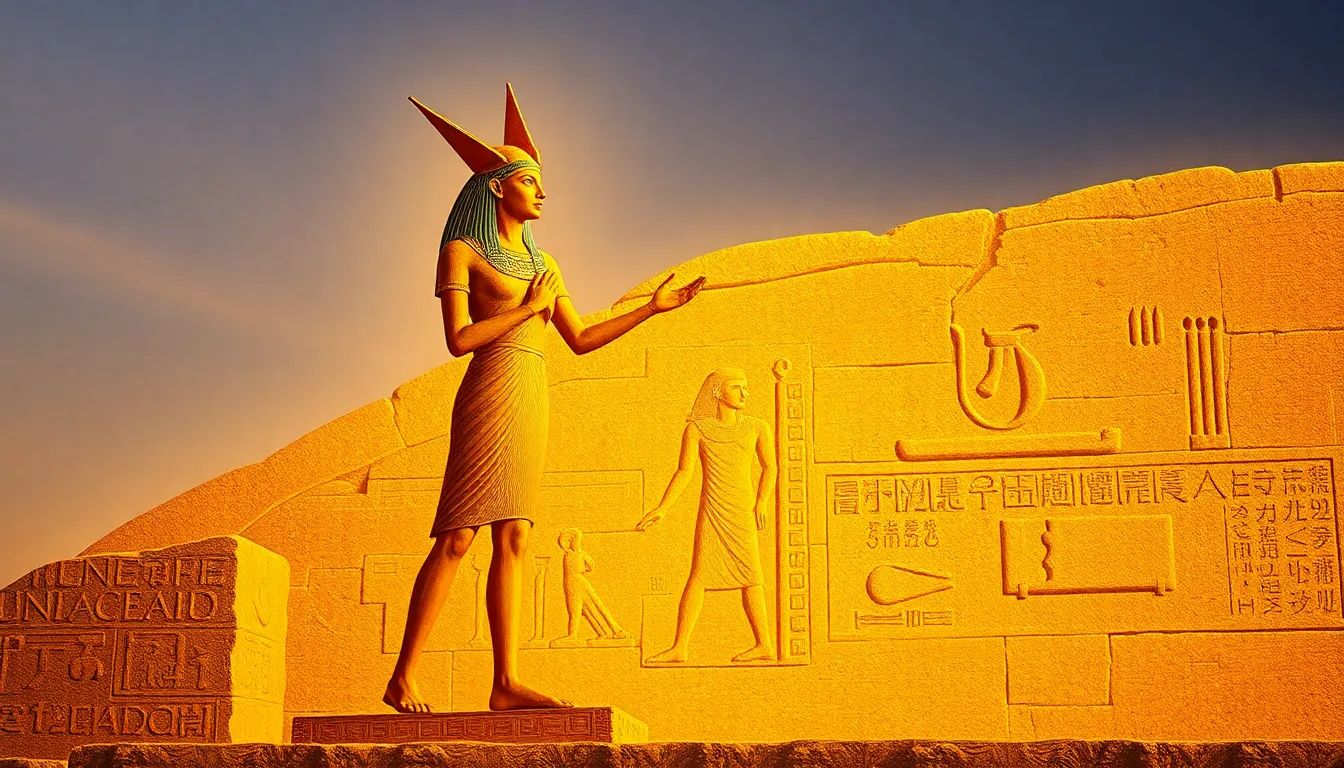
Serqet is often depicted in ancient Egyptian art as a woman with a scorpion on her head or as a scorpion itself. This imagery emphasizes her protective qualities and her association with venomous creatures. In literature, she is mentioned in various texts, highlighting her importance in funerary practices.
C. Serqet’s association with scorpions and the symbolism behind it
The scorpion symbolizes danger and protection. In ancient Egypt, the scorpion was both feared and revered, representing the duality of life and death. Serqet’s connection to this creature underscores her role as a guardian, providing protection against harmful forces in the afterlife.
III. Serqet’s Functions and Attributes
Serqet’s attributes and functions are multifaceted, reflecting her significant role in both life and death.
A. Protective role in the afterlife
Serqet was believed to be a protector of the deceased, ensuring that their journey through the afterlife was safe from malevolent spirits and dangers. She was often invoked in tomb texts to provide a shield against harm.
B. Healing abilities and connection to childbirth
In addition to her protective qualities, Serqet was also considered a healer. She was associated with childbirth, providing safety to mothers and infants. This duality illustrates her importance not only in the realm of death but also in the continuity of life.
C. Serqet as a guardian against venomous creatures
As a goddess associated with scorpions, Serqet was invoked to protect against venomous creatures. Her presence was believed to ward off the dangers posed by snakes and scorpions, which were common threats in ancient Egypt.
IV. Serqet in the Pyramid Texts
The Pyramid Texts, some of the oldest religious texts known, feature numerous references to Serqet, showcasing her integral role in royal burials.
A. Analysis of references to Serqet in early royal tombs
In these texts, Serqet is often portrayed as a protector of the pharaoh, highlighting her significance in royal funerary practices. Her presence is invoked to ensure the pharaoh’s safe passage to the afterlife.
B. Role in the resurrection and protection of the pharaoh
Serqet’s protective nature is emphasized in spells that seek to resurrect the pharaoh. She is often called upon to safeguard the body and spirit, ensuring that the deceased ruler can achieve eternal life.
C. Specific spells and incantations involving Serqet
- Spells that invoke Serqet for protection against venomous beasts.
- Incantations that call upon her healing powers for the deceased.
- Rituals that include offerings to Serqet to ensure her favor in the afterlife.
V. Serqet in the Coffin Texts
As Egyptian funerary practices evolved, so did the representation of Serqet, particularly in the Middle Kingdom’s Coffin Texts.
A. Exploration of her appearances in Middle Kingdom coffin texts
In these texts, Serqet appears more frequently, and her role expands to include not only protection but also guidance for the deceased through the afterlife.
B. The evolution of her narrative and significance in burial practices
The Coffin Texts illustrate how Serqet became more integral to the burial rituals, serving as both a protector and a guide for the soul navigating the afterlife.
C. Comparative analysis with other protective deities
When compared with other protective deities, such as Anubis and Isis, Serqet’s unique attributes as a guardian against venomous creatures set her apart. While Anubis was associated with mummification and Isis with healing and motherhood, Serqet’s role was distinctly tied to the dangers of the underworld.
VI. Serqet in the Book of the Dead
The Book of the Dead is perhaps the most famous of ancient Egyptian funerary texts, containing spells and rituals essential for navigating the afterlife.
A. Importance of the Book of the Dead in ancient Egyptian funerary text
This collection of spells was designed to assist the deceased in overcoming obstacles in the afterlife, making Serqet’s role even more critical.
B. Specific spells and rites involving Serqet
Serqet appears in various spells within the Book of the Dead, often invoked to provide protection during the judgment of the deceased. Her presence is essential in ensuring the soul’s safe passage and acceptance in the afterlife.
C. Serqet’s role in the judgment of the deceased
In the judgment scene, where the heart of the deceased is weighed against the feather of Ma’at, Serqet is called upon to protect the soul from any potential harm or deception from malevolent spirits.
VII. Cultural Impact and Legacy of Serqet
Serqet’s influence extends beyond her immediate role in funerary practices; she has left a lasting cultural legacy.
A. Serqet’s influence on later Egyptian religious practices
Her worship continued through the ages, and she remained an important figure in later Egyptian religious practices, embodying the protective qualities that were essential for the well-being of the deceased.
B. The goddess in modern interpretations and popular culture
In modern interpretations, Serqet has found her way into various forms of popular culture, including literature, film, and art, often depicted as a powerful protector.
C. Continuing relevance in contemporary discussions of ancient mythology
The discussions around Serqet and her role in ancient mythology continue to resonate today, as scholars explore her significance in understanding the complexities of ancient Egyptian spirituality.
VIII. Conclusion
In summary, Serqet’s multifaceted role in tomb texts highlights her importance as a protective and healing deity in ancient Egyptian mythology. Understanding her significance helps illuminate the complex beliefs and practices surrounding death and the afterlife in ancient Egypt. The enduring legacy of Serqet serves as a testament to the rich spiritual landscape of ancient Egyptian culture, reminding us of the profound connections between life, death, and the divine.