The Role of the Goddess Isis in Funerary Practices
I. Introduction
The ancient Egyptians held a profound belief in the afterlife, viewing it as a continuation of life on Earth but in a different realm. This belief was deeply intertwined with their funerary practices, which were meticulously designed to ensure the safe passage of the deceased into the afterlife. Among the pantheon of deities, the goddess Isis emerged as a central figure, revered for her protective qualities and her role in the resurrection of her husband Osiris.
II. Historical Context of Isis
Isis was one of the most important and widely venerated deities in ancient Egyptian mythology. Her origins can be traced back to the early dynastic period, where she began as a local goddess of fertility and motherhood. Over time, her significance evolved, and she became associated with magic, healing, and the protection of the dead.
Key myths surrounding Isis include her legendary quest to resurrect Osiris after his murder by Seth, his brother. This myth not only highlights her role as a devoted wife but also underscores her importance in funerary practices, as Osiris was considered the god of the afterlife. The resurrection of Osiris symbolized the hope for rebirth for all souls, making Isis a crucial figure in the journey of the deceased.
III. Isis as a Protector of the Dead
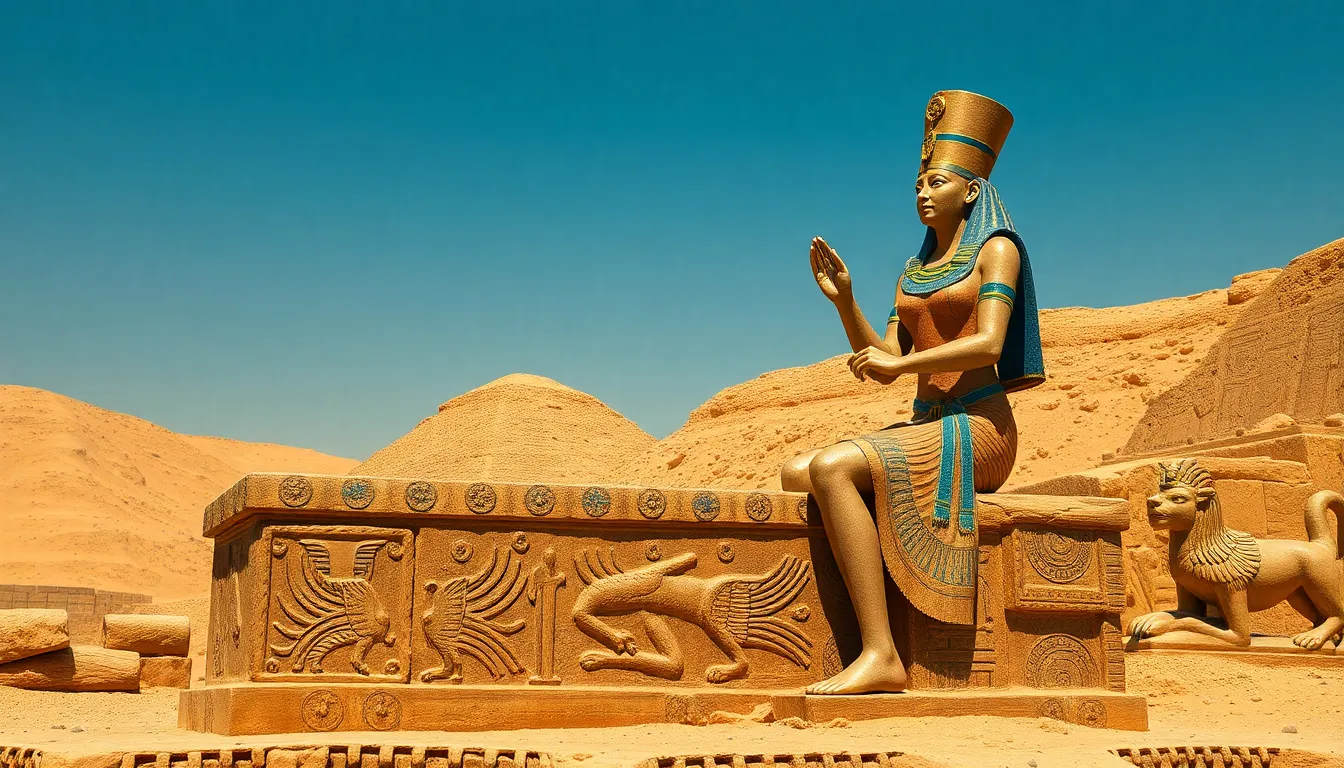
In her role as a protector of the dead, Isis was believed to safeguard the souls of the deceased, ensuring their safe passage into the afterlife. She was often depicted with a throne on her head, symbolizing her royal status and authority over the afterlife.
- Symbolism in Funerary Art: Isis was frequently represented in funerary art and artifacts, often shown with outstretched wings, signifying her protective embrace over the deceased.
- Rituals and Prayers: Ancient Egyptians would invoke Isis through various rituals and prayers, seeking her protection and blessings for the departed souls.
IV. Funerary Texts and the Influence of Isis
Funerary texts, most notably The Book of the Dead, served as guides for the deceased in their journey through the afterlife. Isis plays a pivotal role in these texts, where she is often invoked for assistance and protection.
- Specific Spells: Many spells within The Book of the Dead specifically call upon Isis to provide safety and guidance. These spells reflect her importance in ensuring that the deceased could navigate the challenges of the afterlife.
- Guidance Through the Afterlife: Isis’s presence in these texts emphasizes her role as a guide, leading souls toward the judgment before Osiris.
V. Rituals and Offerings to Isis
Rituals dedicated to Isis were an essential aspect of funerary ceremonies. These rituals were performed to honor her and to invoke her protection for the deceased.
- Common Rituals: Rituals often included the recitation of hymns and the presentation of offerings to Isis, appealing for her favor and assistance.
- Types of Offerings: Offerings typically included food, incense, and symbolic items representing rebirth, such as seeds and flowers.
- Significance of Rituals: These practices were believed to ensure that the deceased received the necessary provisions for their journey and would be welcomed into the afterlife.
VI. Artistic Representations of Isis in Funerary Contexts
Artistic depictions of Isis are prevalent in tombs and temples, where her image served to remind the living of her protective power over the dead.
- Overview of Artistic Depictions: Isis is often portrayed in a variety of forms, including as a woman with a throne headdress or nursing her son Horus.
- Symbolic Elements: Artistic elements such as the Ankh (symbol of life) and the sistrum (a musical instrument) often accompany her, reinforcing her associations with life and rebirth.
- Impact on Understanding: These representations not only highlight her importance in funerary contexts but also reflect the broader cultural beliefs about death and resurrection in ancient Egypt.
VII. The Legacy of Isis in Later Cultures
The influence of Isis extended beyond ancient Egypt, impacting Greco-Roman religion and various spiritual practices throughout history.
- Influence on Greco-Roman Religion: In the Hellenistic period, Isis was worshipped in Greece and Rome, where her attributes as a goddess of magic and motherhood were celebrated.
- Continuation of Worship: Even in modern spiritual practices, elements of Isis worship persist, as she is often invoked for protection and healing.
- Enduring Symbol: Today, Isis is recognized as a symbol of feminine power and resilience, resonating with many contemporary spiritual movements.
VIII. Conclusion
The goddess Isis played a multifaceted role in the funerary practices of ancient Egypt, serving as a protector, guide, and symbol of rebirth. Her influence is evident in various aspects of funerary rituals, texts, and artistic representations, underscoring the importance of understanding ancient beliefs about death and the afterlife.
As we reflect on the legacy of Isis, it becomes clear that her significance transcends time, continuing to inspire modern interpretations of spirituality and mortality. The reverence for Isis reminds us of the universal human desire for protection and continuity beyond death, making her an enduring figure in the tapestry of human belief.