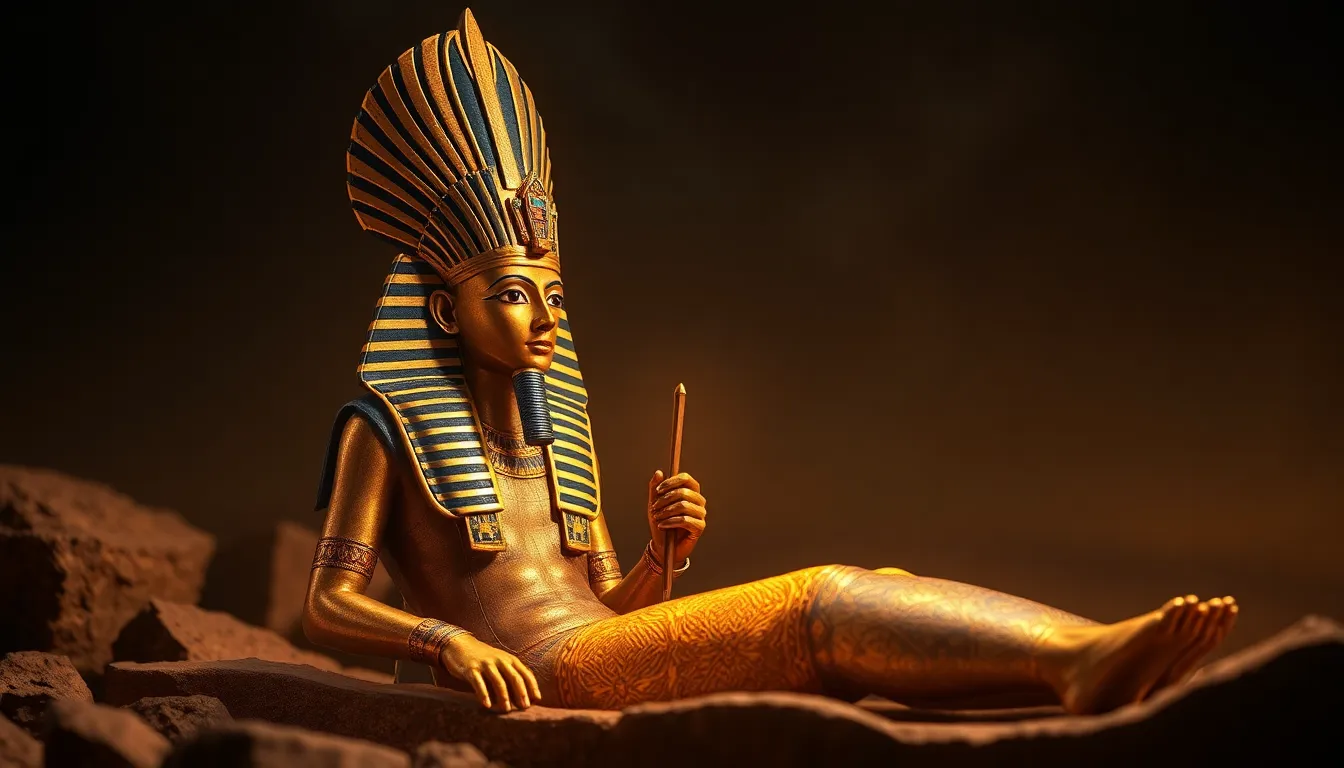
The Role of the God Osiris in Funerary Practices
I. Introduction
Osiris is one of the most significant deities in ancient Egyptian mythology, representing the complexities of life, death, and resurrection. As the god of the afterlife, Osiris played a vital role in the Egyptian understanding of mortality and the rituals that surrounded death. Funerary practices were not just cultural ceremonies but were deeply intertwined with religious beliefs that ensured the safe passage of the soul into the afterlife. This article explores the multifaceted role of Osiris in these practices, examining his myths, significance, and the rituals dedicated to him.
II. Osiris: The God of the Afterlife
Osiris, originally a god of fertility and agriculture, transformed into the god of the afterlife and resurrection. His mythological background is rich and complex, characterized by themes of death, rebirth, and judgment.
A. Mythological background of Osiris
According to myth, Osiris was the son of Geb (the Earth) and Nut (the Sky) and the brother and husband of Isis. His death and resurrection were pivotal events in Egyptian mythology. After being murdered by his brother Set, Osiris was resurrected by Isis and became the ruler of the underworld.
B. Symbolism of death and resurrection
Osiris symbolizes the cycle of life and the promise of resurrection. His story reflects the agricultural cycles in Egypt, where the flooding of the Nile brought death to the land but also new life. Osiris’s resurrection became a metaphor for the afterlife, providing hope to the living that death was not an end but a transition to another existence.
C. Osiris as the judge of the dead
In the afterlife, Osiris was considered the ultimate judge of the deceased. Souls would be weighed against the feather of Ma’at, the goddess of truth and justice. Those who lived a just life were granted eternal life, while the unworthy faced annihilation.
III. The Significance of Funerary Practices in Ancient Egypt
Funerary practices were crucial for the ancient Egyptians, rooted in their beliefs about the afterlife and the journey of the soul.
A. Beliefs about the afterlife
The ancient Egyptians believed in a complex afterlife where the soul would embark on a journey through the Duat (underworld). This journey was fraught with challenges, but successful navigation led to a paradise known as the Field of Reeds.
B. The journey of the soul after death
- Upon death, the soul underwent several trials.
- Encounters with gods and supernatural beings helped determine the soul’s fate.
- The final judgment by Osiris was the culmination of this journey.
C. Role of rituals in ensuring safe passage
Rituals were essential in ensuring that the deceased could navigate the afterlife successfully. These included mummification, burial practices, and the recitation of specific spells from the Book of the Dead.
IV. The Funeral Rites Dedicated to Osiris
Funeral rites in ancient Egypt were elaborate and filled with symbolism, often invoking Osiris directly.
A. Overview of traditional Egyptian funeral rites
Traditional funeral rites included:
- Mummification: Preserving the body for the afterlife.
- Embalming: A sacred process to purify the body.
- Burial: Placing the deceased in a tomb filled with goods for the journey.
B. Specific rituals invoking Osiris
Rituals specifically invoking Osiris included:
- The Opening of the Mouth ceremony: Restoring the deceased’s senses.
- Offering of food and drink to Osiris to sustain the soul.
- Recitations from the Pyramid Texts, emphasizing Osiris’s role as a protector.
C. The use of prayers and offerings
Prayers and offerings were made to Osiris to seek his favor and assistance in ensuring a safe passage for the deceased. These offerings included:
- Food and drink
- Incense
- Items of comfort for the afterlife
V. Osiris in Funerary Art and Iconography
Osiris’s presence is profoundly felt in the funerary art and iconography of ancient Egypt.
A. Depictions of Osiris in tomb paintings and carvings
Osiris is often depicted as a mummified figure, adorned with the atef crown and holding the crook and flail, symbols of kingship and rulership over the dead.
B. Symbols associated with Osiris in funerary contexts
Common symbols associated with Osiris include:
- The green skin of Osiris symbolizes fertility and resurrection.
- The djed pillar represents stability and is often associated with Osiris.
- The Ankh, symbolizing life, is frequently found in depictions of Osiris.
C. Analysis of artifacts related to Osiris and burial practices
Artifacts such as statuettes, amulets, and inscriptions from tombs reveal the importance of Osiris in the funerary beliefs of the ancient Egyptians. These items served both as protective symbols and as offerings to ensure a successful afterlife.
VI. The Osirian Myth and Its Influence on Funerary Beliefs
The Osirian myth has profoundly influenced Egyptian funerary beliefs, shaping their understanding of death and rebirth.
A. The Osiris myth and its key themes
The key themes of the Osiris myth include:
- The struggle between good and evil, represented by Osiris and Set.
- The cycle of death and rebirth that every soul experiences.
- The importance of justice and morality in determining one’s fate after death.
B. How the myth shaped the understanding of death and rebirth
The myth of Osiris provided a framework for the Egyptians to understand their own mortality. His resurrection symbolized hope and the possibility of eternal life, encouraging elaborate funerary practices to ensure a place in the afterlife.
C. The impact of the Osirian narrative on later funerary customs
The narrative of Osiris influenced not only Egyptian beliefs but also later religious traditions that incorporated themes of resurrection and judgment, echoing through history.
VII. Regional Variations in the Worship of Osiris
While Osiris was widely worshipped throughout Egypt, regional variations in funerary practices existed.
A. Differences in funerary practices across ancient Egypt
Different regions developed unique customs and traditions surrounding the worship of Osiris, influenced by local beliefs and practices.
B. Local interpretations of Osiris’s role in the afterlife
In some areas, Osiris was viewed as a more benevolent figure, while in others, he was seen as a strict judge of the dead. These local interpretations shaped how communities approached funerary rituals.
C. Comparative analysis of Osiris worship in various Egyptian regions
For example, in Thebes, Osiris was closely associated with the cult of Amun, leading to unique blends of worship and ritual practices. In contrast, the worship of Osiris in the Delta region emphasized agricultural themes and fertility.
VIII. Conclusion
Osiris’s role in funerary practices is a testament to the deep-seated beliefs of the ancient Egyptians regarding death and the afterlife. His mythological significance, coupled with the elaborate rituals dedicated to him, underscores his importance in ensuring safe passage to the afterlife.
The lasting influence of Osiris can be seen not only in ancient Egyptian culture but also in modern interpretations of death, resurrection, and the afterlife. As we continue to explore the rich tapestry of Egyptian mythology, the figure of Osiris remains central to our understanding of how ancient civilizations approached the profound questions of life and death.
Further research into Osiris can illuminate contemporary perspectives on mortality and the rituals we enact in remembrance of those who have passed.