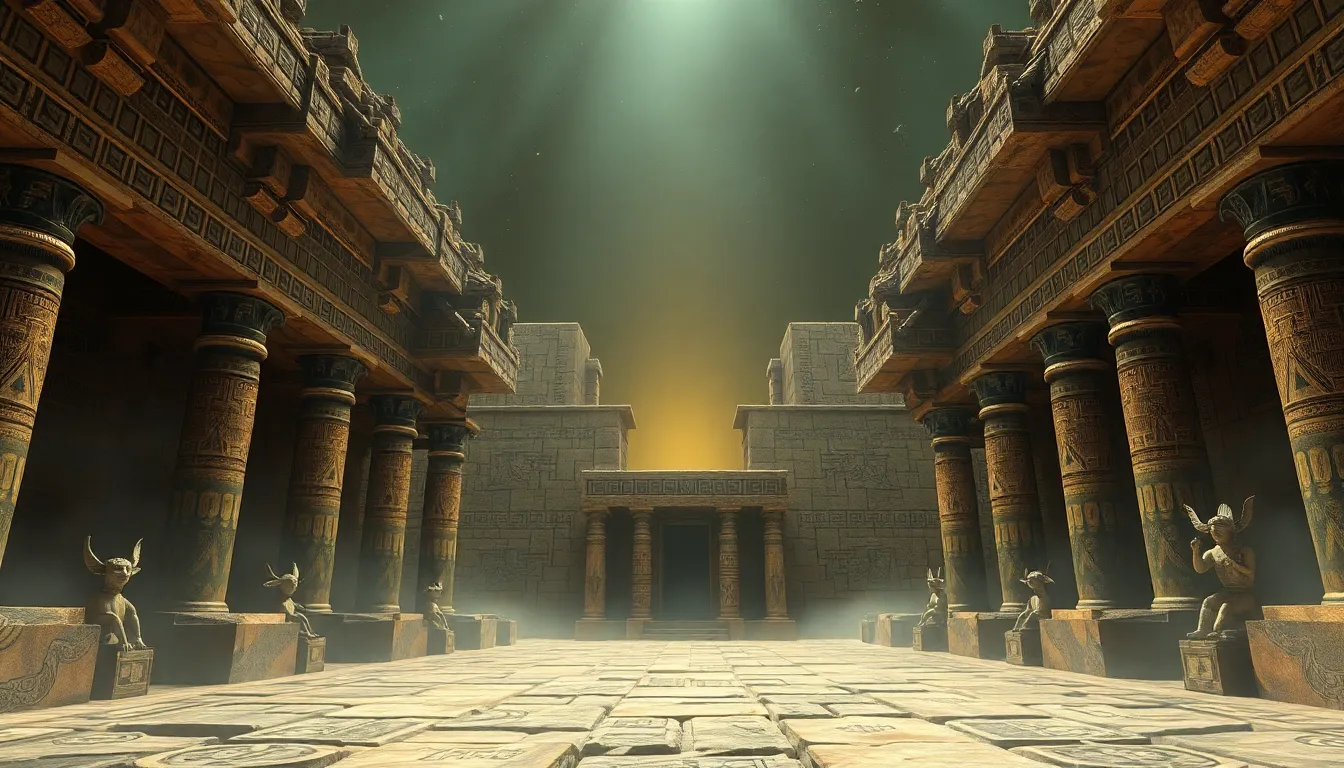
The Role of the Duat: Understanding the Egyptian Underworld
I. Introduction to the Duat
The Duat, often referred to as the Egyptian underworld, holds a significant place in ancient Egyptian mythology and belief systems. This mystical realm is not just a place of darkness and despair; it is a complex landscape filled with various realms, challenges, and deities that reflect the Egyptians’ views on life, death, and the afterlife.
In Egyptian beliefs, the Duat serves as the transitional space where souls journey after death, navigating through trials and tribulations before reaching their final destination. The Duat is intricately tied to the concept of the afterlife, symbolizing both a place of judgment and potential rebirth.
II. Mythological Origins of the Duat
The origins of the Duat can be traced back to ancient Egyptian creation myths. It is often depicted as emerging from the chaos of primordial waters, highlighting its role as a necessary counterpart to the world of the living.
Key deities associated with the Duat include:
- Osiris: The god of the afterlife, resurrection, and fertility, Osiris presides over the judgment of souls in the Duat.
- Anubis: The jackal-headed god who guides souls through the Duat and oversees the embalming process, ensuring safe passage for the deceased.
- Isis: Osiris’s wife, she plays a crucial role in the resurrection and protection of souls in the Duat.
III. Geography and Structure of the Duat
The geography of the Duat is a rich tapestry of landscapes and realms, often depicted in tomb paintings and funerary texts. It is described as a dark and mysterious place, filled with rivers, fields, and various obstacles that souls must navigate.
Some significant locations within the Duat include:
- The Field of Reeds: A paradise where the souls of the virtuous reside, reminiscent of the fertile lands of Egypt.
- The Lake of Fire: A terrifying place where the unworthy face punishment.
- The Hall of Judgement: The location where the weighing of the heart ceremony takes place.
IV. The Journey through the Duat
Upon death, the soul embarks on a perilous journey through the Duat. This journey is filled with challenges, including encounters with hostile creatures and other obstacles designed to test the worthiness of the deceased.
Key elements of the journey include:
- Guidance by Deities: Deities like Anubis and Isis assist the soul in navigating the Duat.
- Trials and Challenges: Souls face various trials, including battles with serpentine guardians and navigating through darkness.
V. The Weighing of the Heart Ceremony
One of the most significant events in the Duat is the Weighing of the Heart ceremony. During this ritual, the heart of the deceased is weighed against the feather of Ma’at, the goddess of truth and justice. This ceremony determines the fate of the soul.
The importance of this ceremony lies in its role as a judgment of moral integrity and righteousness. The outcomes of the ceremony are as follows:
- Heart lighter than the feather: The soul is deemed worthy and allowed to enter the Field of Reeds.
- Heart heavier than the feather: The soul faces dire consequences, often being devoured by the monstrous Ammit, leading to eternal damnation.
VI. Symbolism and Art in the Duat
The Duat is richly represented in Egyptian art and literature, often depicted in tomb paintings and the renowned Book of the Dead. These representations serve not only as artistic expression but also as a means of guiding the deceased through the afterlife.
Key symbolic elements within the Duat include:
- The Ankh: A symbol of life and immortality, often associated with the afterlife.
- The Scarab: Represents rebirth and transformation, highlighting the cyclical nature of life and death.
VII. The Duat in Funerary Practices
The Duat plays a pivotal role in ancient Egyptian funerary practices. Tombs were constructed not merely as burial sites but as gateways to the Duat, equipped with various offerings and texts to assist the deceased in their journey.
Key components of funerary practices related to the Duat include:
- Tombs: Elaborate structures designed to house the deceased and their belongings, ensuring they are well-prepared for the afterlife.
- The Book of the Dead: A collection of spells and prayers meant to guide and protect the deceased in the Duat.
- Ritual Offerings: Food, drink, and other goods were provided to sustain the soul in the afterlife.
VIII. Conclusion: The Lasting Impact of the Duat on Egyptian Culture
The Duat’s influence extends beyond ancient beliefs, shaping modern interpretations of the afterlife and spirituality. Its complex narratives and rich symbolism continue to inspire contemporary literature, art, and spiritual practices.
As we reflect on the Duat, we recognize its enduring legacy in human understanding of life, death, and the possibilities that lie beyond. The beliefs surrounding the Duat remind us of the universal quest for meaning and the hope of existence beyond our earthly life.