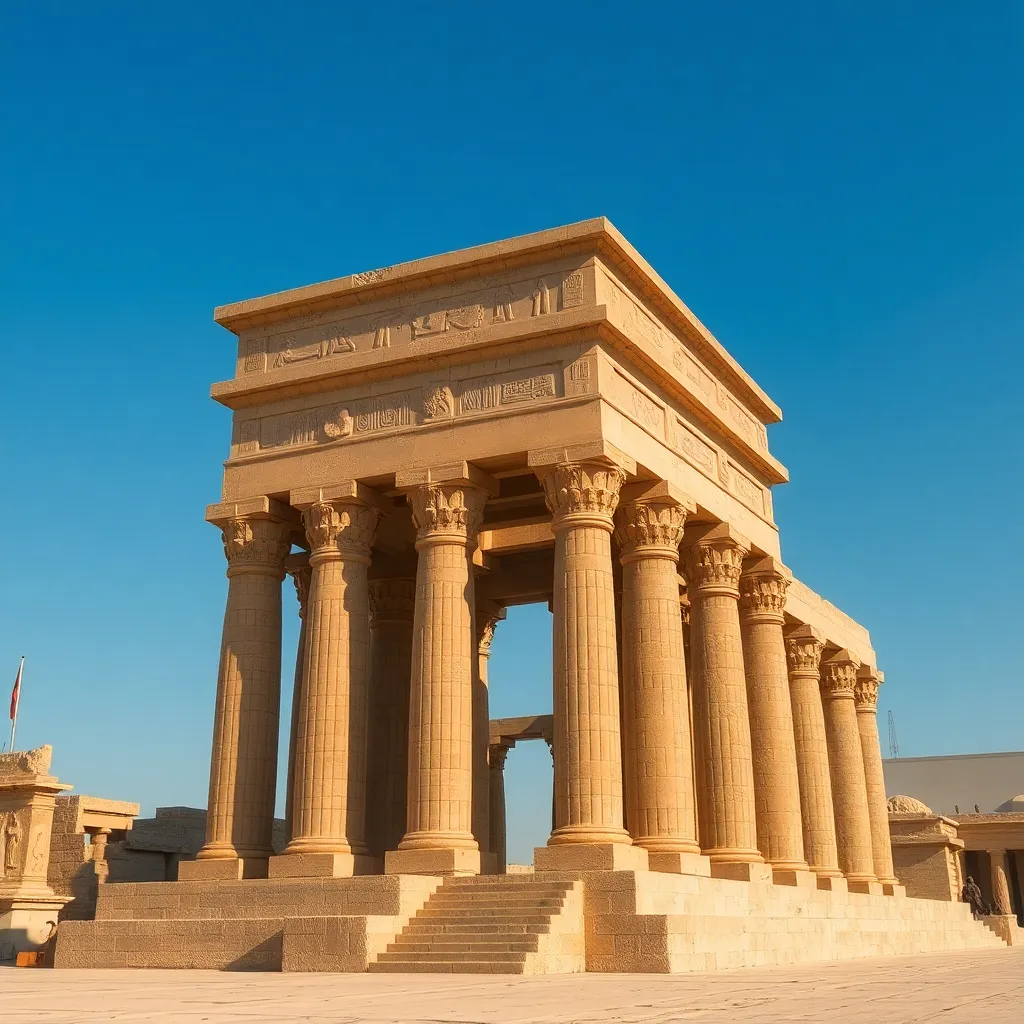
The Role of Temples in Aten Worship: Architectural Significance
I. Introduction
Aten worship in ancient Egypt represents a significant shift in religious practices, marked by the reverence for the sun disk, Aten. This form of worship emerged prominently during the reign of Pharaoh Akhenaten, who advocated for a monotheistic approach that centered around this solar deity. Temples played a crucial role in the spiritual and communal life of ancient Egyptians, serving as sacred spaces for rituals, worship, and connection with the divine.
The purpose of this article is to explore the architectural significance of Aten temples, highlighting their design, layout, and the cultural implications of their existence within the context of Aten worship.
II. Historical Context of Aten Worship
Aten worship emerged as a distinctive religious movement during the 14th century BCE, primarily under Pharaoh Akhenaten’s rule. This period marked a radical departure from the traditional polytheistic beliefs that dominated ancient Egyptian religion. Akhenaten introduced Aten as the sole deity, promoting a form of monotheism that challenged the established pantheon of gods.
The shift to Aten worship had profound political and cultural implications. It represented not only a theological revolution but also an assertion of power by Akhenaten, who sought to centralize worship and diminish the influence of the traditional priesthoods. This reformation led to the establishment of new temples and the reimagining of sacred spaces to reflect the ideals associated with Aten.
III. Architectural Features of Aten Temples
Aten temples are characterized by several distinct architectural features that set them apart from other ancient Egyptian temples:
- Open-air structures: Unlike traditional temples that featured enclosed halls, Aten temples often incorporated open-air layouts that allowed worshippers to experience the sun’s rays directly.
- Use of light and space: The architecture emphasized light, with large courtyards and expansive openings designed to flood the interiors with sunlight, symbolizing the presence of Aten.
The symbolism inherent in these architectural features is profound:
- Representation of the sun’s rays: The design elements often included representations of the sun’s rays reaching down to the worshippers, signifying the divine connection between Aten and humanity.
- Connection to the divine: The use of natural light and open spaces fostered an intimate atmosphere for worship, allowing devotees to feel closer to the divine presence of Aten.
IV. Key Temples Dedicated to Aten
Two of the most significant temples dedicated to Aten are:
A. The Temple of Aten at Karnak
This temple complex represents one of the earliest and most important sites of Aten worship. Its architectural layout features:
- Wide courtyards and open-air sanctuaries: These spaces were designed to accommodate large gatherings and rituals.
- Historical importance: The temple served as a focal point for the promotion of Aten worship and was integral to Akhenaten’s religious reforms.
B. The Temple of Aten at Amarna (Akhetaten)
Located in the city Akhetaten, this temple showcases unique architectural innovations:
- Unique architectural innovations: The temple featured innovative designs that emphasized light and space, reflecting the core principles of Aten worship.
- Role in promoting Aten worship: As the central temple in Akhetaten, it was a vital site for rituals and ceremonies dedicated to Aten.
V. The Role of Temples in Rituals and Worship
Aten temples played a pivotal role in the daily rituals and ceremonies that were central to the worship of Aten. Key aspects include:
- Daily rituals and ceremonies: These included offerings, prayers, and communal gatherings that reinforced the community’s connection to the divine.
- The significance of temple space: The open and light-filled designs of the temples created an inviting atmosphere for worship, encouraging participation from the community.
- Relationship between architecture and religious practices: The architectural elements directly influenced the way rituals were performed, with the emphasis on light symbolizing the presence of Aten during worship.
VI. Artistic Representations in Aten Temples
The artistic expressions within Aten temples are rich with iconography that reflects the beliefs associated with Aten worship:
- Depictions of the sun disk and rays: Artworks often featured the sun disk, Aten, with rays reaching out to the pharaoh and worshippers, symbolizing divine favor and connection.
- Artistic styles reflecting Aten beliefs: The art from this period exhibited a shift in style, focusing on naturalism and intimate representations of the royal family in relation to Aten.
The impact of temple art on understanding Aten theology is significant, as it provides insights into the beliefs, values, and cultural context of this unique religious movement.
VII. The Decline of Aten Worship and Its Temples
The decline of Aten worship began soon after Akhenaten’s death. Several factors contributed to this decline:
- Factors leading to decline: The return to traditional polytheistic beliefs, coupled with political instability, diminished the prominence of Aten.
- Preservation and ruin of temples: Many Aten temples fell into disrepair or were repurposed for worship of other deities, reflecting the broader cultural shift.
- Modern archaeological discoveries: Recent excavations have uncovered much about the architectural and cultural significance of Aten temples, providing a deeper understanding of this unique period in ancient Egyptian history.
VIII. Conclusion
In summary, the architectural significance of Aten temples is profound, reflecting a unique period in ancient Egyptian history characterized by a shift toward monotheism. The innovative designs and open-air structures symbolize the connection between the divine and humanity, fostering communal worship and spiritual experiences.
The legacy of Aten worship continues to influence our understanding of ancient Egyptian architecture and religion. Future research may delve deeper into the cultural impacts of these temples and their role in shaping religious practices in ancient Egypt.