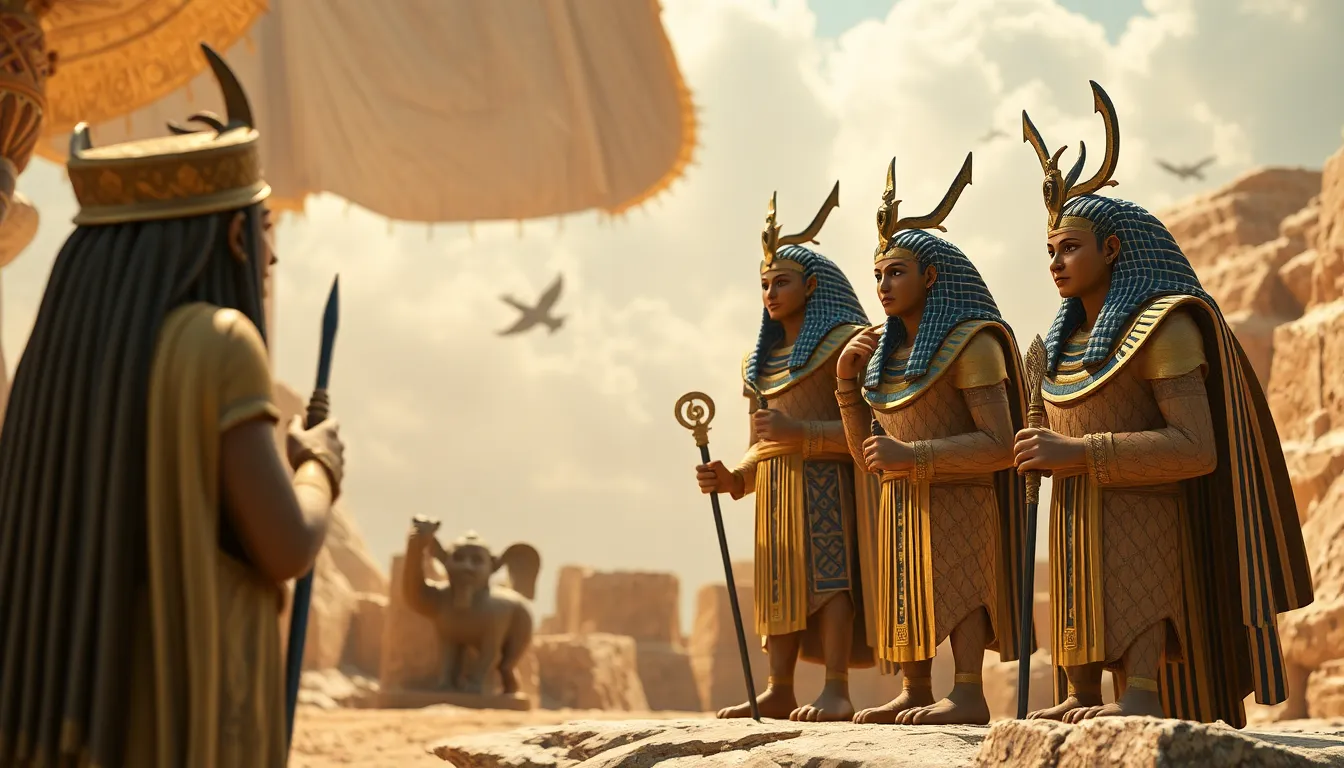
The Role of Nomes in Shaping Egyptian Mythological Narratives
I. Introduction
Nomes, the ancient administrative divisions of Egypt, held significant importance in the social, political, and religious landscape of the civilization. Each nome was a distinct entity that contributed to the rich tapestry of Egyptian mythology, serving as a backdrop for various deities, rituals, and local narratives.
Egyptian mythology is characterized by its intricate narrative structure, which encompasses a wide array of gods, creation myths, and moral tales. The interplay between the nomes and these mythological stories is crucial for understanding the cultural identity of ancient Egypt.
This article aims to explore the relationship between nomes and mythology, highlighting how the geographical and administrative features of these divisions shaped the mythological narratives that defined ancient Egyptian beliefs.
II. Historical Context of Nomes in Ancient Egypt
The concept of nomes dates back to the earliest periods of Egyptian history, with evidence suggesting their existence as far back as the Predynastic era. Each nome was governed by a nomarch, who was responsible for the administration and welfare of the region.
Geographically, Egypt was divided into Upper and Lower regions, with each consisting of several nomes. The nomes not only served administrative purposes but also reflected the local identities and cultures of the people living within them.
- Origins and Development: Nomes evolved over time, particularly during the unification of Egypt around 3100 BCE, when the need for organized governance became paramount.
- Geographic Distribution: There were 42 nomes in total, with 22 in Upper Egypt and 20 in Lower Egypt, each with its unique characteristics and resources.
- Regional Identities: Each nome fostered a sense of local pride and identity, often leading to distinct cultural practices and beliefs.
III. Nomes as Centers of Worship and Mythological Significance
Nomes were not only administrative units but also vital centers of worship where local deities were venerated. Each nome had its patron gods, which played significant roles in the local mythology.
- Major Deities: For example, the nome of Hermopolis was associated with Thoth, the god of wisdom and writing, while the nome of Thebes was dedicated to Amun, one of the most powerful deities in the Egyptian pantheon.
- Local Cults: The worship of these gods led to the establishment of local cults that contributed to the development of unique mythological narratives.
- Temples and Rituals: Temples served as the focal points for religious life, where rituals and offerings reinforced the local myths and the community’s connection to their gods.
IV. Nomes and the Creation of Regional Myths
The diversity of nomes allowed for the creation of various regional myths that reflected the unique characteristics of each area. These myths often diverged from one another, influenced by geography, resources, and local customs.
For instance, the myth of Osiris, which centers around death and resurrection, took on different interpretations in various nomes, demonstrating how local beliefs shaped broader mythological themes.
- Regional Differences: The mythological stories of the nome of Memphis often emphasized the god Ptah’s role as a creator, while those in the nome of Abydos highlighted Osiris’s journey in the afterlife.
- Case Studies: The nome of Heliopolis, known for its sun worship, produced myths that celebrated Ra’s journey across the sky.
- Political Changes: As political power shifted, particularly during the unification of Egypt, local myths were sometimes adapted to fit a national narrative.
V. The Interplay Between Nomes and National Identity
The nomes of Egypt also played a crucial role in the formation of national identity. As Egypt unified, a collective mythology began to emerge that integrated the diverse local narratives into a cohesive national story.
- Reflection of Unification: The merging of regional myths and deities helped to establish a shared cultural identity among the Egyptian people.
- Larger Narrative: Nomes contributed to the overall narrative of Egyptian history, with their myths often intertwining with significant historical events.
- Cohesive National Myth: The process of integrating various local myths into a national mythology was essential for fostering a sense of unity and identity among the different regions.
VI. Nomes and Their Representation in Art and Literature
Art and literature played a pivotal role in the depiction and preservation of nomes and their associated myths. Artistic representations often showcased the deities of the nomes, while literature provided narratives that connected these gods to the people.
- Artistic Depictions: Temples and tombs are adorned with murals and carvings that celebrate the gods of specific nomes, illustrating their significance in the local context.
- Textual References: Egyptian literature, including religious texts like the Pyramid Texts, often includes references to nomes and their deities, highlighting their importance in mythology.
- Impact on Preservation: Artistic expressions have been crucial in preserving the mythological narratives, providing modern scholars with valuable insights into ancient beliefs.
VII. The Legacy of Nomes in Modern Understanding of Egyptian Mythology
The study of nomes continues to be relevant in contemporary scholarship, enhancing our understanding of ancient Egyptian mythology and culture.
- Continued Relevance: Modern researchers explore how the nomes influenced local and national identities, shedding light on the complexities of Egyptian belief systems.
- Modern Interpretations: Current interpretations of nomes help to contextualize ancient myths within the broader framework of Egyptian history and society.
- Role of Archaeology: Archaeological discoveries have been instrumental in uncovering the connections between nomes and mythology, revealing the rich heritage of ancient Egypt.
VIII. Conclusion
In summary, nomes played a vital role in shaping Egyptian mythology, influencing local and national narratives that defined the cultural identity of ancient Egypt. The interplay between regional narratives and broader mythological themes illustrates the complexities of ancient Egyptian belief systems.
As we reflect on the significance of nomes, it becomes clear that understanding these divisions is crucial for appreciating the rich tapestry of ancient Egyptian mythology. Further exploration of the intricacies of these ancient beliefs will undoubtedly illuminate the lasting impact they have had on contemporary understandings of culture and identity.