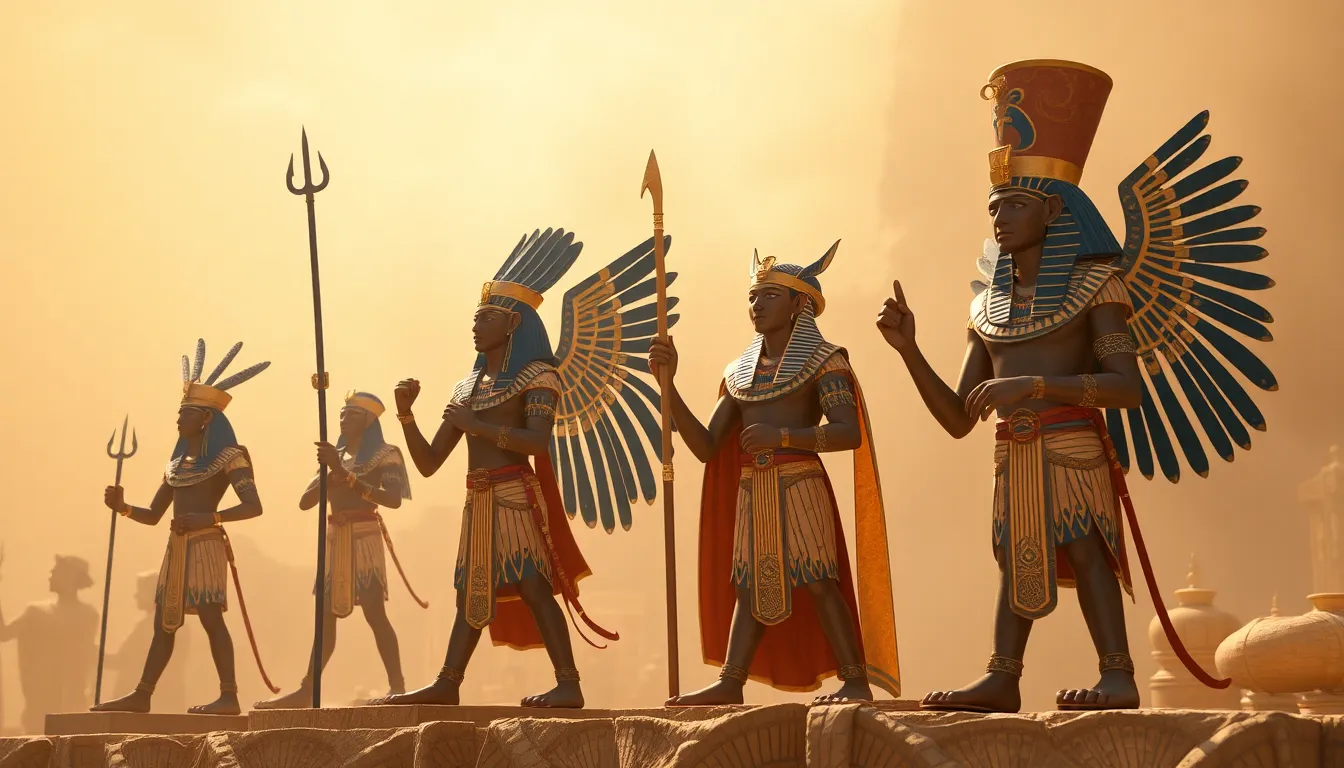
The Role of Deity Relationships in Egyptian Festivals and Celebrations
I. Introduction
Ancient Egyptian religion was a complex system of beliefs characterized by a rich pantheon of gods and goddesses, each playing a vital role in the daily lives of the people. The intricate relationships between these deities defined the spiritual landscape of ancient Egypt and influenced various aspects of society, including morality, governance, and the natural order.
Festivals and celebrations were significant events in ancient Egyptian society, serving as moments of communal joy, religious fervor, and societal unity. These occasions were not merely for entertainment; they were deeply entrenched in the religious and cultural fabric of Egypt, providing a means for the populace to connect with the divine.
This article aims to explore the relationship between deities and festivals in ancient Egypt, highlighting how these connections shaped celebrations and reinforced the cultural identity of the Egyptian people.
II. The Pantheon of Egyptian Deities
The ancient Egyptians worshipped a vast array of gods and goddesses, each with specific attributes and domains. Some of the major deities included:
- Ra – The sun god, symbolizing light and creation.
- Amun – The hidden one, associated with the wind and air.
- Isis – The goddess of magic and motherhood, protector of the pharaoh.
- Osiris – The god of the afterlife, resurrection, and fertility.
- Horus – The sky god, often depicted as a falcon, representing kingship.
The relationships among these deities were multifaceted, often characterized by hierarchies and familial connections. For instance, Osiris was the husband of Isis and the father of Horus, creating a divine lineage that played a significant role in the mythology and religious practices of the time.
III. Types of Festivals in Ancient Egypt
Ancient Egyptian festivals can be broadly categorized into three main types, each reflecting the people’s reverence for their deities and the rhythms of nature:
- Agricultural Festivals: These festivals were tied to the agricultural calendar, celebrating the flooding of the Nile and the planting and harvesting seasons. They invoked deities like Osiris, who was associated with fertility and agriculture.
- Religious Festivals: Dedicated to specific gods and goddesses, these festivals often involved elaborate rituals and offerings. The Festival of Opet, for example, honored Amun and celebrated his rejuvenation.
- Seasonal Celebrations: Marking the changes of the seasons, these celebrations were critical to the agricultural society of ancient Egypt, acknowledging the cyclical nature of life and death.
IV. Rituals and Practices Associated with Festivals
The rituals conducted during festivals were diverse but generally included:
- Offerings and Sacrifices: Devotees would present food, flowers, and other offerings to the gods, seeking their favor and blessings.
- Public Processions: Communities would gather for processions, often featuring the transport of sacred statues of deities through the streets, allowing the populace to participate in the divine presence.
- Music, Dance, and Theatrical Performances: Artistic expressions were integral to festivals, with music and dance used to honor the gods and entertain the crowds.
V. Case Studies of Prominent Egyptian Festivals
Several festivals stand out in ancient Egyptian culture, highlighting the importance of deity relationships:
A. The Festival of Opet
This festival celebrated the annual journey of the god Amun from Karnak to Luxor. It symbolized the renewal of kingship and the connection between the pharaoh and the divine.
B. The Sed Festival
The Sed Festival was a significant event celebrating the pharaoh’s reign and divine kingship. It involved various rites that reaffirmed the pharaoh’s strength and connection to the gods, particularly Osiris and Horus.
C. The Wepet-Renpet Festival
Known as the “Opening of the Year,” this festival marked the beginning of the agricultural year. It was a time for renewal and reflection, dedicated to the goddess Hathor and other fertility deities.
VI. The Role of Temples and Sacred Spaces in Celebrations
Temples served as the focal points for worship during festivals, acting as sacred spaces where the divine could be accessed. Their significance included:
- Centers of Worship: Temples were where rituals and offerings occurred, establishing a direct link between the people and the gods.
- The Role of Priests and Priestesses: These individuals were vital in conducting rituals, interpreting divine will, and maintaining the temple’s sanctity.
- Impact of Architecture and Sacred Art: The grand designs and intricate art within temples created an immersive experience that enhanced the festival atmosphere.
VII. The Influence of Deity Relationships on Social Cohesion
Festivals played a crucial role in unifying communities and reinforcing cultural identity through shared experiences. Their influence included:
- Unifying Communities: Festivals brought people together, fostering a sense of belonging and shared purpose.
- Reinforcing Cultural Identity: Participating in rituals connected individuals to their heritage and the collective memory of their civilization.
- Impact on Social Hierarchy: The divine relationships reflected in festivals underscored social structures, with the pharaoh often seen as the intermediary between the gods and the people.
VIII. Conclusion
The relationships between deities in ancient Egypt were not just theological concepts; they were integral to the fabric of society, influencing festivals and celebrations that brought communities together and reinforced cultural identity. These practices, rich in meaning and tradition, have left an enduring legacy that resonates in modern culture, reminding us of the profound connection between religion, celebration, and community in ancient Egypt.
As we reflect on these ancient practices, we appreciate their role in shaping the spiritual and social landscape of a civilization that continues to fascinate and inspire us today.