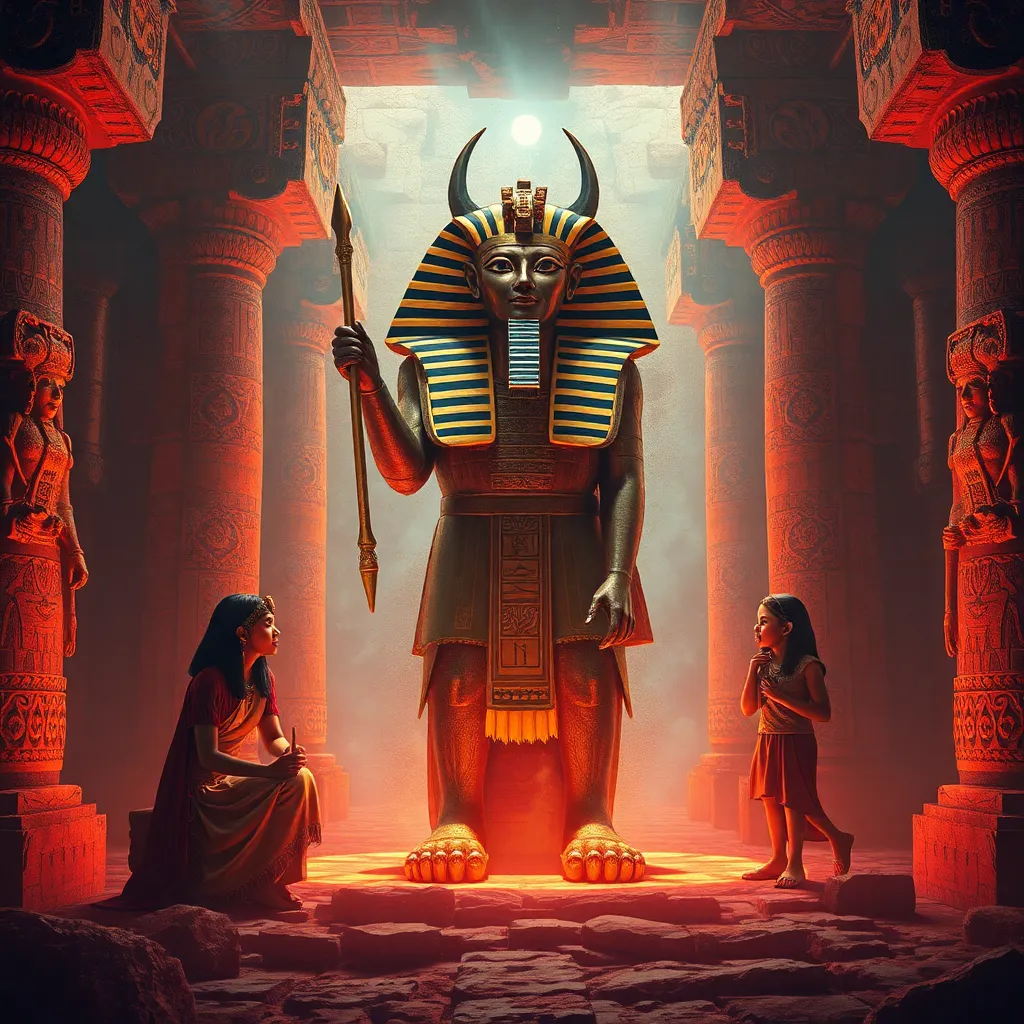
The Role of Ammit in the Afterlife Journey
I. Introduction
Ancient Egyptian beliefs about the afterlife were intricate and deeply rooted in their culture and religion. The afterlife was not merely an extension of life on Earth but a continuation of the soul’s journey, marked by various trials and assessments. One of the most significant figures in this context is Ammit, a fearsome creature who played a pivotal role in the judgment of souls. This article explores Ammit’s role in the afterlife journey, shedding light on her characteristics, significance, and impact on ancient Egyptian beliefs.
II. The Mythological Background of Ammit
Ammit, often referred to as the “Devourer of the Dead,” is a unique figure in Egyptian mythology, embodying both fear and justice. Her appearance is striking, typically depicted as a hybrid creature with the head of a crocodile, the body of a lion, and the hindquarters of a hippopotamus. This combination represents the most dangerous animals in ancient Egyptian society, symbolizing her role as a fearsome judge of souls.
The origins of Ammit can be traced back to the ancient Egyptian pantheon, where she is closely associated with the gods of the afterlife. She is often linked to:
- Osiris: The god of the afterlife and resurrection, who presides over the judgment of the dead.
- Anubis: The god associated with mummification and the protection of the dead, who weighs the hearts of the deceased.
- Ma’at: The goddess of truth, balance, and justice, whose principles govern the judgment process.
III. Ammit’s Role in the Weighing of the Heart Ceremony
The Weighing of the Heart ceremony is a central event in the journey of the deceased, where their heart is weighed against the feather of Ma’at. This ceremony determines whether a soul is deemed worthy of entering the afterlife.
The heart, considered the seat of emotion, thought, and intention, holds immense significance in Egyptian beliefs. It was believed that the heart would reveal the true character of the individual during the judgment process.
Ammit’s function in this ceremony is crucial; she stands ready to devour the hearts of those who fail the test. If the heart is heavier than the feather, indicating a life filled with sin or wrongdoing, Ammit consumes it, leading to the soul’s permanent destruction.
IV. Characteristics of the Souls Judged by Ammit
The criteria for judgment in ancient Egypt were closely tied to the concept of Ma’at. This principle emphasized truth, balance, and moral integrity. Souls were judged based on their deeds throughout their lives, with specific criteria including:
- Moral conduct: Actions that aligned with the values of Ma’at.
- Intentions: The motives behind one’s actions were also taken into account.
- Acceptance of truth: Acknowledging and adhering to the principles of Ma’at.
The fate of souls deemed unworthy was grim. Those judged as sinful faced eternal annihilation as Ammit devoured their hearts. Some common examples of sins and behaviors leading to judgment included:
- Murder and violence
- Theft and dishonesty
- Disrespect towards the gods and elders
V. The Symbolism of Ammit in the Afterlife
Ammit serves as a powerful representation of divine justice. Her role emphasizes the balance between reward and punishment in the afterlife, reinforcing the idea that one’s actions in life have significant consequences beyond death.
The presence of Ammit in the judgment process impacted the moral compass of ancient Egyptians, instilling a sense of accountability. Her fearsome image and the consequences of her actions encouraged individuals to lead virtuous lives, adhering to the principles of Ma’at.
VI. Ammit in Funerary Practices and Texts
Ammit’s influence extends into funerary practices and texts, particularly in the Book of the Dead, a vital guide for the deceased navigating the afterlife. In this text, Ammit is depicted alongside Anubis and Osiris, highlighting her role in the judgment process.
Rituals and offerings were also made to appease Ammit, as ancient Egyptians sought to avoid her wrath. These practices included:
- Offerings of food and drink at tombs.
- Prayers for protection from her judgment.
- Inscribing spells to ensure a favorable judgment.
Ammit’s presence influenced burial customs and tomb designs, with many tombs featuring inscriptions and depictions of the judgment scene, serving as both a warning and a guide for the deceased.
VII. Modern Interpretations of Ammit
In contemporary culture, Ammit’s legacy persists, reflecting a resurgence of interest in ancient Egyptian mythology. Her character has appeared in various forms of media, including literature, film, and art, often symbolizing the themes of justice and morality.
Ammit has become a symbol in modern discussions about morality and justice, embodying the ongoing struggle between good and evil. This relevance illustrates the timeless nature of her story and the importance of ethical conduct.
VIII. Conclusion
In summary, Ammit holds a significant place in the afterlife journey of ancient Egyptians. Her role as the devourer of the unworthy underscores the importance of moral integrity and accountability in life. The lasting impact of Ammit is felt in both ancient and modern contexts, as her story continues to resonate with contemporary discussions about justice and morality.
Understanding ancient beliefs about the afterlife, as exemplified by Ammit, enriches our appreciation of their culture and the values that shaped their society. The legacy of Ammit serves as a reminder of the enduring importance of living a life aligned with truth and justice.