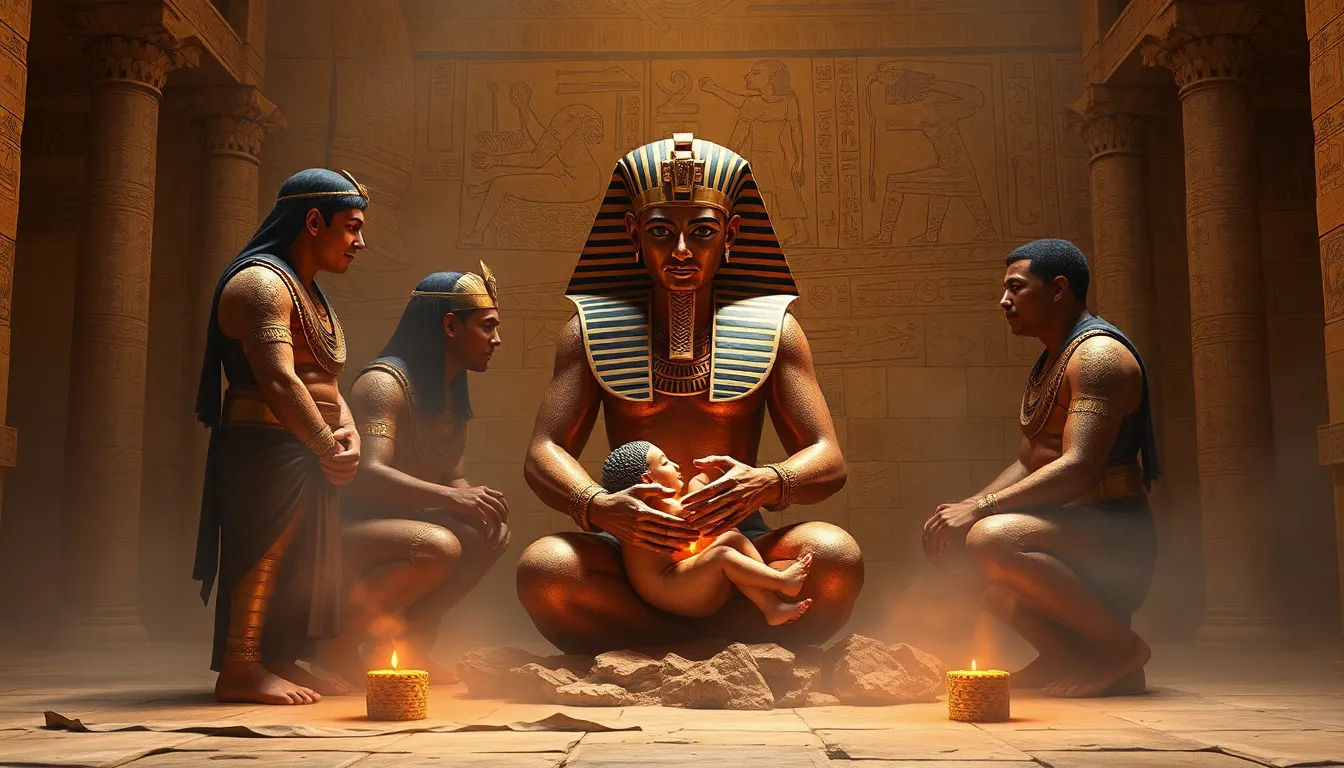
The Rituals Surrounding the Birth of a Pharaoh
I. Introduction
The Pharaoh was not just a ruler in ancient Egyptian society; he was considered a god on Earth, a divine intermediary between the gods and the people. The birth of a Pharaoh was surrounded by elaborate rituals and ceremonies that served to establish his divine legitimacy and authority. These rituals were essential in reinforcing the belief that the Pharaoh was predestined to rule, embodying the essence of divine order in the universe.
II. Historical Context of Pharaohs
A Pharaoh, in ancient Egypt, was the supreme leader, regarded as a political and religious figure. The term “Pharaoh” itself means “great house,” referring to the royal palace. Pharaohs were believed to be descended from the gods, particularly from Horus, the sky god, which legitimized their rule and authority.
The divine lineage of the Pharaoh was crucial in the eyes of the Egyptians. The concept of the Pharaoh as a god-king was deeply ingrained in their culture, where the king was seen as the earthly embodiment of the divine, ensuring Ma’at, or cosmic order, was maintained throughout the land.
III. Prenatal Rituals and Preparations
Before the birth of a Pharaoh, significant attention was given to the conception and the role of the goddess Isis, who represented motherhood and fertility. It was believed that she would protect and bless the child, ensuring a successful birth.
Rituals performed by the royal family and the priesthood prior to the birth included:
- Prayers and offerings to the goddess Isis for protection and guidance.
- Astrological readings to determine auspicious dates and favorable omens surrounding the conception and birth.
- Consultations with oracles to predict the future of the unborn child.
IV. The Birth Ceremony
The physical setting for the birth of a Pharaoh was typically within the royal palace, often in a specially designated birthing chamber. This chamber was considered sacred, and great care was taken to prepare it for the event.
Key participants in the birth ceremony included:
- Midwives, who were skilled in the art of childbirth.
- Priests, who would perform rituals to invoke the blessings of the gods.
- Family members, who provided emotional and spiritual support during the birth.
During the birth, various rituals were performed to ensure the divine status of the child. These included:
- Recitations of sacred texts to invoke divine protection.
- Symbolic gestures made by the midwives to affirm the child’s royal lineage.
V. Post-Birth Customs and Celebrations
After the birth, a series of purification rituals were conducted for both the mother and the newborn. This was essential to cleanse them of any impurities and to prepare them for the sacred role they would play.
Naming ceremonies were also significant, as the name given to the child carried great importance and was believed to influence their destiny. The public celebrations that followed the birth played a crucial role in legitimizing the new heir. These celebrations often included:
- Festivals featuring music, dance, and feasting.
- Public announcements of the birth, emphasizing the divine nature of the child.
VI. Symbolic Gifts and Offerings
The presentation of gifts to the newborn Pharaoh was a vital aspect of the post-birth rituals. These gifts often included:
- Jewelry and precious items symbolizing wealth and power.
- Offerings to deities for protection and blessings upon the child.
Amulets and talismans were also integral to safeguarding the child, believed to provide magical protection against malevolent forces. These items were often inscribed with spells or symbols associated with the gods.
VII. The Role of the Nile and Natural Elements
The Nile River was central to life in ancient Egypt, and its significance extended to the birth of a Pharaoh. The river was associated with fertility and abundance, making it a powerful symbol during birth rituals.
Ritual connections between natural elements and the Pharaoh’s birth included:
- Water from the Nile used in purification ceremonies.
- Offerings made to the river, thanking it for its life-giving properties.
- Seasonal celebrations tied to the flooding of the Nile, which was believed to coincide with the birth of the Pharaoh.
VIII. Conclusion
The rituals surrounding the birth of a Pharaoh were not just ceremonial; they were a profound expression of the belief in the divine right to rule. These practices reinforced the authority of the Pharaoh, intertwining their identity with that of the gods.
Reflecting on these ancient customs offers insight into how leadership and divinity are perceived across cultures. The legacy of these rituals continues to resonate, influencing modern views on governance, authority, and the sacred nature of leadership.