

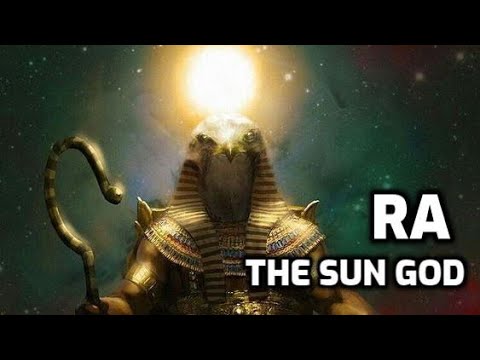
The Rise of the Sun God: Celebrating the Festival of Ra
In ancient Egyptian mythology, Ra, the Sun God, plays a central role. He is not only the bringer of light and warmth but also the creator of the universe and the very essence of life itself. The Festival of Ra, celebrated throughout Egypt, was a grand tribute to this powerful deity, reflecting the deep reverence the Egyptians held for the sun’s life-giving power.
1. The Cosmic Power of Ra: From Primal Waters to the Sky
The myth of Ra’s creation is a cornerstone of Egyptian cosmology. According to legend, Ra emerged from Nun, the primordial waters, existing before time and space. He was self-created, taking the form of Atum, the first being, and brought forth the world through his own power. Ra, as Atum, represents the ultimate source of creation, the initial spark that ignited the universe.
Ra’s role goes beyond mere creation; he is the source of life itself. His light, a symbol of knowledge and truth, illuminates the world, while his warmth sustains all living beings. As the sun traverses the sky, Ra breathes life into the earth, nourishing plants and animals. The Egyptians believed that the air itself was infused with Ra’s energy, making it the very breath of existence.
2. The Solar Barque: Journeying Across the Sky
Ra’s daily journey across the heavens is a captivating part of Egyptian mythology. He sails in his divine boat, the Solar Barque, carrying the light and warmth of the sun across the sky. This journey symbolizes the eternal cycle of day and night.
As the sun sets, Ra descends into the underworld, facing darkness and challenges. He battles Apophis, the serpent of chaos, who attempts to engulf the sun and plunge the world into eternal darkness. This nightly battle represents the constant struggle between light and darkness, order and chaos. Ra’s triumph over Apophis ensures the return of the sun and the continuation of life.
3. The Festival of Ra: Honoring the Sun God
The Festival of Ra, a grand celebration held throughout Egypt, was a testament to the Egyptians’ deep veneration of their Sun God. This festival was a time of joy, feasting, and elaborate rituals, all dedicated to honoring Ra’s power and influence.
The festival’s significance stemmed from the sun’s vital role in Egyptian life. The sun was crucial not only for agriculture, the backbone of their economy, but also for their very existence. The Egyptians believed that the pharaoh’s power was a reflection of Ra’s divine authority, further emphasizing the sun god’s importance in their societal structure.
During the Festival of Ra, priests performed specific rituals and offered symbolic gifts to appease and celebrate the sun god. The offerings often included food, incense, and precious metals. These rituals were believed to strengthen Ra’s power and ensure his favor for the coming year.
The Festival of Ra was usually celebrated in temples dedicated to the sun god, particularly those at Heliopolis and Thebes. These temples were elaborate structures, designed to capture the sun’s rays and serve as focal points for the festival’s celebrations.
4. The Significance of the Sun God’s Rise
The daily rise of the sun was not merely a natural phenomenon for the Egyptians; it was a moment of profound significance. The dawn symbolized a rebirth, a fresh start, and a triumph over darkness. The sun’s first rays, piercing through the night, brought hope and the promise of a new day.
Light, a key aspect of Ra’s power, held profound symbolic meaning for the Egyptians. It represented knowledge, truth, and enlightenment, guiding them towards a higher understanding of the universe and their place within it. The sun’s light also symbolized the victory of order over chaos, reminding them of the constant struggle between good and evil.
The sun’s importance in Egyptian society cannot be overstated. It was the source of life, health, and abundance. Its daily journey across the sky was a constant reminder of the cyclical nature of time, the resilience of life, and the enduring power of Ra, the Sun God.
5. The Great Ennead: Ra’s Family and the Cosmic Order
Ra’s family, known as the Great Ennead, consisted of nine gods who played important roles in the Egyptian pantheon. These gods, who were often considered Ra’s children, represented various aspects of the universe and its creation. Together, they formed a cosmic order, maintaining balance and harmony in the world.
The Ennead included deities such as Shu, the god of air, and Tefnut, the goddess of moisture, who embodied the vital elements that brought life to the world. Geb, the god of earth, and Nut, the goddess of the sky, represented the physical world itself. Other members of the Ennead, such as Osiris, Isis, and Horus, played significant roles in Egyptian mythology, further illustrating the vast and intricate web of relationships that bound the gods together.
The Great Ennead reflected the interconnectedness of the universe and the importance of maintaining harmony within the cosmic order. Ra, as the head of this divine family, was seen as the ultimate source of order and the guarantor of a stable and prosperous world.


