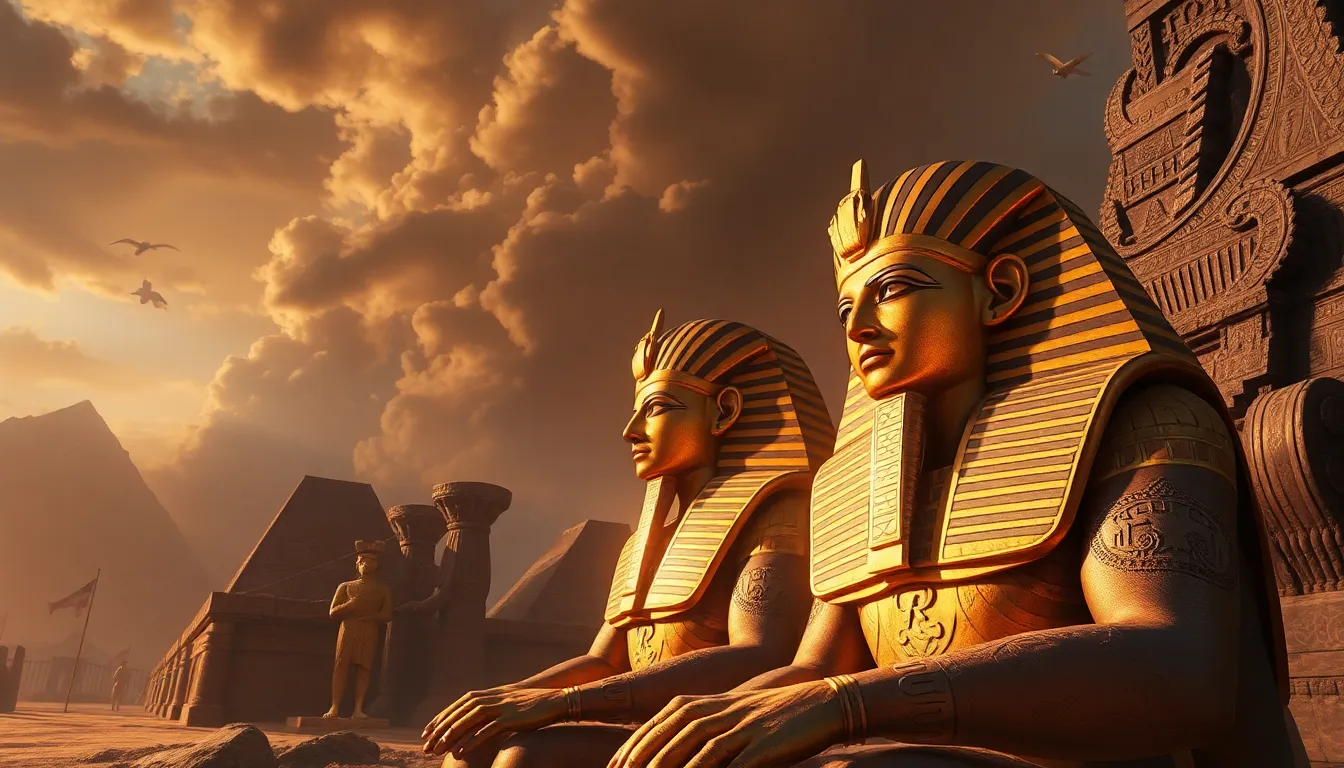
The Price of Power: Pharaohs and the Threat of Divine Retribution
I. Introduction
The Pharaohs of ancient Egypt were not only rulers but also considered divine embodiments of the gods on earth. Their significance in ancient Egyptian civilization cannot be overstated, as they were central to both governance and religious life. The concept of divine retribution played a critical role in shaping the actions and policies of these leaders, serving as a reminder that their power was both a privilege and a responsibility. This article aims to explore the intricate relationship between the Pharaohs and the divine, the fear of retribution, and how this influenced their reigns.
II. The Role of Pharaohs in Ancient Egypt
The Pharaoh’s power was defined by a blend of political, military, and religious responsibilities. As the supreme leader, the Pharaoh was tasked with maintaining order and prosperity within the kingdom.
A. Definition of the Pharaoh’s power and responsibilities
Pharaohs held absolute power over their subjects and were responsible for:
- Establishing laws and social order
- Leading military campaigns
- Overseeing agricultural production and resource management
- Conducting religious ceremonies and rituals
B. The Pharaoh as a divine figure: the connection to gods
Pharaohs were viewed as intermediaries between the gods and the people. They were often associated with major deities, such as:
- Horus: Representing the Pharaoh’s role as a ruler.
- Osiris: Symbolizing death and resurrection, echoing the Pharaoh’s role in the afterlife.
- Ra: The sun god, embodying the Pharaoh’s divine right to rule.
C. The political and religious authority of the Pharaoh
As both a political leader and a high priest, the Pharaoh’s authority extended across all aspects of life in ancient Egypt. This dual role reinforced the idea that political power was divinely sanctioned, further complicating the dynamics of leadership.
III. Divine Retribution: Understanding the Concept
Divine retribution refers to the belief that the gods would punish rulers for their transgressions or failures. This concept was deeply rooted in the religious and cultural consciousness of ancient Egyptians.
A. Historical context of divine retribution in ancient beliefs
In ancient Egypt, the notion of divine retribution served as a moral compass for leaders. Pharaohs were believed to be accountable not just to their subjects but also to the divine forces that governed the universe.
B. Examples of divine retribution in Egyptian mythology
Several myths illustrate the consequences of ignoring divine will:
- The story of Osiris, where his betrayal and murder led to chaos until order was restored.
- The tale of Ra, who punished humanity for its disobedience.
C. The societal implications of fearing divine wrath
Fear of divine retribution influenced social order, as it instilled a sense of accountability among rulers. The populace believed that the Pharaoh’s moral conduct directly affected their prosperity.
IV. Case Studies: Pharaohs Who Faced Divine Retribution
Throughout Egyptian history, certain Pharaohs faced divine retribution, often reflecting the consequences of their actions.
A. The reign of Akhenaten and the consequences of religious reform
Akhenaten attempted to shift worship from the traditional pantheon of gods to the sun disk, Aten. This radical change led to social unrest and is often cited as a cause for the decline of his dynasty.
B. Ramses II and the impact of the plagues on his legacy
Ramses II ruled during a time of great conflict and trials, including the plagues that struck Egypt as told in the biblical Exodus. These events were seen as manifestations of divine displeasure.
C. The downfall of Pharaohs during times of famine and disaster
Periods of famine, such as during the reign of Pharaoh Djoser, were interpreted as signs of divine retribution for failing to uphold Ma’at, the principle of order and balance.
V. The Relationship Between Pharaohs and the Priesthood
The priesthood played a crucial role in mediating between the Pharaoh and the divine, influencing the actions and decisions of the rulers.
A. The influence of priests on the Pharaoh’s decisions
Priests were powerful figures who advised Pharaohs and conducted rituals that were essential for maintaining divine favor.
B. How priestly authority acted as a check on the Pharaoh’s power
While Pharaohs held significant authority, they were also reliant on priests for religious legitimacy, creating a balance of power that could lead to conflict.
C. The role of temples in mediating divine favor and retribution
Temples served as centers of worship and administration, crucial for ensuring that the gods remained appeased and that the Pharaoh’s rule was justified.
VI. The Ideology of Kingship and Moral Conduct
The moral expectations placed upon Pharaohs were deeply intertwined with their divine status, demanding that they exemplify virtue.
A. The expectations of Pharaohs as morally upright leaders
Pharaohs were expected to embody virtues such as justice, truth, and piety. Their legitimacy depended on their adherence to these ideals.
B. The concept of Ma’at and its relation to divine order
Ma’at represented truth, balance, and cosmic order, and Pharaohs were seen as the guardians of this principle. Failure to uphold Ma’at could invite divine retribution.
C. Consequences of failing to uphold moral and ethical standards
When Pharaohs failed to maintain moral integrity, it was believed that the natural order would be disrupted, leading to disasters, famine, and loss of power.
VII. The Legacy of Divine Retribution in Egyptian History
The fear of divine retribution had lasting effects on governance and societal values throughout Egyptian history.
A. How the fear of divine retribution shaped policies and governance
Pharaohs often enacted policies that aligned with religious expectations to avoid divine punishment, influencing laws and social structures.
B. Long-term impacts on Egyptian society and culture
This interplay between divine authority and royal power left a lasting imprint on Egyptian culture, shaping their art, literature, and religious practices.
C. Lessons learned from the Pharaohs’ experiences with divine consequences
The stories of the Pharaohs serve as cautionary tales about the importance of moral conduct and the potential consequences of power divorced from responsibility.
VIII. Conclusion
The relationship between power and divine retribution in ancient Egypt illustrates a complex interplay that shaped leadership and governance. The Pharaohs, as divine representatives, were acutely aware of the repercussions of their actions in the eyes of the gods. Today, the lessons learned from their experiences remain relevant, prompting reflections on the nature of leadership and accountability in contemporary society. The enduring legacy of the Pharaohs and their divine connection continues to captivate our imagination, highlighting the intricate ties between power, morality, and the divine.