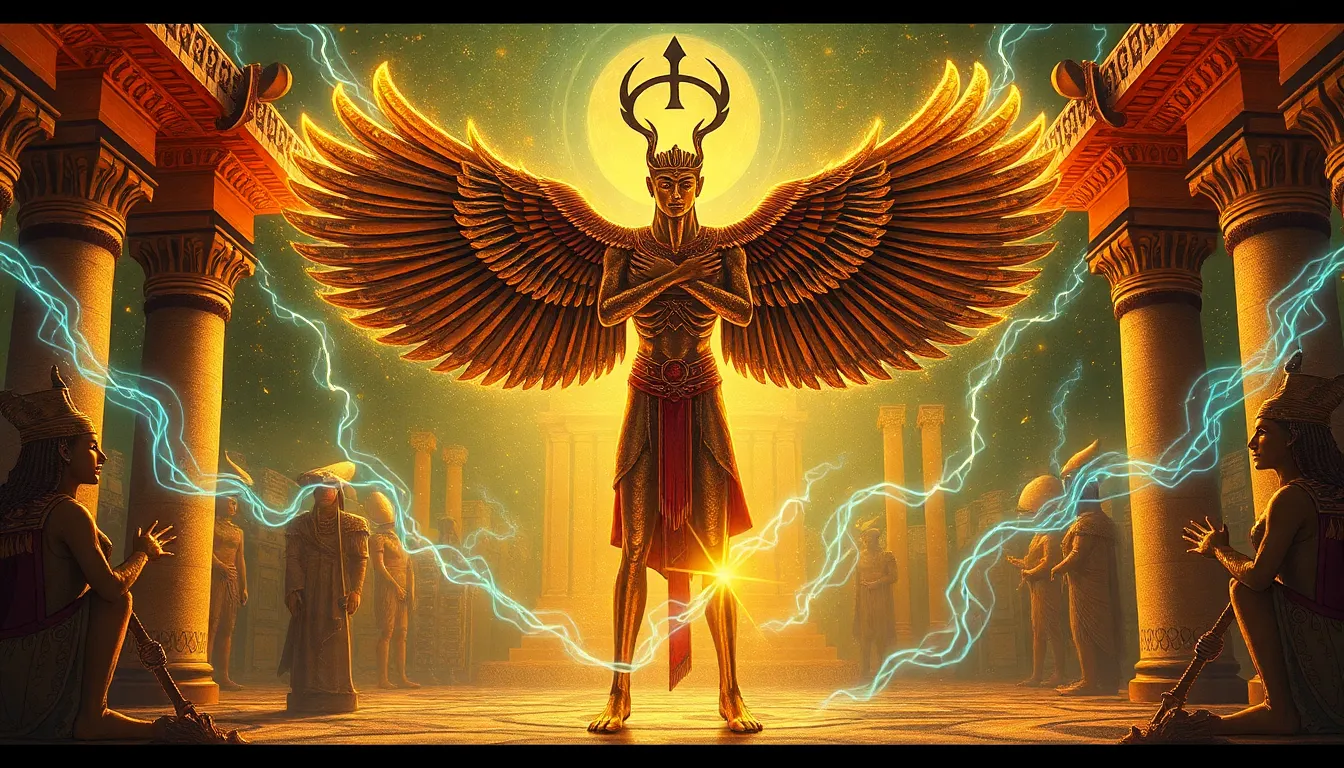
The Power of Fate: How Egyptian Myths Portray Divine Retribution
I. Introduction
Egyptian mythology is a rich tapestry of stories, gods, and rituals that reflect the beliefs and values of ancient Egyptian culture. The myths not only served as a means of explaining natural phenomena but also offered insights into the moral and ethical frameworks of the society. Central to these narratives is the concept of fate, which played a pivotal role in how the ancient Egyptians viewed their lives and the divine order of the universe. This article will delve into the portrayal of divine retribution in Egyptian myths, exploring how fate is intertwined with justice and morality.
II. Understanding Fate in Egyptian Beliefs
In the context of Egyptian mythology, fate can be understood as the predetermined course of events that governs the lives of both mortals and gods. It is a force that is largely influenced by the divine deities who shape the destinies of individuals based on their actions and moral integrity.
- Definition of fate: In ancient Egypt, fate was seen as a cosmic law that could not be altered, but it was not entirely deterministic; individuals had some agency in their lives.
- The role of the gods: Gods were believed to have the power to influence fate, ensuring that justice was served through divine retribution.
- Interplay between free will and destiny: While fate was a significant factor, the choices made by individuals also played a critical role in shaping their destinies.
III. Major Deities Associated with Fate and Retribution
Several key deities in Egyptian mythology are closely associated with the themes of fate and retribution.
- Anubis: The god of the afterlife and judgment, Anubis is responsible for overseeing the weighing of the heart, determining the fate of souls in the afterlife.
- Ma’at: The goddess of truth, balance, and cosmic order, Ma’at embodies the principles of justice that govern both the mortal and divine realms.
- Osiris: The god of resurrection and the afterlife, Osiris plays a critical role in the cycle of life, death, and rebirth, representing the ultimate judgment of the soul.

IV. Mythological Narratives Illustrating Divine Retribution
The myths of ancient Egypt are filled with narratives that illustrate the consequences of actions and the idea of divine retribution.
- The story of Osiris: Osiris, the beloved god of the afterlife, was murdered by his brother Set. His resurrection symbolizes justice and the triumph of good over evil, reinforcing the belief that wrongdoings will ultimately be punished.
- The tale of Set and Horus: The epic conflict between Set and Horus represents the struggle for rightful kingship. Horus’s eventual victory signifies the restoration of order and justice, showcasing the importance of fate in determining the rightful ruler.
- The judgment of the dead: In the weighing of the heart ceremony, the heart of the deceased is weighed against the feather of Ma’at. A heart that is heavy with sin results in dire consequences, illustrating the direct correlation between one’s actions and their fate in the afterlife.
V. Fate and Moral Lessons in Egyptian Myths
Egyptian myths often served as cautionary tales, emphasizing the importance of moral integrity and the consequences of hubris.
- Consequences of hubris and wrongdoing: Many myths illustrate that pride and immoral actions lead to downfall and punishment.
- Significance of moral integrity: Characters who uphold truth and justice, like Horus and Osiris, are ultimately rewarded, reinforcing the idea that virtue is integral to a favorable fate.
- Cautionary tales: These myths provided ancient Egyptians with moral guidelines, teaching lessons about the importance of living a just and honorable life.
VI. Symbolism and Imagery of Retribution in Egyptian Art
The themes of fate and retribution are vividly represented in Egyptian art and artifacts, conveying deep moral and ethical meanings.
- Depictions in temples and tombs: Temples often featured intricate carvings and paintings that illustrated scenes of divine judgment and retribution, serving as reminders of the moral order.
- Symbolic representations in hieroglyphs: Hieroglyphs frequently depicted concepts of justice and fate, using symbols to convey complex ideas about morality.
- Analysis of artifacts: Artifacts such as amulets and funerary items often carried symbols of Ma’at, representing the hope for a just fate in the afterlife.
VII. The Legacy of Egyptian Myths in Contemporary Culture
The themes of fate and divine retribution in Egyptian mythology continue to resonate in modern culture.
- Influence on modern literature and media: Egyptian myths have inspired countless works of literature, film, and art, showcasing the timeless nature of these stories.
- Enduring relevance: The concepts of fate and justice are universal, making them relatable across cultures and time periods.
- Comparisons to other cultures: Many cultures have their own interpretations of fate, often paralleling the ideas found in Egyptian beliefs, highlighting a shared human experience.
VIII. Conclusion
In conclusion, the significance of fate and divine retribution in Egyptian myths is profound, offering insights into the moral and ethical frameworks of ancient Egyptian society. These themes continue to resonate today, providing valuable lessons about justice, morality, and the human experience. The power of mythology lies in its ability to help us understand the complexities of life and the consequences of our actions.