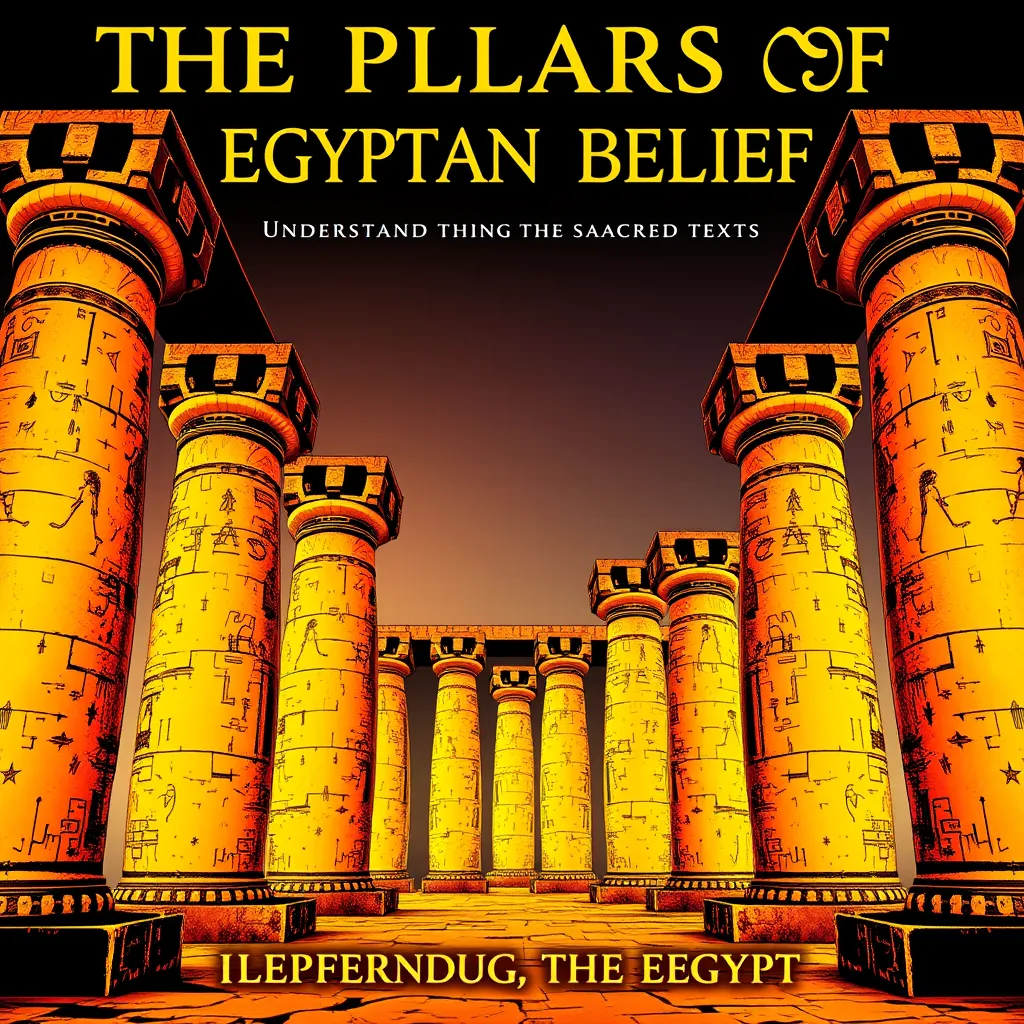
The Pillars of Egyptian Belief: Understanding the Sacred Texts
I. Introduction
Ancient Egyptian religion, with its rich tapestry of beliefs, rituals, and practices, has fascinated scholars and enthusiasts alike for centuries. At the heart of this intricate belief system are sacred texts that offer profound insights into the spiritual landscape of ancient Egypt. These texts not only illuminate the religious practices of the time but also provide a glimpse into the values, ethics, and societal norms of one of history’s most captivating civilizations.
The importance of sacred texts in understanding the beliefs of ancient Egyptians cannot be overstated. They served as both a guide for the living and a roadmap for the afterlife, reflecting the deep-seated convictions of a society that revered its gods and the mysteries of existence. This article aims to explore the various sacred texts of ancient Egypt, their roles in society, and their lasting impact on our understanding of this remarkable culture.
II. The Role of Sacred Texts in Egyptian Society
To appreciate the significance of sacred texts in ancient Egypt, it is essential to define what these texts were and the different types that existed. Sacred texts encompassed a wide range of writings, including religious hymns, spells, prayers, and mythological narratives, all of which played a critical role in both individual and communal religious practices.
- Types of Sacred Texts:
- Pyramid Texts
- Coffin Texts
- Book of the Dead
- Hymns and prayers
- Mythological stories
The influence of these texts extended beyond the realm of spirituality; they were integral to daily life and governance. Rulers and officials relied on sacred texts to legitimize their authority and guide their decisions. Moreover, these writings preserved cultural identity and historical legacy, ensuring that the beliefs and practices of ancient Egyptians would endure through generations.
III. The Pyramid Texts: The Earliest Religious Writings
The Pyramid Texts represent the oldest known religious writings in ancient Egypt, dating back to the Old Kingdom (c. 2686–2181 BCE). Discovered inscribed on the walls of royal tombs, these texts served as a means of safeguarding the deceased in the afterlife.
Key themes found within the Pyramid Texts include:
- The journey of the soul after death
- Invocations to gods for protection and guidance
- Spells to ensure safe passage through the underworld
Deities such as Osiris, Isis, and Ra are prominently featured, underscoring their importance in funerary practices. The significance of the Pyramid Texts lies in their role in shaping beliefs about the afterlife, providing a framework for understanding death and immortality in ancient Egyptian culture.
IV. The Coffin Texts: Transition and Transformation
As time progressed, the Pyramid Texts evolved into the Coffin Texts during the Middle Kingdom (c. 2055–1650 BCE). This transition marked a significant transformation in Egyptian religious thought, expanding the accessibility of sacred texts beyond royalty to include the elite and common people.
The Coffin Texts contain a broader range of spells and incantations, often personalized for the deceased. Notable spells include:
- Spells for protection against malevolent forces
- Spells for sustaining life in the afterlife
- Spells for navigating the trials of the underworld
This democratization of sacred texts reflected a shift in beliefs, allowing more individuals to engage with the divine and seek personal connections to the afterlife.
V. The Book of the Dead: A Guide for the Afterlife
The Book of the Dead, formally known as “The Book of Coming Forth by Day,” emerged during the New Kingdom (c. 1550–1070 BCE) and became one of the most famous and widely utilized sacred texts in ancient Egypt. This collection of spells, prayers, and hymns served as a guide for the deceased, aiding them in their journey through the afterlife.
Key components of the Book of the Dead include:
- Spells for protection and guidance
- Declarations of innocence before the judgment of Osiris
- Rituals for ensuring sustenance in the afterlife
Rituals associated with the Book of the Dead included elaborate funerary practices, where family members and priests would recite spells to assist the deceased in navigating the challenges of the afterlife.
VI. The Role of Mythology in Egyptian Sacred Texts
Mythology plays a vital role in the sacred texts of ancient Egypt, as it provides the narrative framework for understanding the gods and their influence on the world. Major myths, such as the story of Osiris and Isis, are often interwoven with the themes found in the sacred texts.
The symbolism of gods and goddesses is rich and multi-layered. For instance:
- Osiris: God of the afterlife and resurrection
- Isis: Goddess of magic and healing
- Ra: Sun god, representing creation and life
The interplay between myth and morality is evident in the moral lessons conveyed through these stories, guiding individuals on how to live righteous lives in accordance with divine order.
VII. The Impact of Sacred Texts on Modern Understanding of Ancient Egypt
Archaeological discoveries and the study of sacred texts have significantly enriched our understanding of ancient Egypt. These texts provide invaluable insights into the religious beliefs, social structures, and cultural practices of the time.
The influence of these texts extends into contemporary spirituality and culture, inspiring modern interpretations of ancient Egyptian beliefs. However, challenges remain in translating and understanding these ancient writings, as nuances of language and cultural context can be lost over time.
VIII. Conclusion
In conclusion, the sacred texts of ancient Egypt are foundational to understanding the beliefs and practices of this remarkable civilization. They reveal a complex worldview that intertwines religion, morality, and daily life, providing a legacy that continues to captivate scholars and enthusiasts alike.
As we reflect on the enduring legacy of Egyptian beliefs, it becomes clear that the exploration and study of ancient Egyptian religion are not merely academic pursuits; they are an invitation to delve into the rich history of humanity’s quest for meaning and understanding in the face of the unknown.