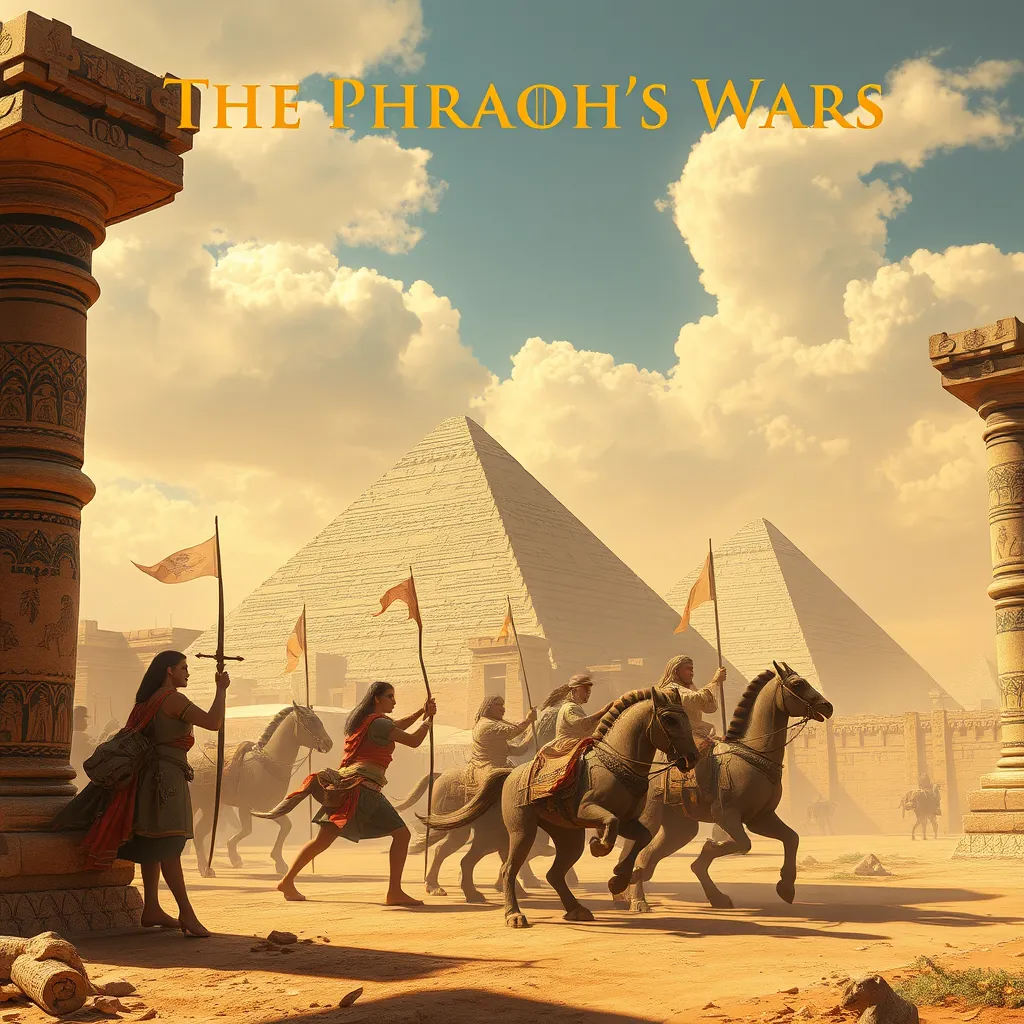
The Pharaoh’s Wars: Tales of Conquest and Triumph in Ancient Egypt
I. Introduction
Ancient Egypt, a civilization that flourished along the banks of the Nile River for thousands of years, is renowned for its monumental architecture, intricate hieroglyphs, and rich cultural heritage. This remarkable society was not only a center of art and religion but also a formidable military power. The Pharaohs, as the divine rulers of Egypt, played a crucial role in leading military campaigns that shaped the geopolitical landscape of the ancient Near East.
The purpose of this article is to explore the key wars waged by the Pharaohs and their lasting impacts on Egyptian society, culture, and governance. Through the lens of military history, we will uncover the strategies, tactics, and consequences of these conquests.
II. The Historical Context of Warfare in Ancient Egypt
The ancient Near East was a complex tapestry of rival kingdoms, trade routes, and shifting alliances. Egypt’s geographic position, bordered by deserts and the Mediterranean Sea, provided both protection and challenges. The need to secure borders, control trade routes, and maintain dominance over neighboring territories often led to military conflict.
Over the centuries, Egyptian warfare evolved significantly. Early battles relied on infantry and simple weapons, but as the need for more sophisticated tactics arose, so did advancements in military technology, such as:
- Bronze weapons
- Chariots for rapid movement
- Advanced siege techniques
Warfare became essential for the Pharaohs not only to expand their territories but also to reinforce their divine authority and maintain the stability of their rule.
III. Notable Pharaohs and Their Military Campaigns
Several Pharaohs stand out in history for their military prowess and notable campaigns:
A. Pharaoh Narmer: The Unification of Upper and Lower Egypt
Pharaoh Narmer, also known as Menes, is credited with the unification of Upper and Lower Egypt around 3100 BCE. His military campaigns were pivotal in consolidating power and establishing the First Dynasty. Narmer’s victory is famously depicted on the Narmer Palette, showcasing his triumph over his enemies and the symbolic merging of the two lands.
B. Hatshepsut: Expeditions to Punt and Beyond
Hatshepsut, one of the few female Pharaohs, is known for her ambitious trade expeditions rather than conventional military conquests. Her famous expedition to the Land of Punt brought back valuable resources, including incense, gold, and exotic animals, enhancing Egypt’s wealth and international standing.
C. Thutmose III: The Napoleon of Ancient Egypt
Thutmose III, often referred to as the “Napoleon of Ancient Egypt,” reigned from 1479 to 1425 BCE and is celebrated for his military genius. He conducted numerous campaigns in the Levant, expanding Egypt’s empire to its greatest extent. His most notable victory was at the Battle of Megiddo, where he employed innovative tactics, including the strategic use of terrain and surprise attacks.
D. Ramses II: The Battle of Kadesh and Its Aftermath
Ramses II, known as Ramses the Great, engaged in one of the largest chariot battles in history against the Hittites at Kadesh around 1274 BCE. Although the battle ended in a stalemate, Ramses skillfully used propaganda to portray it as a great Egyptian victory. His subsequent peace treaty with the Hittites marked a significant moment in diplomatic history, showcasing the Pharaoh’s ability to blend military might with political strategy.
IV. Strategies and Tactics of Ancient Egyptian Warfare
The structure of the Egyptian military was highly organized, comprising various units including:
- Infantry: The backbone of the military, composed of foot soldiers armed with spears and shields.
- Chariotry: Elite units that provided mobility and striking power on the battlefield.
- Archers: Skilled marksmen who played a crucial role in both offense and defense.
Chariots were particularly significant in battle, allowing for rapid movement and shock tactics. Siege warfare also became a critical component of Egyptian military strategy, with fortifications designed to withstand enemy attacks and protect vital cities.
V. Cultural and Religious Dimensions of War
Warfare in ancient Egypt was deeply intertwined with religion and culture. The Pharaohs were seen as divine figures, and their military endeavors were believed to be guided by the gods. Victories in battle were celebrated with grand rituals, reinforcing the Pharaoh’s status as a protector of the nation.
Propaganda played a vital role in shaping the public perception of Pharaohs as powerful warriors. Monumental inscriptions and temple reliefs often depicted them in heroic poses, emphasizing their strength and divine favor. This portrayal extended to various forms of art and literature, celebrating military achievements and instilling a sense of national pride.
VI. The Consequences of Conquest
The consequences of military victories were profound and multi-faceted:
- Economic Benefits: Conquests often resulted in the acquisition of wealth, resources, and tribute from conquered lands, bolstering the Egyptian economy.
- Cultural Exchanges: As Egypt expanded its empire, it integrated diverse cultures, leading to rich exchanges in art, religion, and customs.
- Long-term Impacts: Military campaigns influenced governance, leading to the establishment of provinces and administrative systems to manage newly acquired territories.
VII. Decline of Pharaohs and Changes in Warfare
Despite their formidable military prowess, the power of the Pharaohs waned over time due to various factors:
- Internal Strife: Civil wars and power struggles weakened central authority.
- Foreign Invasions: The rise of powerful empires in the region, such as the Assyrians and Persians, challenged Egyptian dominance.
- Shifts in Alliances: Changes in international relations led to new military strategies, often requiring cooperation with foreign powers.
As new military leaders emerged, the traditional role of the Pharaoh as the supreme military commander diminished, leading to the eventual decline of their dominance.
VIII. Conclusion
The legacy of the Pharaohs is inextricably linked to their military exploits. Warfare was not only a means of expansion and power but also a reflection of their divine mandate and cultural identity. The lessons learned from Egypt’s military history remind us of the complexities of power, the interplay of culture and warfare, and the enduring fascination with the stories of conquest and triumph that have shaped human civilization.
As we reflect on the importance of warfare in the legacy of the Pharaohs, we recognize the profound impacts these campaigns had on Egyptian society, governance, and culture, leaving an indelible mark that continues to captivate our imagination today.