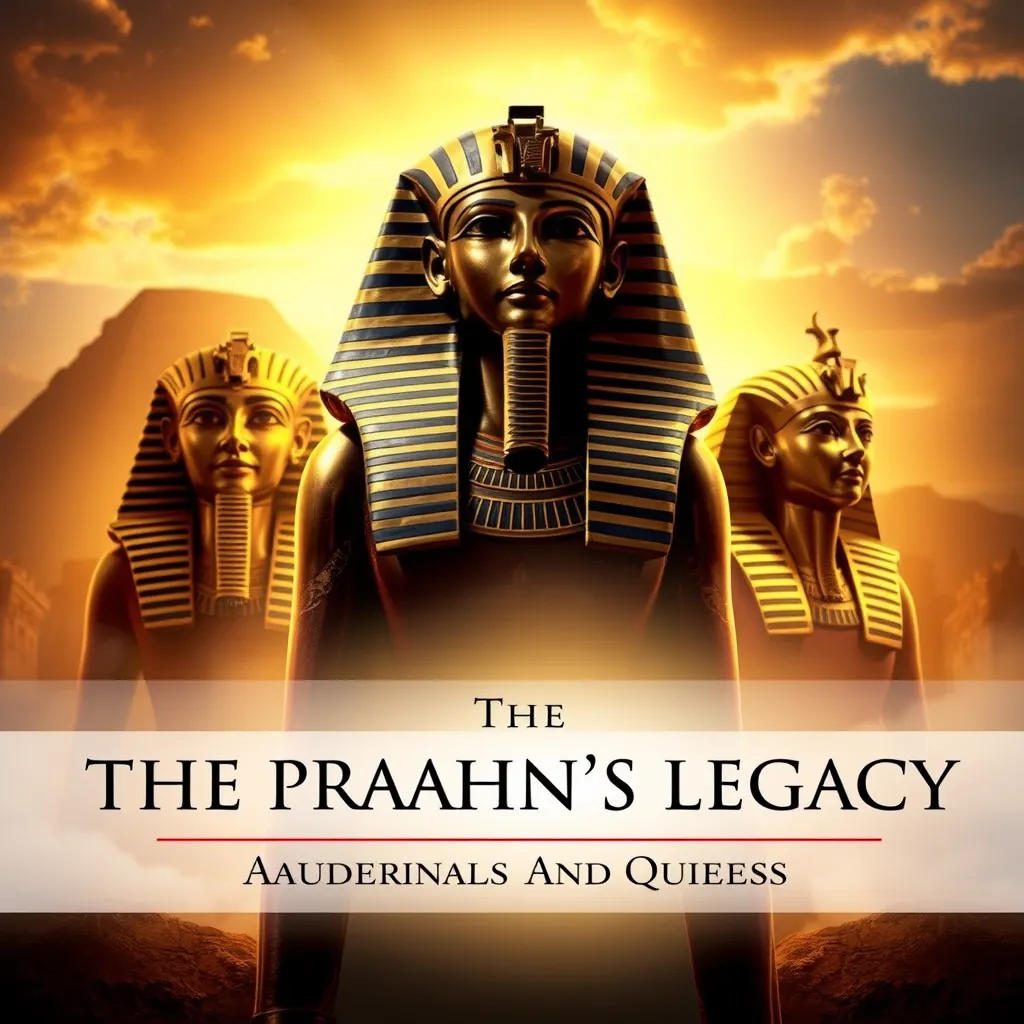
The Pharaoh’s Legacy: The Stories of Kings and Queens
I. Introduction
Ancient Egyptian civilization is one of the most fascinating and enduring cultures in human history. It flourished along the banks of the Nile River for over three millennia, leaving behind a rich tapestry of art, architecture, and written records. Central to this civilization were the Pharaohs, who played a vital role in shaping its history and culture.
The Pharaohs were not just rulers; they were considered divine beings, mediators between the gods and the people. Their legacies are etched in the monumental structures they built, the stories they left behind, and their influence on subsequent generations. This article aims to explore the legacies of notable kings and queens of ancient Egypt, highlighting their significance and contributions to the civilization.
II. The Role of Pharaohs in Ancient Egypt
A Pharaoh was more than a king; this title carried immense weight, encompassing political, religious, and social responsibilities. Pharaohs were viewed as living gods on earth, responsible for maintaining ma’at, or cosmic order, and ensuring the prosperity of their people.
Their religious significance was profound, as they were seen as intermediaries between the gods and the Egyptian people. Through rituals and ceremonies, Pharaohs sought to appease the gods, ensuring bountiful harvests and protection from foreign threats. This divine association solidified their authority and power.
III. Iconic Kings of Ancient Egypt
A. Narmer: The Unifier of Upper and Lower Egypt
Narmer, also known as Menes, is credited with the unification of Upper and Lower Egypt around 3100 BCE. His reign marked the beginning of the First Dynasty and the establishment of the Pharaoh as the central figure in Egyptian society.
B. Ramses II: The Great Builder and Military Leader
Ramses II, often referred to as Ramses the Great, is one of the most celebrated Pharaohs in Egyptian history. His reign lasted from 1279 to 1213 BCE and was marked by extensive military campaigns, architectural achievements, and a long period of peace and prosperity.
- He commissioned the construction of monumental temples, including the famous Abu Simbel.
- Ramses II signed the first known peace treaty with the Hittites after the Battle of Kadesh.
- His legacy includes over 50 sons and numerous monumental inscriptions celebrating his achievements.
C. Tutankhamun: The Boy King and his Impact on Egyptology
Tutankhamun, often called King Tut, ascended to the throne at a young age and ruled from 1332 to 1323 BCE. Although his reign was relatively short and unremarkable politically, the discovery of his nearly intact tomb in 1922 by Howard Carter brought him global fame.
His tomb contained a wealth of artifacts that provided invaluable insights into ancient Egyptian burial practices and material culture, sparking a renewed interest in Egyptology.
IV. Powerful Queens and Their Influence
A. Hatshepsut: The Female Pharaoh who Challenged Norms
Hatshepsut reigned as Pharaoh from 1479 to 1458 BCE and is one of the few female rulers in ancient Egypt. She is known for her ambitious building projects, including her mortuary temple at Deir el-Bahari, and for promoting trade expeditions that enriched the kingdom.
Hatshepsut adopted the full regalia of a Pharaoh, including a false beard, challenging traditional gender roles and showcasing her leadership capabilities.
B. Cleopatra VII: The Last Pharaoh and Her Political Acumen
Cleopatra VII, the last active ruler of the Ptolemaic Kingdom of Egypt, reigned from 51 to 30 BCE. Known for her intelligence and political savvy, she formed alliances with powerful Roman leaders such as Julius Caesar and Mark Antony.
Her reign marked the end of the Hellenistic period and the beginning of Roman domination in Egypt.
C. Nefertiti: The Icon of Beauty and Religious Change
Nefertiti, the wife of Pharaoh Akhenaten, is famous for her beauty and her role in a significant religious revolution. She was an influential queen who supported her husband’s worship of the sun disk Aten and played a crucial role in the shift from traditional polytheism to monotheism.
Her iconic bust, discovered in 1912, continues to captivate people worldwide, symbolizing the beauty and power of ancient Egyptian queens.
V. The Architectural Achievements of Pharaohs
A. Pyramids of Giza: Tombs of the Kings
The Pyramids of Giza, particularly the Great Pyramid of Khufu, are among the most remarkable architectural achievements of ancient Egypt. Built as monumental tombs, they reflect the Pharaohs’ beliefs in the afterlife and their desire for immortality.
B. Temples and Obelisks: Symbols of Divine Power
Pharaohs constructed grand temples and towering obelisks to honor the gods and commemorate their reigns. These structures served as places of worship and as symbols of the Pharaoh’s divine authority.
C. The Sphinx: The Guardian of the Desert
The Great Sphinx of Giza, with the body of a lion and the head of a Pharaoh, stands as a testament to the architectural prowess of ancient Egyptians. It symbolizes strength and wisdom, guarding the Giza Plateau and the secrets of the ancient world.
VI. Pharaohs and Their Contributions to Art and Culture
A. Artistic Innovations in Sculpture and Painting
Ancient Egyptian art is characterized by its distinctive styles and symbolism. Pharaohs commissioned numerous sculptures and paintings that depicted their achievements and religious beliefs, leaving a lasting impact on the cultural landscape.
B. Literature and Writing: Hieroglyphics and Beyond
The development of hieroglyphics as a writing system was a significant achievement of ancient Egyptians. It allowed for the documentation of history, religious texts, and administrative records, preserving the civilization’s legacy for future generations.
C. The Role of Religion in Art and Cultural Identity
Religion played a central role in all aspects of ancient Egyptian culture, influencing art, architecture, and daily life. Temples and tombs were adorned with religious imagery to ensure the Pharaoh’s successful journey to the afterlife, reinforcing their divine status.
VII. The Decline of Pharaohs and Their Legacy
A. Factors Leading to the Decline of Pharaohs
The decline of the Pharaohs was influenced by various factors, including internal strife, economic difficulties, and the rise of foreign powers. The weakening of central authority allowed for increased regional autonomy and ultimately led to foreign invasions.
B. The Impact of Conquests and Foreign Rule
The conquests of Alexander the Great and later Roman rule marked the end of the Pharaoh’s reign. Egypt became a province of larger empires, leading to a significant transformation of its culture and governance.
C. How Pharaohs are Remembered Today
Today, the Pharaohs are remembered as iconic figures of ancient history. Their monumental achievements and cultural contributions continue to inspire awe and fascination, influencing art, literature, and popular culture worldwide.
VIII. Conclusion
The enduring legacy of the Pharaohs reflects the richness of ancient Egyptian civilization. Their stories, marked by remarkable achievements and profound influence, resonate through time, illustrating the complexities of power, culture, and religion.
In modern culture, the tales of these kings and queens capture the imagination, reminding us of the importance of preserving history. As we explore their stories, we gain insights into the foundations of human civilization and the universal themes that bind us across time.