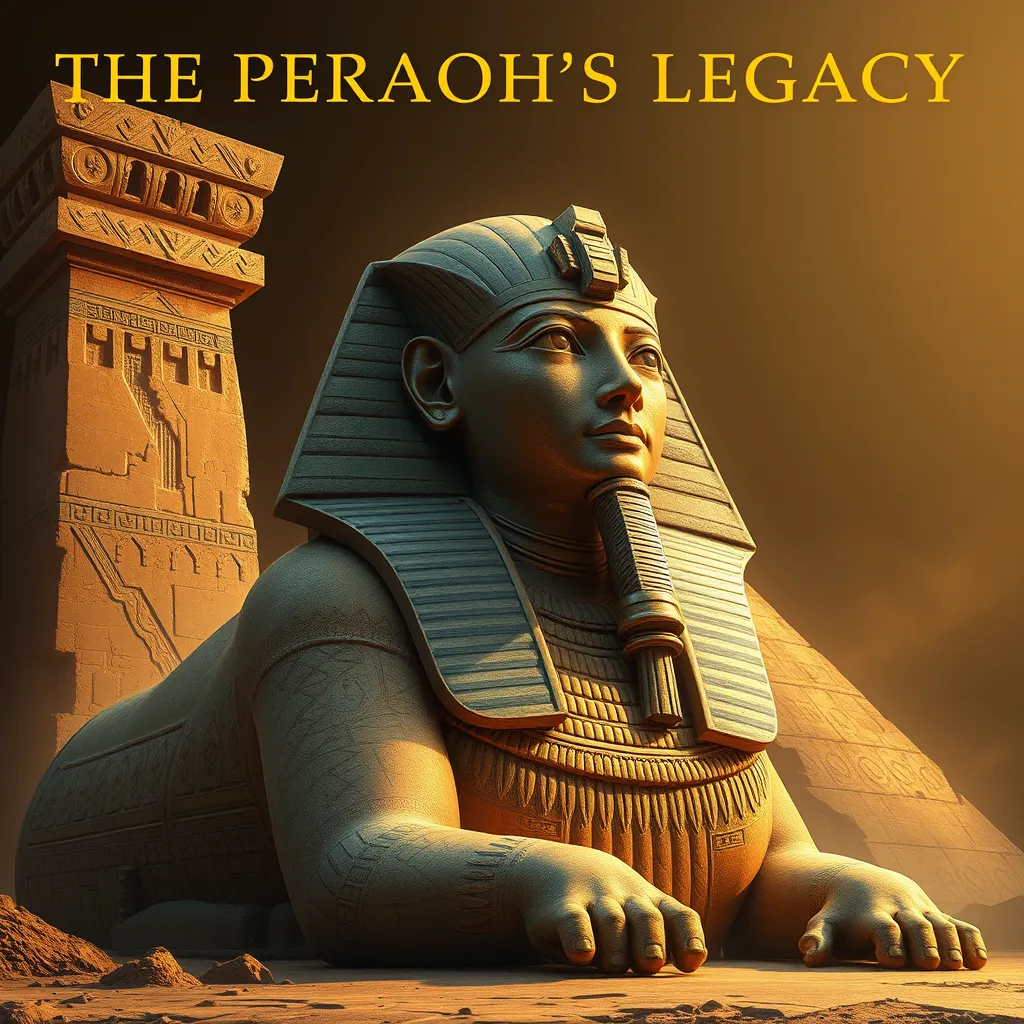
The Pharaoh’s Legacy: The Myth of the Pharaoh’s Divine Right to Rule
I. Introduction
The Pharaohs of ancient Egypt were not merely rulers; they were central figures in the cultural, religious, and political life of the civilization. As the apex of the social hierarchy, they wielded immense power and were perceived as divine entities on Earth. The concept of divine right—a belief that a ruler’s authority comes directly from a divine source—was integral to the Pharaoh’s legitimacy and governance.
This article aims to explore the myth of the Pharaoh’s divine right to rule, delving into its historical context, mythological foundations, and the implications of this belief system, both in ancient times and in contemporary society.
II. Historical Context of Pharaohs in Ancient Egypt
The pharaonic system emerged around 3100 BCE, marking the beginning of a unified Egypt under a singular ruler. The Pharaoh was not just a political leader; he was considered a god on Earth, a mediator between the gods and the people.
Key roles and responsibilities of a Pharaoh included:
- Ensuring the prosperity and stability of the kingdom
- Conducting religious rituals and ceremonies
- Judging disputes and maintaining law and order
- Defending the nation against external threats
Religion and governance were deeply intertwined in ancient Egypt, with the Pharaoh often depicted as a divine figure whose decisions were believed to be guided by the gods.
III. The Concept of Divine Right in Ancient Civilizations
The notion of divine right has appeared in various cultures throughout history, wherein rulers claimed their authority as ordained by a higher power. In ancient Mesopotamia, for example, kings were seen as chosen by the gods to maintain order and justice. Similarly, in China, the concept of the Mandate of Heaven justified the emperor’s rule as divinely sanctioned.
However, the divine right of Egyptian Pharaohs had unique aspects:
- The Pharaoh was considered the living embodiment of Horus, the sky god.
- Upon death, the Pharaoh was believed to join the afterlife as Osiris, ensuring continued divine influence.
- Pharaohs were central to the concept of Ma’at, the principle of truth, balance, and cosmic order.
IV. Mythological Foundations of Pharaoh’s Authority
The legitimacy of the Pharaoh’s rule was deeply rooted in mythology. Ancient Egyptian mythology provided a framework that justified the Pharaoh’s authority and reinforced the belief in his divinity.
Key deities associated with the Pharaoh included:
- Horus: The sky god, symbolizing kingship and protection.
- Osiris: The god of the afterlife, representing resurrection and eternal life.
- Isis: The goddess of magic and motherhood, often depicted in connection with the Pharaoh’s lineage.
The Pharaoh was viewed as a divine intermediary, connecting the people with the gods and ensuring that the divine order was maintained on Earth.
V. Rituals and Ceremonies Reinforcing Divine Right
Rituals and ceremonies played a crucial role in reinforcing the divine right of the Pharaoh. The coronation ceremony, for instance, was not just a political event but a spiritual one, signifying the Pharaoh’s divine appointment. It involved rituals designed to invoke the blessing of the gods and ensure the Pharaoh’s authority was recognized by both deities and subjects.
Key rituals included:
- The Opening of the Mouth ceremony, which symbolically awakened the Pharaoh for his duties.
- Festivals dedicated to gods, reinforcing the Pharaoh’s role as a religious leader.
- Building and maintaining temples, where priests would perform rituals to ensure the favor of the gods.
Temples served as the epicenter of these activities, with priests acting as intermediaries who supported and legitimized the Pharaoh’s rule through their religious duties.
VI. Challenges to the Myth of Divine Right
<pDespite its long-standing acceptance, the myth of the Pharaoh's divine right faced challenges throughout history. Various instances of rebellion and opposition arose, as well as significant events that questioned the infallibility of pharaonic rule.
Some notable challenges included:
- Rebellions during periods of famine or economic distress, where the populace questioned the Pharaoh’s divine favor.
- Foreign invasions that undermined the perception of the Pharaoh’s strength and divine protection.
- Dynastic changes, where new pharaohs had to establish their legitimacy, often through elaborate claims of divine favor.
Additionally, shifts in religious beliefs, such as the rise of Atenism during the reign of Akhenaten, challenged traditional views of divinity and the Pharaoh’s role within the pantheon.
VII. The Legacy of the Pharaoh’s Divine Right in Modern Contexts
The legacy of the Pharaoh’s divine right continues to influence contemporary leadership and governance. The idea that leaders derive their authority from divine or higher powers can be seen in various political systems around the globe.
The enduring fascination with ancient Egyptian culture also highlights the importance of understanding these historical myths. Aspects of pharaonic governance and the divine right have been romanticized in modern media, influencing how leaders are perceived today.
Lessons from the myth of divine right can be observed in modern politics:
- The need for leaders to maintain public faith and legitimacy.
- The impact of religious beliefs on governance and authority.
- The potential for rebellion and change when leaders fail to meet the expectations of their constituents.
VIII. Conclusion
In summary, the myth of the Pharaoh’s divine right to rule was a complex interplay of mythology, religion, and governance that shaped ancient Egyptian society. From the historical context of the pharaonic system to the rituals that reinforced their authority, this belief system played a pivotal role in legitimizing the Pharaoh’s power.
Understanding these myths is crucial for appreciating the cultural and political dynamics of ancient civilizations. The legacy of the Pharaoh’s divine right continues to resonate in discussions of authority and governance today, reminding us of the intricate ways in which power can be constructed and maintained through belief.
Ultimately, the Pharaoh’s legacy serves as a testament to the enduring human quest for legitimacy and the complex relationships between rulers and the ruled.