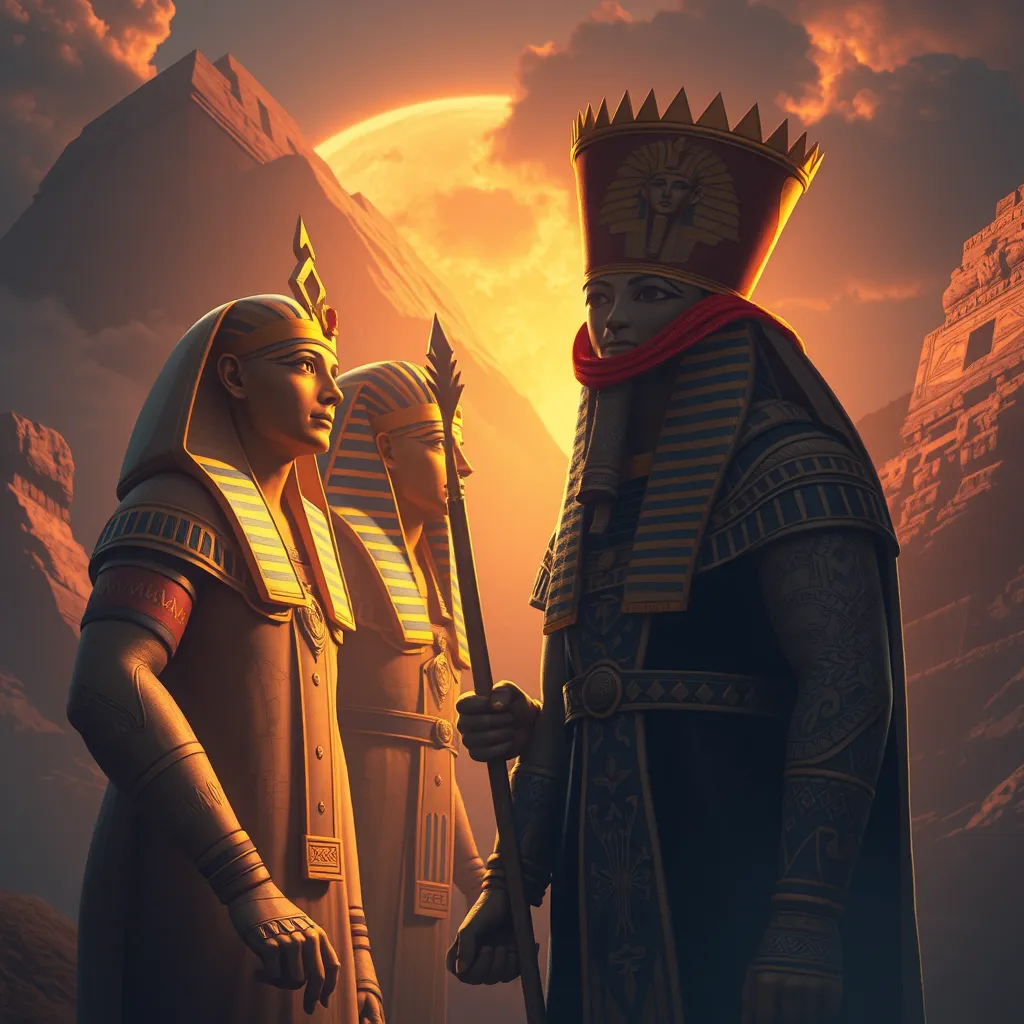
The Pharaohs: Guardians of the Two Lands
I. Introduction to the Pharaohs
The Pharaohs of ancient Egypt were not merely rulers; they were the embodiment of the nation’s identity and culture. As sovereigns of the Nile Valley, they played a crucial role in the governance, religion, and social structure of ancient Egyptian society. The term ‘Pharaoh’ itself derives from the Egyptian words for ‘great house’, symbolizing their grandeur and authority.
Ancient Egypt was often referred to as the “Two Lands,” which represented the division between Upper Egypt (the southern region, characterized by its highlands) and Lower Egypt (the northern delta region). The unification of these two lands under a single ruler marked a pivotal moment in Egyptian history, establishing the foundation for a civilization that would endure for millennia.
This article aims to explore the historical context, divine authority, political structure, cultural contributions, notable figures, decline, and the enduring legacy of the Pharaohs in shaping one of the most remarkable civilizations in history.
II. Historical Context of the Pharaohs
The emergence of the Pharaohs dates back to around 3100 BCE, with the unification of Upper and Lower Egypt traditionally attributed to Narmer, also known as Menes. This unification marked the beginning of the Early Dynastic Period, which saw the establishment of a centralized state.
The Pharaohs played a significant role in shaping Egyptian civilization. They were viewed as the mediators between the gods and the people, responsible for maintaining harmony and order (Ma’at) in society. Their reigns were characterized by monumental architectural projects, military conquests, and extensive trade networks, which contributed to the wealth and stability of the nation.
III. The Divine Authority of Pharaohs
Pharaohs were considered living gods, a belief that reinforced their divine right to rule. This status was derived from the belief that they were the earthly embodiment of Horus, the sky god, and upon their death, they became associated with Osiris, the god of the afterlife. This divine connection granted them immense power and authority over their subjects.
The concept of Ma’at was central to the Pharaoh’s rule, encapsulating the ideals of order, truth, and justice. The Pharaoh was responsible for upholding Ma’at through laws, ethical governance, and religious practices.
Pharaohs also had significant religious responsibilities, including the performance of elaborate rituals to appease the gods and ensure the fertility of the land. These rituals often involved offerings, ceremonies, and the construction of temples dedicated to various deities.
IV. The Political Structure of Ancient Egypt
The governance of ancient Egypt was highly organized under the Pharaohs. The Pharaoh held absolute power, but they were supported by a complex administrative structure. The vizier, akin to a prime minister, was the chief advisor to the Pharaoh and oversaw the day-to-day operations of the government.
- Roles of Administration:
- Viziers: Managed governmental affairs and legal matters.
- Nobility: Assisted in governance and land management.
- Priests: Played a crucial role in religious and political life.
Military leadership was also a crucial aspect of the Pharaoh’s role. Pharaohs led their armies in battles to expand Egypt’s territories, secure resources, and protect the nation from invaders. This military prowess was often commemorated in inscriptions and monumental art, highlighting the Pharaoh’s strength and divine favor.
V. Cultural Contributions of the Pharaohs
The Pharaohs were instrumental in the cultural development of ancient Egypt, leaving a legacy of architectural and artistic achievements that continue to fascinate the world today.
- Architectural Achievements:
- Pyramids: The Great Pyramid of Giza remains one of the Seven Wonders of the Ancient World.
- Temples: Structures like the Karnak and Luxor temples showcase the grandeur of ancient Egyptian religious architecture.
- Advancements in Art and Literature:
- Hieroglyphics: The writing system that conveyed complex ideas and stories.
- Art: Statues, carvings, and paintings that depicted the Pharaohs and deities, emphasizing their divine nature.
- Influence on Religion and Mythology:
- Creation myths, the afterlife beliefs, and the pantheon of gods were deeply intertwined with the Pharaoh’s rule.
- Pharaohs were often deified, further solidifying their place in religious practices.
VI. Notable Pharaohs and Their Legacies
Throughout Egypt’s long history, several Pharaohs stand out for their significant contributions and lasting influence:
- Ramses II: Known as Ramses the Great, he is celebrated for his military exploits and monumental building projects, including the temples at Abu Simbel.
- Tutankhamun: Though he ruled for a short time, the discovery of his nearly intact tomb has provided invaluable insights into ancient Egyptian culture and burial practices.
- Hatshepsut: One of the few female Pharaohs, she is known for her successful trade expeditions and her impressive mortuary temple at Deir el-Bahari.
These Pharaohs left behind legacies that continue to shape our understanding of ancient Egypt and its contributions to world history.
VII. The Decline of Pharaohs and the End of an Era
The decline of pharaonic power began around the 1st millennium BCE, influenced by several factors:
- Internal Strife: Political instability, corruption, and social upheaval weakened the central authority of the Pharaohs.
- Invasions: Foreign powers, including the Assyrians, Persians, and eventually the Greeks and Romans, invaded Egypt, leading to the loss of independence.
- Transformation of Egypt: As Egypt came under foreign rule, the cultural and political landscape changed, leading to the decline of traditional pharaonic practices.
VIII. Conclusion: The Enduring Legacy of the Pharaohs
The Pharaohs of ancient Egypt remain a symbol of power, culture, and divine authority. Their influence extends beyond their time, shaping the foundations of civilization and leaving a legacy that continues to be studied and admired. From their monumental architecture to their complex governance and rich mythology, the Pharaohs contributed significantly to the cultural heritage of humanity.
In modern society, the fascination with Egypt and its history persists, highlighting the importance of preserving Egypt’s heritage. The lessons learned from the reign of the Pharaohs can inform contemporary discussions on leadership, governance, and the complexities of human civilization.
As we reflect on the significance of the Pharaohs, it is crucial to recognize their role in the tapestry of human history and the lasting impact they have had on cultures around the world.